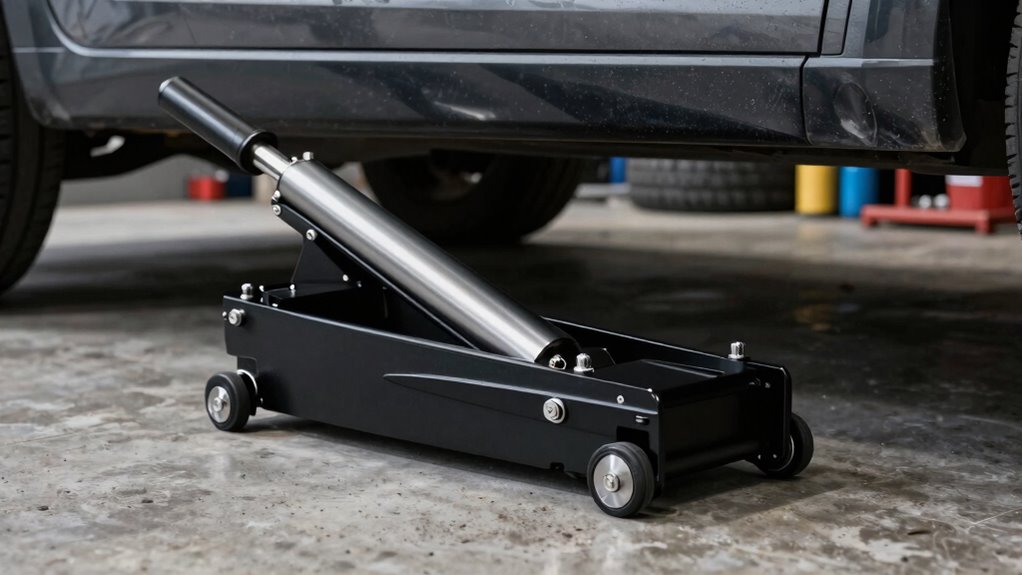

To save clearance and frustration, focus on choosing a low-profile floor jack with the minimum height that still offers enough lifting capacity for your vehicle. Always make certain the jack fits securely under the frame without forcing it, and verify it’s rated for the vehicle’s weight. Proper placement at designated lift points and maintaining hydraulic pressure are key. Staying within these guidelines guarantees safer, smoother lifts. Keep exploring to discover even more tips for effortless vehicle lifting.
Key Takeaways
- Choose a jack with a minimum height that matches your vehicle’s clearance requirements.
- Ensure the jack fits snugly under the vehicle’s designated lifting points without forcing.
- Verify the jack’s lifting capacity matches or exceeds the vehicle’s weight for safe operation.
- Use on a flat, solid surface to maintain stability and prevent frustration during lifting.
- Always position the jack correctly and use jack stands for added safety and clearance.
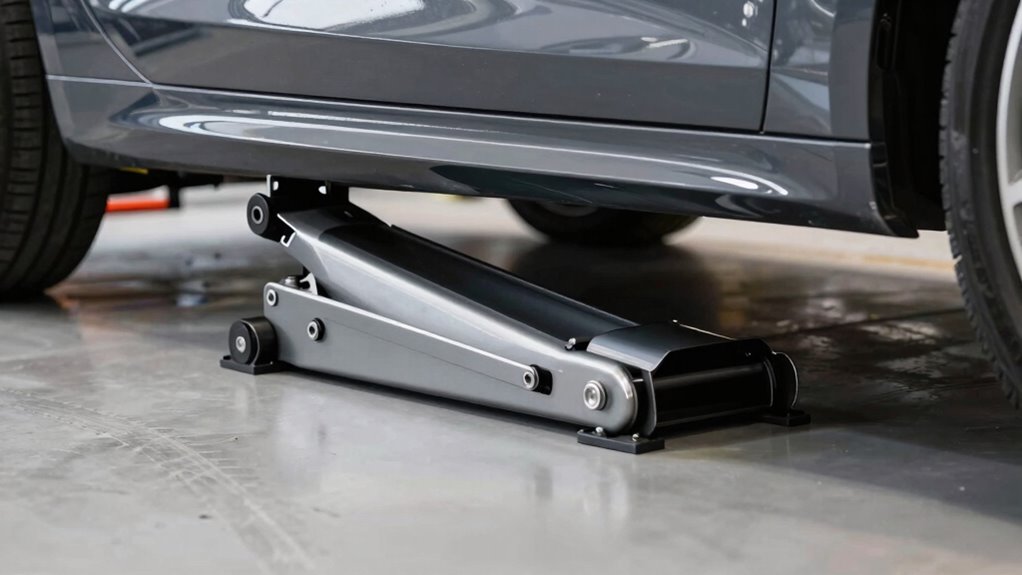
Ever wondered how much space you need between a floor jack and the vehicle’s frame? It’s a common question, especially when working with low-clearance vehicles or tight spots. The key is understanding that the right clearance guarantees your jack lifts safely without damaging the car or risking injury. When you’re selecting a low-profile floor jack, you want to pay attention to the minimum height it can reach and how much lifting capacity it offers. Too high, and you won’t get enough clearance; too low, and it might not lift your vehicle at all. The goal is to find a jack that fits snugly under the vehicle’s frame but still provides enough room to position the lifting pad securely.
Choosing the right low-profile jack ensures safe lifting without damaging your vehicle or risking injury.
Hydraulic pressure plays an essential role here. As you operate the jack, hydraulic fluid is forced into a cylinder, creating pressure that lifts the vehicle. Proper hydraulic pressure guarantees a smooth, controlled lift, reducing the risk of sudden drops or instability. If the pressure isn’t maintained or the jack isn’t rated for the weight, you could end up with unsafe lifting conditions. That’s why safety guidelines are so important: always verify the jack’s weight capacity, inspect for leaks or damage, and ensure it’s rated for your vehicle. Never attempt to lift beyond the jack’s specified limit, even if it seems capable of handling more. Overloading can compromise the hydraulic system, leading to dangerous failures.
Maintaining proper clearance isn’t just about ease; it’s about safety. You want enough space between the jack and the vehicle’s frame to avoid pinched fingers, slipping, or damaging sensitive components. When positioning the jack, follow the manufacturer’s safety guidelines: place it on a flat, solid surface, and make sure the lifting point is sturdy and designed for jacking. Always use jack stands once your vehicle is lifted; never rely solely on the jack for support. This extra step ensures safety against accidental drops or hydraulic failure. Additionally, understanding the importance of hydraulic pressure helps ensure a safe and effective lift. Regular jack maintenance is crucial to prevent any unforeseen failures during use and extend the life of your equipment. A thorough understanding of properly rated jacks can help avoid costly mistakes and enhance safety.
In essence, choosing a low-profile floor jack isn’t just about fitting under your vehicle—it’s about understanding the principles of hydraulic pressure, following safety guidelines, and ensuring you have enough clearance to work confidently and securely. When you get these details right, your work becomes more efficient, frustration drops, and you markedly reduce the risk of accidents. The low-profile rule isn’t just a convenience; it’s a safety strategy that keeps your workspace safe and your vehicle properly supported.
low profile hydraulic floor jack
As an affiliate, we earn on qualifying purchases.
As an affiliate, we earn on qualifying purchases.
Frequently Asked Questions
How Do I Measure My Vehicle’s Ground Clearance Accurately?
To measure your vehicle’s ground clearance accurately, park on a level surface and check that your tire pressure matches the recommended levels. Use a ruler or tape measure to record the distance from the lowest part of your vehicle’s undercarriage to the ground. Make sure your wheel alignment is correct, as misalignment can affect measurements. Repeat the process at multiple points to get an accurate understanding of your vehicle’s clearance.
Are There Specific Floor Jacks for Low-Clearance Cars?
Yes, there are specific floor jacks designed for low-clearance cars. Look for models with extended lift pads or lift pad adaptors to increase clearance and guarantee safe lifting. These jacks often feature improved jack stability, so you won’t worry about slipping or tipping. Using a low-profile jack with the right adaptors makes lifting your vehicle easier without risking damage, saving you time and frustration during maintenance.
What Are the Risks of Using a High-Profile Jack on Low-Clearance Vehicles?
Using a high-profile jack on low-clearance vehicles risks unstable jack stability, which can cause slips or accidents. You might also struggle to lift the car properly, risking damage or injury. To avoid this, guarantee proper lubrication maintenance of the jack’s moving parts to keep it functioning smoothly. Always select the right jack height for your vehicle to maintain safety and stability, preventing frustration and potential harm.
Can a Low-Profile Jack Handle Heavy-Duty Lifting?
Yes, a low-profile jack can handle heavy-duty lifting if it has the right hydraulic capacity and weight limits. Always check the jack’s specifications to guarantee it supports your vehicle’s weight. Opt for models with higher weight limits and strong hydraulic systems designed for heavy loads. Using a low-profile jack within its capacity prevents accidents, protects your vehicle, and ensures safe, effective lifting during repairs or maintenance.
How Often Should I Inspect My Floor Jack for Safety?
You should inspect your floor jack before every use, much like a mechanic checks tools daily. Regular jack maintenance and safety tips help prevent accidents. Look for leaks, rust, or damage to the hydraulic system, and make certain the wheels roll smoothly. For safety, also check the release valve and handle. If you spot issues, don’t use the jack until it’s properly repaired or replaced. Consistent inspections keep your lifting safe and reliable.
vehicle lift jack for low clearance cars
As an affiliate, we earn on qualifying purchases.
As an affiliate, we earn on qualifying purchases.
Conclusion
Remember, choosing a low-profile floor jack isn’t just about convenience—it’s your secret weapon against frustration and clearance issues. By following this rule, you’re not just lifting a vehicle; you’re lifting your confidence and ease. Think of it as your trusty sword in the battle against stubborn, tight spaces. When you keep clearance in mind, you’re not just working smarter—you’re working like a pro, turning a challenging task into a smooth, victorious feat.
heavy duty car jack with minimum height
As an affiliate, we earn on qualifying purchases.
As an affiliate, we earn on qualifying purchases.
car jack stands for safety
As an affiliate, we earn on qualifying purchases.
As an affiliate, we earn on qualifying purchases.