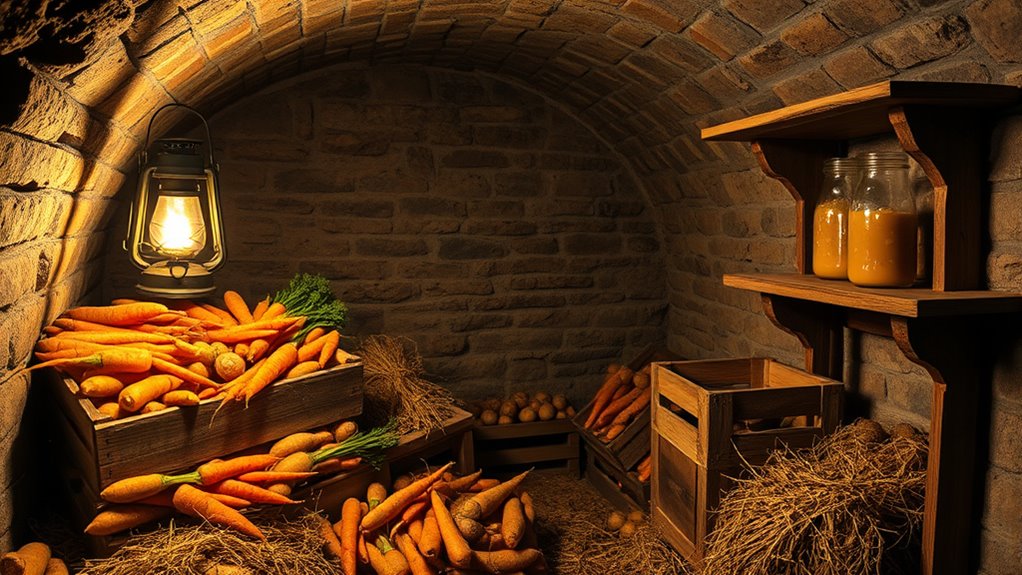

To construct a root cellar for food storage, you should focus on proper insulation and strategic ventilation. Use rigid foam, mineral wool, or straw to line walls, ceiling, and floor, creating a stable, cool environment. Install vents at the top and bottom to promote natural airflow, and seal gaps to prevent drafts. Combining insulation with effective ventilation maintains the ideal temperature and humidity. Keep exploring, and you’ll discover how to optimize your cellar for long-lasting freshness.
Key Takeaways
- Choose a cool, dark, and well-ventilated location, preferably underground or partially underground, for natural temperature stability.
- Install adjustable vents at the top and bottom of the cellar to facilitate airflow and regulate humidity.
- Insulate walls, ceiling, and floor with materials like foam boards or mineral wool to maintain consistent internal temperatures.
- Seal all gaps around vents and insulation to prevent drafts and ensure a stable environment for food storage.
- Regularly inspect and maintain ventilation and insulation systems to prolong the cellar’s effectiveness and ensure food freshness.
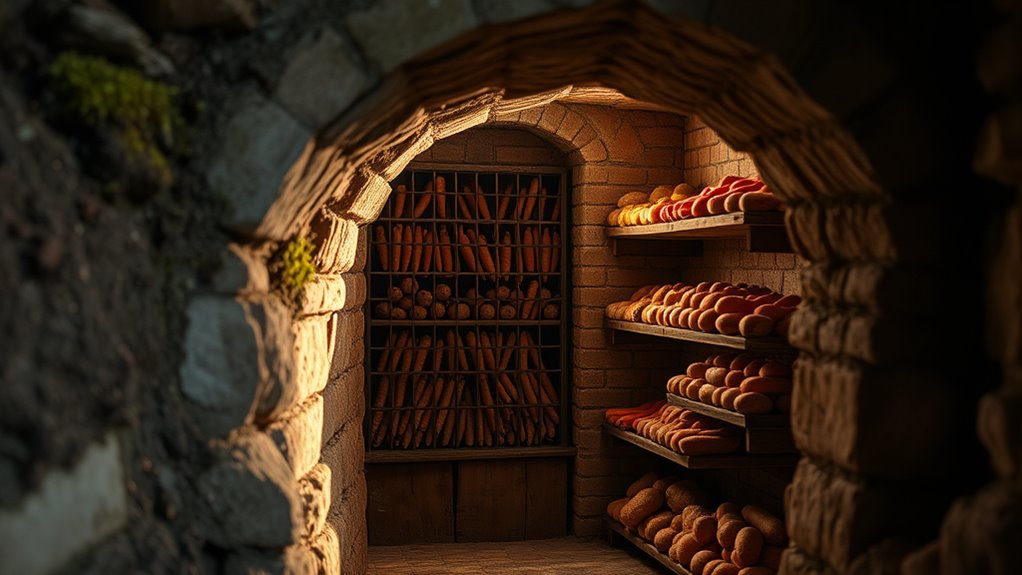
Building a root cellar is a practical way to preserve your harvest naturally and efficiently. When constructing your cellar, one of the most important aspects to contemplate is proper ventilation. Good airflow prevents moisture buildup, which can lead to mold, rot, and spoilage. You want to incorporate ventilation techniques that promote continuous air exchange without causing temperature fluctuations. Installing vents at the top and bottom of the cellar allows cooler, fresh air to enter while stale, humid air escapes. You might also consider using adjustable vents or fans for better control, especially during extreme weather conditions. This guarantees that your stored produce stays dry and cool, extending its shelf life.
Proper ventilation ensures your root cellar stays dry, cool, and mold-free for long-lasting harvest storage.
In addition to ventilation, insulation materials play a vital role in maintaining a stable environment inside your root cellar. Insulation helps regulate temperature fluctuations, keeping your stored food cool during summer and preventing freezing in winter. When choosing insulation materials, look for options like rigid foam boards, mineral wool, or straw, which provide effective thermal barriers. You can line the walls, ceiling, and floor with these materials to create a consistent, cool environment. Be mindful to avoid materials that trap moisture or emit fumes, as these can compromise your stored produce’s quality. Proper insulation not only stabilizes temperature but also reduces energy costs if you’re using active cooling systems.
As you build your root cellar, pay attention to the placement of insulation and ventilation components. Position vents strategically to facilitate natural convection currents, and seal gaps around insulation to prevent drafts. Consider the location of your cellar as well; underground or partially underground sites naturally help with temperature regulation, but you’ll still need to implement effective insulation and ventilation strategies. Remember, the goal is to create a controlled environment that mimics a cool, humid underground space, which is ideal for storing root vegetables, canned goods, and other perishables.
Finally, guarantee your construction is airtight but allows for easy access and maintenance. Regularly check the vents and insulation for signs of wear or damage, and keep the interior clean to prevent pests and mold. Incorporating reliable ventilation techniques can further enhance your cellar’s performance and longevity. With proper ventilation techniques and the right insulation materials, your root cellar will become a reliable, energy-efficient storage solution that preserves your harvest for months to come. By paying close attention to these details, you’ll guarantee your stored foods remain fresh, flavorful, and safe throughout the year.
root cellar insulation materials
As an affiliate, we earn on qualifying purchases.
As an affiliate, we earn on qualifying purchases.
Frequently Asked Questions
What Are the Best Materials for Insulating a Root Cellar?
You should use insulation materials like rigid foam boards or spray foam for your root cellar, as they provide excellent thermal resistance. Additionally, install moisture barriers such as plastic sheeting or vapor barriers to prevent humidity issues. These materials work together to maintain a stable, cool environment, protecting your stored food from temperature fluctuations and excess moisture. Proper insulation and moisture barriers are key to a successful, long-lasting root cellar.
How Do I Prevent Mold and Pests in My Root Cellar?
Think of your root cellar as a fortress against pests and mold. To keep it secure, install pest-proof shelving and use mold-resistant coatings on walls and floors. Keep the space dry and well-ventilated, and regularly check for signs of trouble. By sealing entry points and maintaining cleanliness, you create a hostile environment for pests and mold, ensuring your stored food stays fresh and safe for longer.
What Is the Ideal Temperature Range for Food Storage?
You should aim for a temperature between 32°F and 40°F for ideal food storage. To maintain this, control humidity and use effective ventilation methods, like vents or fans, to prevent excess moisture that encourages mold and pests. Regularly check the temperature and humidity levels, adjusting ventilation as needed to keep your food fresh and safe. Proper temperature management ensures your stored food stays good longer.
How Deep Should I Dig My Root Cellar?
You should dig your root cellar about 8 to 12 feet deep, depending on your climate and soil composition. Make certain the soil has good moisture control, like clay or loamy soil, to maintain consistent temperature and humidity. Proper depth helps stabilize temperature and prevents frost, keeping your stored food fresh longer. Use moisture barriers and proper drainage to manage soil moisture, which is vital for the cellar’s effectiveness.
Can I Build a Root Cellar Indoors or Underground?
Building a root cellar indoors or underground is like creating a secret garden beneath your home. You can definitely do it, but guarantee proper ventilation systems to prevent stale air and moisture control to keep your food fresh. An underground cellar offers natural insulation, while indoor spaces need careful sealing. Either way, maintaining good airflow and moisture balance is essential for a safe, long-lasting food storage haven.
adjustable ventilation vents for cellar
As an affiliate, we earn on qualifying purchases.
As an affiliate, we earn on qualifying purchases.
Conclusion
Now that you’ve built your root cellar, you’ve opened a treasure chest of freshness right beneath your feet. Think of it as your secret garden’s vault, quietly preserving nature’s bounty through the seasons. With just a bit of effort, you’ve created a cool, dark sanctuary that keeps your harvest lively and tasty. Remember, this cellar isn’t just a storage space—it’s the heartbeat of your homegrown abundance, standing as a tribute to your self-sufficiency and love for good, honest food.
underground food storage containers
As an affiliate, we earn on qualifying purchases.
As an affiliate, we earn on qualifying purchases.
thermal insulation foam boards
As an affiliate, we earn on qualifying purchases.
As an affiliate, we earn on qualifying purchases.