
To set your saw teeth with a saw set, start by ensuring your blade is properly aligned and the teeth are clean. Use the saw set tool to gently bend each tooth outward, alternating sides in a zigzag pattern to prevent binding. Adjust the teeth just enough for the desired cut width, checking frequently for uniformity. If you keep these steps in mind, you’ll achieve smooth, accurate cuts every time—there’s much more to discover about perfecting your technique.
Key Takeaways
- Inspect the saw blade for misalignment and ensure it runs true before setting teeth.
- Count and identify damaged or bent teeth, repairing or replacing them as needed.
- Use a proper saw set tool to bend teeth outward slightly, following a zigzag pattern.
- Adjust each tooth uniformly to achieve the desired cut width without excessive material removal.
- Regularly verify blade alignment and tooth spacing during the setting process for consistency.
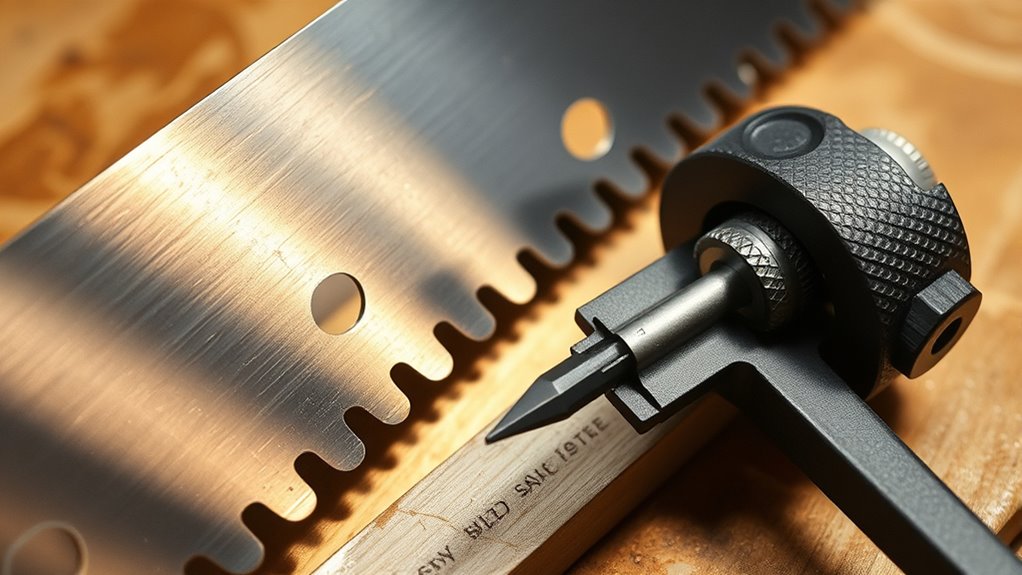
Setting saw teeth is a crucial step to guarantee your saw cuts smoothly and efficiently. When you’re preparing to set your saw teeth, one of the most important aspects to focus on is blade alignment. Proper blade alignment ensures that each tooth is positioned correctly relative to the saw’s body, which directly impacts cutting performance. If the blade isn’t aligned, even the most precise setting won’t produce optimal results, leading to uneven cuts or increased wear on the saw. Before you start setting the teeth, take a moment to inspect the blade for any misalignment, especially if the saw has been used heavily or subjected to rough handling. Adjust the blade so it’s perfectly aligned with the saw’s frame, making sure it runs true and doesn’t wobble. This step is crucial because it ensures that when you set the teeth, they’ll be uniformly spaced and properly positioned.
Next, consider the tooth count — the number of teeth on your saw blade. The tooth count influences how you set the teeth because different projects require different tooth configurations. For fine, detailed cuts, a blade with a higher tooth count is preferable, as it creates smoother edges. Conversely, for rough cuts or ripping through thicker material, a lower tooth count is more effective. When setting the teeth, you need to ensure that each tooth is spaced correctly to match your intended cut type. An uneven tooth count or inconsistent spacing can cause binding or jagged cuts. Count the teeth on your blade before beginning, and plan your setting process to maintain uniformity across all teeth. If some teeth are damaged or bent, replace or repair them to keep the overall tooth count consistent. Additionally, understanding the importance of blade alignment can help prevent issues like wobbling or miscut edges, making your work more precise and efficient.
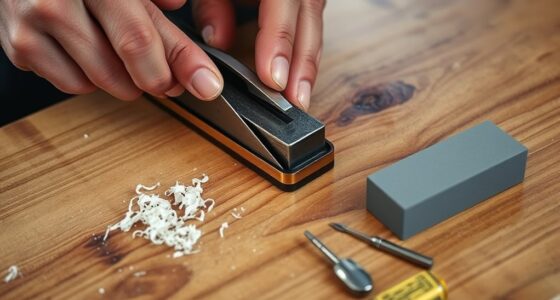
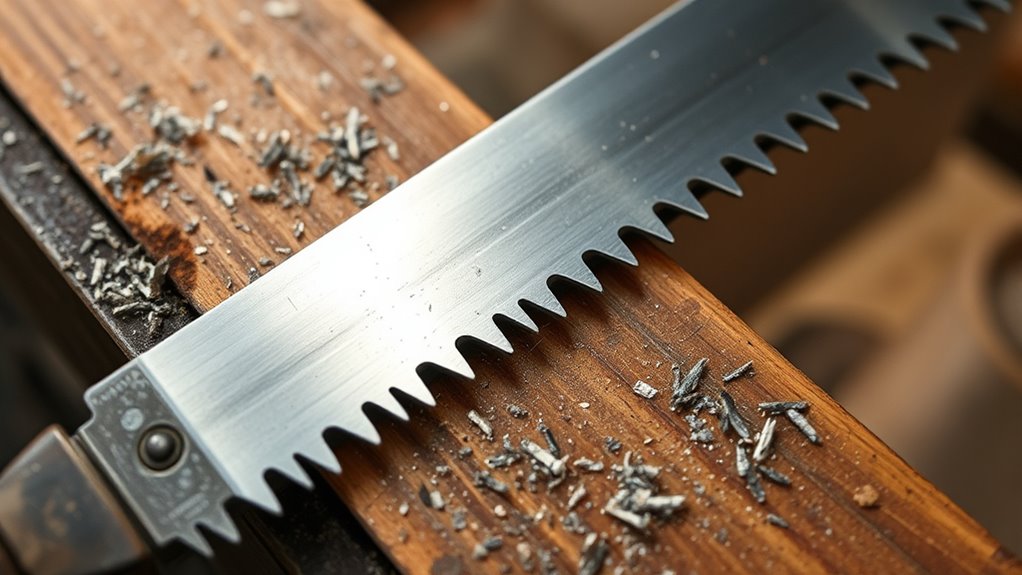
As you start setting the teeth, use a saw set tool designed for this purpose. Carefully position each tooth with the tool, making sure to lift or bend the tooth outward just enough to achieve the desired width of cut. Keep in mind that the goal is to create a slight zigzag pattern, which prevents the saw from binding during cuts. You want each tooth to be set just enough so it clears the material without being too wide, which could cause the saw to wobble or cut inaccurately. Regularly check the blade alignment and tooth spacing as you work, adjusting as needed for accuracy. Properly setting your saw teeth with attention to blade alignment and tooth count guarantees smoother cuts, less effort, and a longer lifespan for your saw.
Frequently Asked Questions
How Often Should I Check Saw Teeth for Proper Setting?
You should check your saw teeth for proper setting every few cuts or after about 10-15 uses to guarantee ideal saw blade maintenance. Regular inspections help maintain hand tool safety by preventing uneven cuts or blade damage. Keep an eye out for bent or uneven teeth, and adjust as needed. Consistent checks help prolong your saw’s life and maintain cutting efficiency, making your work safer and more precise.
Can I Set Saw Teeth Without a Saw Set Tool?
You can attempt to set saw teeth without a saw set tool; it’s like trying to tune a guitar with a butter knife. Manual adjustment might work in a pinch, but it’s tricky and less precise. Alternative tools like pliers or small hammers can help, but they risk damaging the teeth or misaligning them. For best results, investing in a saw set tool guarantees clean, even teeth, making your cuts smoother and safer.
What Are Signs of Over- or Under-Set Teeth?
You’ll notice over-set teeth by their aggressive cutting action, causing rough cuts and increased kickback, while under-set teeth produce dull, narrow cuts that bind in the wood. Proper saw blade maintenance guarantees teeth are correctly set, promoting safer woodworking. Always check for signs like uneven cuts or excessive effort, and adjust your saw teeth accordingly to maintain woodworking safety and efficiency. Regularly inspecting and adjusting teeth helps prevent accidents and ensures quality results.
Does Tooth Setting Affect Cutting Speed or Efficiency?
You might think setting teeth doesn’t matter, but it can make or break your cutting precision and blade durability. Proper tooth setting guarantees smoother cuts and less strain on your saw, boosting efficiency. When teeth are set correctly, you avoid unnecessary resistance, helping you work faster and extend the life of your blade. In the end, good tooth setting keeps your project running smoothly—don’t let small details become big problems.
Are There Different Settings for Different Types of Saw Blades?
Yes, there are different settings for various saw blades, and you should adjust based on blade compatibility and the type of cut you want. Use proper setting techniques tailored to each blade’s tooth design and material to guarantee peak performance. Incorrect settings can cause inefficient cutting or damage, so always refer to manufacturer guidelines and fine-tune your saw set for each specific blade and task.
Conclusion
Now that you’ve mastered setting your saw teeth, imagine the perfect cut just within reach. But what if a small mistake could compromise the entire project? Will your next cut be flawless or fall short because of a tiny misalignment? Keep your focus sharp, stay attentive, and remember: precision is the secret to success. The next step could make all the difference—are you ready to see how perfectly your saw can perform?