
When using a pressure washer, always start with wider nozzles to avoid damage and maintain a safe distance of 12-18 inches from the surface. Use steady, overlapping strokes and hold the nozzle at a 45-degree angle to prevent splashing. Wear protective gear like goggles and gloves, and check for hazards before starting. Adjust pressure levels based on the surface to prevent harm. Keep practicing proper techniques, and you’ll achieve effective cleaning while staying safe—there’s more to learn!
Key Takeaways
- Select the appropriate nozzle (wider for delicate surfaces, narrower for tough grime) to control spray pattern and pressure.
- Maintain a 12-18 inch distance from surfaces and use steady, overlapping strokes for effective cleaning.
- Wear protective gear like goggles, gloves, and closed-toe shoes, and be cautious around electrical outlets and fragile items.
- Adjust pressure levels based on surface softness or toughness to prevent damage and ensure thorough cleaning.
- Inspect the area for hazards before starting, keep a safe distance from windows and furniture, and follow safety precautions throughout use.

Have you ever wondered how to effectively clean stubborn dirt and grime from your outdoor surfaces? Using a pressure washer can be incredibly efficient, but to get the best results, you need to understand some key tips and safety precautions. One of the first things to consider is nozzle selection. The nozzle you choose profoundly impacts the cleaning process, as different nozzles produce varying spray patterns and pressures. For delicate surfaces like wood or painted surfaces, a nozzle with a wider spray angle, such as a 40-degree nozzle, helps prevent damage. For tougher grime on concrete or brick, a narrower spray like a 15-degree nozzle delivers more power, breaking through stubborn dirt effectively. Always start with a wider spray nozzle and switch to a narrower one only if necessary, to avoid causing unintended damage.
Next, mastering cleaning techniques is essential for safe and efficient pressure washing. Begin by maintaining a consistent distance from the surface—usually about 12 to 18 inches—and keep the spray moving in steady, overlapping strokes. This prevents uneven cleaning and avoids gouging or etching the surface. Remember to never point the pressure washer at yourself or others, and always aim the nozzle at a safe angle—usually around 45 degrees—to avoid splashing debris or water back onto your body. When working on vertical surfaces like siding or fences, hold the wand at a slight angle and work from the bottom up to prevent streaks and ensure thorough cleaning. Additionally, understanding the pressure levels suitable for different surfaces can help prevent damage and optimize cleaning efficiency.
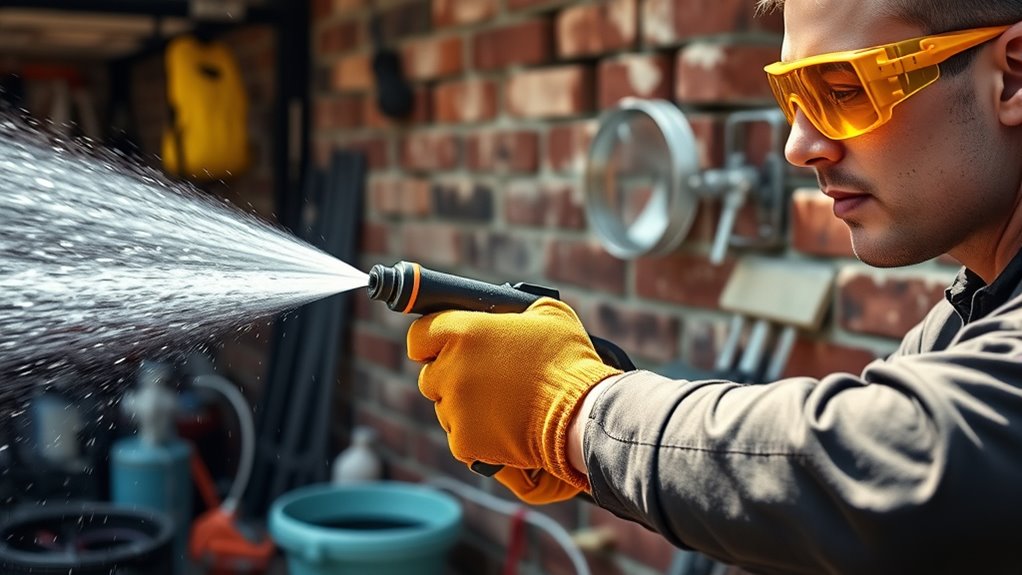
In addition to knowing how to choose the right nozzle and apply proper cleaning techniques, safety should be your top priority. Wear protective gear such as goggles, gloves, and closed-toe shoes, especially when working at high pressure levels. Be cautious around electrical outlets, fixtures, and delicate landscaping, as high-pressure water can cause damage or electrical hazards. Adjust the pressure settings according to the surface you’re cleaning—lower pressure for softer materials and higher for tougher surfaces. Always check the area for loose or fragile objects before starting, and keep a safe distance from windows, doors, and outdoor furniture. Using the right nozzle and cleaning techniques not only guarantees a cleaner surface but also minimizes the risk of accidents or damage. With a bit of preparation and attention to safety, pressure washing can be a quick, effective way to restore your outdoor spaces.
Frequently Asked Questions
Can I Use a Pressure Washer on Delicate Surfaces?
Yes, you can use a pressure washer on delicate surfaces, but you need to be cautious. To prevent surface damage, choose a lower pressure setting and employ the appropriate cleaning techniques, such as keeping the nozzle at a safe distance and avoiding direct contact. Test on a small, hidden area first to verify it won’t cause damage. Proper technique helps you clean effectively without harming fragile surfaces.
What Is the Best Soap to Use With a Pressure Washer?
The best soap for your pressure washer depends on your cleaning needs, but eco-friendly soaps are a great choice because they’re gentle and environmentally safe. Make sure to check detergent compatibility with your pressure washer to avoid damage. Use a biodegradable, eco-friendly soap that’s designed for pressure washers, especially for delicate surfaces. Always follow the manufacturer’s instructions for dilution and application to achieve effective cleaning without harming your surfaces.
How Do I Store a Pressure Washer Properly?
Don’t leave it high and dry—proper storage keeps your pressure washer in top shape. After use, drain all water, especially from the hose and pump, to prevent freezing or rust. Store it in a cool, dry place away from direct sunlight. Follow maintenance routines like inspecting hoses and cleaning filters regularly. Cover your unit to protect it from dust and debris, ensuring it’s ready for next time you need it.
Is It Safe to Use a Pressure Washer Indoors?
Using a pressure washer indoors isn’t safe due to high water pressure and potential for water damage. For indoor cleaning, opt for a damp cloth or specialized cleaning tools instead. If you must use a pressure washer indoors, guarantee proper ventilation safety by opening windows and wearing protective gear. Always follow manufacturer instructions and avoid indoor use unless specifically designed for it, to prevent accidents or damage.
What PPE Should I Wear When Operating a Pressure Washer?
You should always wear protective gear when operating a pressure washer to keep yourself safe. Safety precautions include goggles to shield your eyes, gloves for hand protection, and sturdy footwear to prevent slips. Hearing protection is also wise if you’re working for extended periods. Don’t skip these precautions; they’re your best defense against unexpected hazards. Prioritize your safety by wearing the right PPE to enjoy your cleaning project with peace of mind.
Conclusion
With the right techniques and safety precautions, operating a pressure washer becomes as smooth as a gentle stream. Remember to wear protective gear, keep a steady hand, and never point the nozzle at yourself or others. Think of your pressure washer as a powerful brush that can restore your surfaces or cause damage if misused. By respecting its strength, you’ll keep your projects safe and your property shining brighter than a diamond in the sun.