
To integrate dust extraction with your power tools, attach built-in dust ports or use adapters to connect hoses to dust extractors or shop vacuums. Make certain your system is powerful enough to capture fine particles, preferably with HEPA filters for better air quality. Regularly maintain and check your connections for leaks or blockages. Proper integration keeps your workspace cleaner, safer, and improves tool performance—keep exploring to learn how to optimize your dust management setup.
Key Takeaways
- Use built-in dust ports on power tools to connect directly to dust collection systems for immediate debris removal.
- Select compatible adapters and hoses to retrofit portable tools for effective dust extraction.
- Ensure proper sealing of connections to prevent dust leaks and maximize suction efficiency.
- Choose high-quality, HEPA-filtered dust extractors for capturing fine dust particles and improving air quality.
- Regularly maintain and inspect dust collection components to ensure optimal performance and safety.
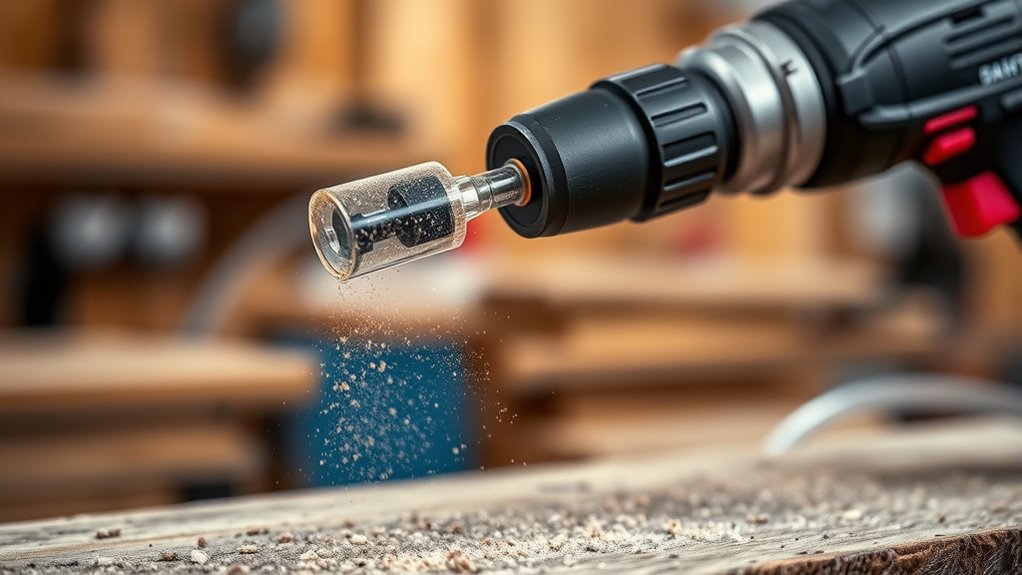
Dust generated by power tools can pose serious health risks and create a messy workspace. When you’re working on projects that produce a lot of sawdust or debris, it’s crucial to manage that dust effectively. Integrating dust extraction with your power tools isn’t just about keeping your workspace tidy—it’s about protecting your health and maintaining a safe environment. The key is understanding dust collection methods and choosing the right safety equipment options to suit your needs.
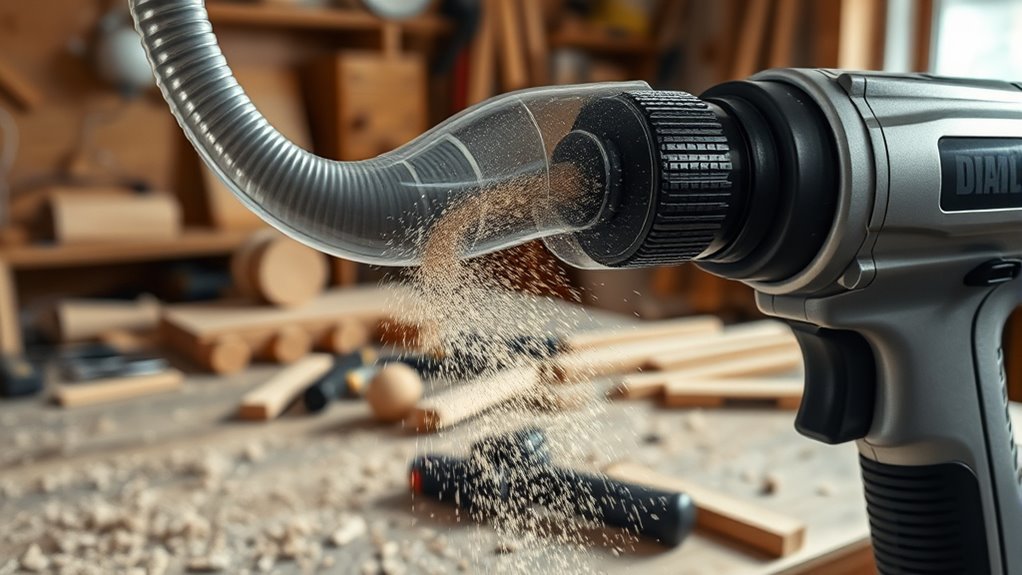
First, you need to familiarize yourself with different dust collection methods. Many power tools come with built-in dust ports designed to connect directly to a shop vacuum or dust extractor. These ports allow for immediate removal of dust as it’s generated, preventing it from settling on surfaces or becoming airborne. For stationary tools like table saws, miter saws, or sanders, attaching a dust collection hose to the built-in port ensures a continuous flow of debris into a collection container. Portable tools, such as hand-held routers or sanders, often have smaller ports, but you can retrofit them with adapters to connect to your vacuum system.
Many power tools feature built-in dust ports for direct connection to vacuums or extractors.
If your tools don’t have built-in dust collection features, you can still improve dust management by setting up a central vacuum system or using portable dust extractors. These systems connect to multiple tools via flexible hoses, creating a detailed dust management network. Keep in mind that the effectiveness of dust collection depends on the size of the dust particles and the power of your extraction system. Fine dust particles are harder to capture, so investing in a high-quality, HEPA-filtered dust extractor can drastically reduce airborne contaminants. Additionally, understanding dust particle sizes helps in selecting the most effective filtration options.
Alongside dust collection methods, safety equipment options play a crucial role in protecting you from dust exposure. Wearing a properly fitted dust mask or respirator helps prevent inhalation of fine particles, especially when working with materials that produce hazardous dust. Safety glasses or goggles should be used to shield your eyes from flying debris. Additionally, using hearing protection is advisable, as power tools can be loud and cause long-term hearing damage. For prolonged projects, consider using disposable or reusable respirators equipped with HEPA filters, which provide a high level of filtration for airborne dust.
Incorporating effective dust collection methods and appropriate safety equipment options creates a safer, cleaner work environment. When you connect your power tools to a quality dust extraction system, you reduce airborne dust and maintain a healthier workspace. Always remember to regularly empty your dust collection containers and inspect hoses for blockages or leaks to maximize efficiency. Staying proactive in dust management not only protects your health but also enhances your overall workflow, making your projects safer and more enjoyable.
HEPA dust extractor for power tools
As an affiliate, we earn on qualifying purchases.
As an affiliate, we earn on qualifying purchases.
Frequently Asked Questions
What Types of Dust Extractors Are Compatible With Different Power Tools?
You should choose dust extractors compatible with your power tools for seamless power tool integration. Many shop vacuums and dedicated dust collectors work well, especially those with adjustable hoses and fittings. Check dust collector compatibility to guarantee it fits your tools’ ports. For peak performance, select a dust extractor designed for your specific power tool type, like circular saws or routers, so you can efficiently manage dust and maintain a clean workspace.
How Do I Maintain and Clean My Dust Extraction System Effectively?
You might think your dust extractor stays spotless forever, but ironically, regular maintenance is key. To keep it running smoothly, replace filters when they’re clogged or dirty, and don’t forget hose maintenance—check for blockages or leaks. Clean the filter housing and hose connections regularly, and empty the collection bin often. This way, your system stays efficient, and dust stays where it belongs—away from your workspace.
Can Dust Extraction Systems Reduce Health Risks During Prolonged Use?
Yes, dust extraction systems considerably reduce health risks during prolonged use by capturing harmful dust particles and debris. This enhances occupational safety and offers notable health benefits, such as preventing respiratory issues and long-term lung damage. When you use these systems properly, you create a safer work environment, lowering exposure to airborne contaminants. Regular maintenance guarantees peak performance, further protecting your health and maintaining a secure, compliant workspace.
Are There Specific Safety Precautions for Integrating Dust Extractors?
Think of integrating dust extractors as building a fortress around you. You should always wear eye protection and guarantee proper dust containment. Regularly check and replace filter maintenance to keep the system effective. Keep the extractor’s hoses secure to prevent accidental disconnection. Following these safety precautions helps keep your workspace safe, reduces airborne dust, and assures your dust extraction system functions ideally during prolonged use.
How Does Dust Extraction Impact Overall Tool Performance and Lifespan?
Dust collection helps keep your workspace cleaner and reduces airborne debris, but it can also impact your tool’s durability if not properly maintained. Proper dust extraction prevents dust buildup inside the motor, extending its lifespan and maintaining peak performance. However, poor or inconsistent dust collection may cause overheating or wear, so verify your dust extraction system is compatible and well-maintained to protect your tools and optimize performance over time.
dust collection hose adapters for power tools
As an affiliate, we earn on qualifying purchases.
As an affiliate, we earn on qualifying purchases.
Conclusion
By integrating dust extraction with your power tools, you’re fundamentally creating a shield that guards your workspace from harmful debris. It’s like giving your tools a gust of fresh air, turning chaos into clarity. With this seamless partnership, you’ll find your projects cleaner, safer, and more efficient—transforming a messy task into a smooth symphony of craftsmanship. Embrace this connection, and watch your workshop flourish like a well-tuned orchestra.
built-in dust port power tools
As an affiliate, we earn on qualifying purchases.
As an affiliate, we earn on qualifying purchases.
shop vacuums with dust collection
As an affiliate, we earn on qualifying purchases.
As an affiliate, we earn on qualifying purchases.