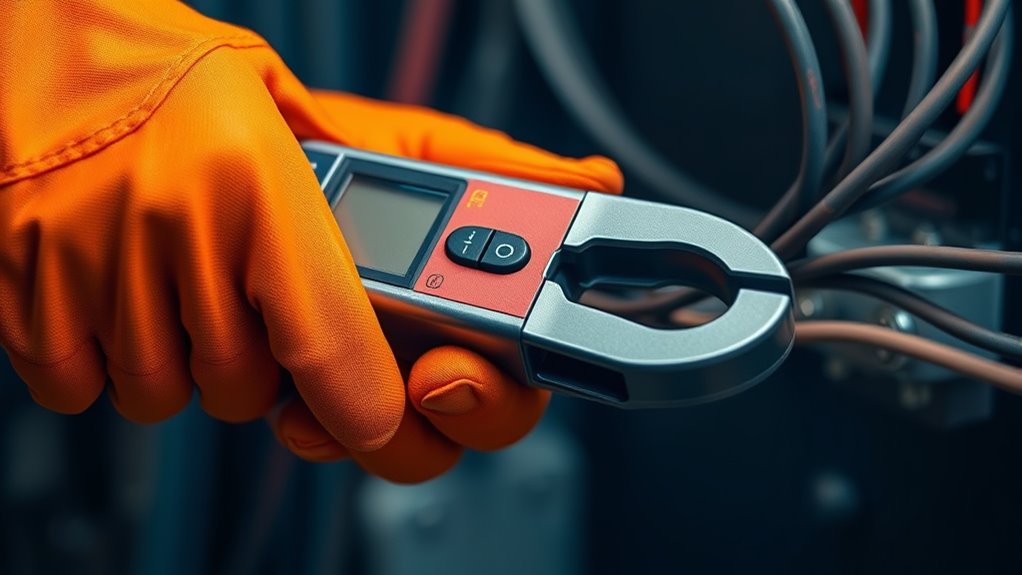
To use a clamp meter safely and effectively, you need to understand its functions, choose the right model, and prepare properly. Carefully clamp around a conductors, ensuring they are centered and the device is snug, then select the correct measurement mode (AC or DC). Always wear protective gear, inspect the device before use, and handle it gently. Following proper setup and handling procedures will help you get accurate results and ensure safety. Keep exploring for detailed guidance on mastering its use.
Key Takeaways
- Select the appropriate measurement mode (AC or DC) and ensure the clamp is properly centered around the conductor.
- Prepare the conductor by cleaning and inspecting insulation before clamping for accurate readings.
- Handle the clamp gently, opening and closing it carefully to avoid internal damage and ensure a snug fit.
- Always wear personal protective equipment and de-energize circuits when possible for safety.
- Regularly calibrate and inspect the clamp meter to maintain accuracy and ensure safe, reliable operation.
Understanding the Functions of a Clamp Meter
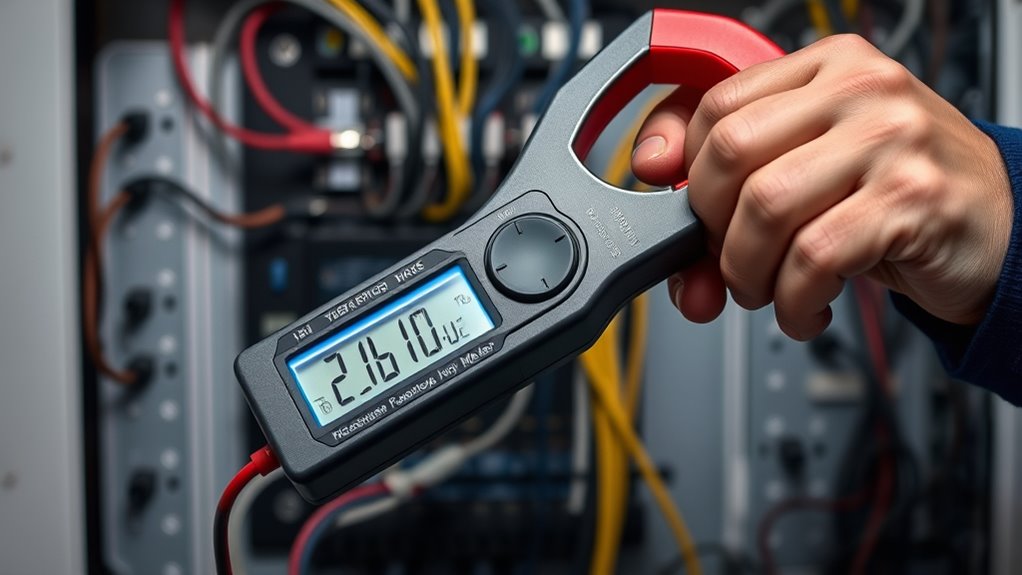
A clamp meter is a versatile tool that allows you to measure electrical parameters without disconnecting wiring. One of its key functions is detecting magnetic fields around conductors, which helps you measure current flow directly. By sensing the magnetic field, the clamp meter can determine the current without breaking the circuit. Additionally, some models can measure electrical resistance, enabling you to test components like wires and switches efficiently. This feature is useful for troubleshooting and diagnosing electrical issues quickly. The ability to measure magnetic fields and electrical resistance makes the clamp meter a valuable device for electricians and DIY enthusiasts alike. It simplifies tasks that would otherwise require more invasive methods, saving you time and effort while providing accurate readings. A solid understanding of testing methodologies can further enhance your ability to utilize the clamp meter effectively.
Choosing the Right Clamp Meter for Your Needs
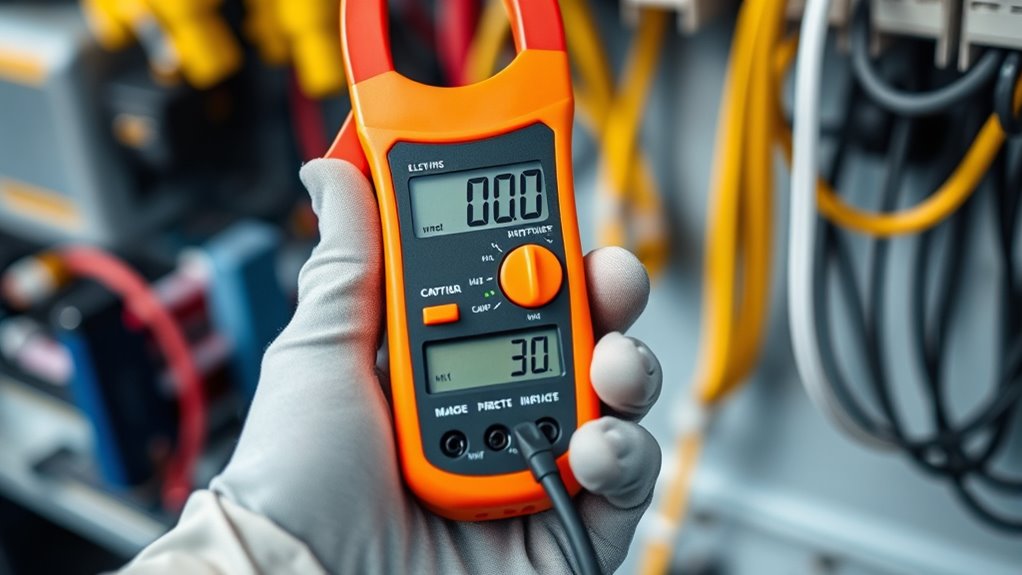
When selecting a clamp meter, you need to consider its measurement capabilities to ensure it meets your specific tasks. Your budget also plays a role, so find a model that balances features with affordability. By understanding these points, you can choose a meter that best fits your needs and skill level. Additionally, selecting a model with appropriate measurement ranges can help you perform various testing scenarios more effectively.
Measurement Capabilities
Understanding the measurement capabilities of a clamp meter is essential to selecting the right tool for your needs. Not all clamp meters can perform every measurement, so you need to consider what functions are critical. For current detection, ensure the meter can handle the maximum current levels you’ll encounter, whether AC or DC. If voltage measurement is also necessary, verify that the device supports the voltage ranges you’ll work with safely and accurately. Some clamp meters offer additional features like resistance testing or continuity checks, which might be useful depending on your projects. Additionally, understanding the measurement capabilities helps in determining whether the device supports high refresh rates for fast-changing signals or low input lag for precise readings. By understanding these capabilities, you can choose a meter that meets your specific requirements, ensuring reliable readings and safe operation. Always match the meter’s specs to your intended tasks for optimal performance.
Budget Considerations
Are you trying to find a clamp meter that fits your budget without sacrificing essential features? If so, explore cost-effective options that deliver reliable performance without overspending. Look for models that balance affordability with necessary measurement capabilities. Consider brand comparisons to identify reputable brands offering quality at lower prices. Some brands provide budget-friendly models equipped with key features suitable for DIY projects or professional use. Keep in mind that very cheap meters may lack durability or accuracy, so prioritize those with good reviews and solid warranties. By evaluating your needs carefully, you can select a clamp meter that offers the best value for your money, ensuring you get reliable measurements without breaking the bank. Additionally, understanding measurement accuracy and durability can help you make a more informed choice.
Preparing for Measurement
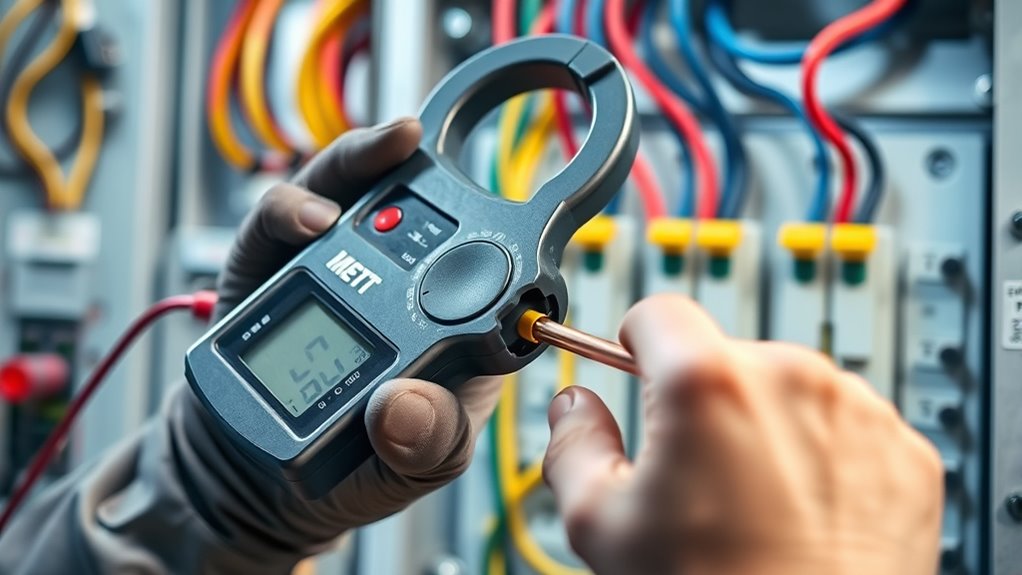
Have you checked that your clamp meter is in good working condition before starting your measurement? Ensuring proper calibration procedures are followed helps maintain accuracy. Before use, inspect the device for any damage or dirt that could affect readings. Confirm the meter’s battery is fully charged to avoid interruptions. Follow the storage guidelines by keeping your clamp meter in a clean, dry place, protecting it from extreme temperatures and moisture. Proper storage prevents damage and preserves calibration accuracy over time. Additionally, verify that the current range settings are appropriate for your measurement task. Taking these preparatory steps ensures reliable results and prolongs your meter’s lifespan. Being thorough before measurement saves time and minimizes errors during your work. Understanding industry trends can also help you select the most suitable measurement settings and techniques.
How to Clamp Around a Conductor
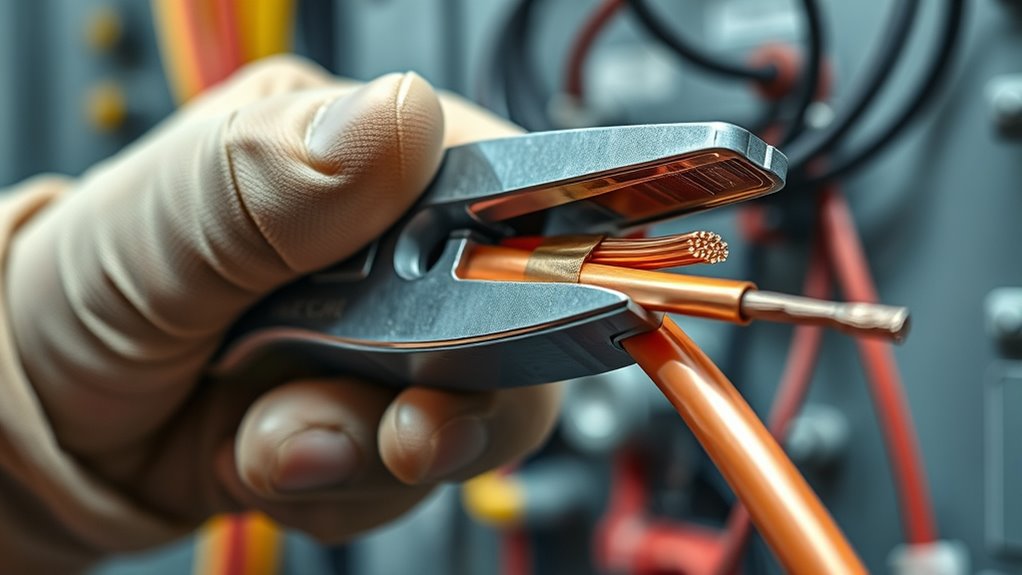
To clamp around a conductor properly, start by preparing the wire to guarantee clean contact. Carefully open the clamp without forcing it, then position it around the conductor. Make sure the conductor is centered inside the clamp for accurate readings.
Prepare the Conductor Properly
Before clamping around a conductor, guarantee the wire is clean, dry, and free of any debris or corrosion. Check the conductor insulation for cracks or damage that could interfere with accurate readings. Ensure environmental conditions are suitable; avoid working in wet or excessively dusty areas that might affect your measurement. If the conductor is dirty or has corrosion, wipe it clean with a non-abrasive cloth and inspect for damage. Proper preparation helps prevent false readings and protects both you and the meter. Keep the area clear of obstructions, and handle the wire gently to avoid damaging the insulation. Taking these steps ensures a secure clamp and reliable measurement, giving you confidence in your readings and maintaining safety throughout the process. Additionally, verifying the air quality in your workspace can help create a safer environment and improve the accuracy of your measurements.
Open the Clamp Carefully
Gently open the clamp by squeezing the handles apart, making certain you do not force or jerk it, which could damage the device or compromise safety. During the clamp opening, exercise caution to prevent applying excessive force that might misalign the internal components. Take your time to open it smoothly, avoiding sudden movements that could cause parts to bend or break. Keep the clamp opening wide enough to comfortably fit around the conductor, but do not overextend it. Be mindful of the clamp’s hinge and ensure it opens evenly. Remember, careful handling during this step reduces the risk of damage and ensures an accurate measurement. Additionally, proper clamp operation is essential for maintaining device longevity and measurement accuracy. Always stay alert during the clamp opening to maintain safety and protect both the device and yourself.
Center the Conductor Correctly
Have you made certain the clamp is fully open and positioned correctly? To guarantee accurate readings, you need to center the conductor properly within the clamp. First, identify the conductor insulation to avoid touching any exposed wiring. Gently open the clamp and position it around the conductor, making sure the conductor is centered inside. Proper clamp positioning is vital—if the conductor isn’t centered, your measurement could be off. Keep the clamp steady and close it fully around the conductor, ensuring it grips evenly. This prevents interference from adjacent wires or other conductors. Always double-check that the clamp is snug and that the conductor is in the middle of the clamp’s opening. Proper positioning guarantees precise current readings and safe operation. Additionally, understanding the benefits of airless paint sprayers can help you appreciate the importance of proper setup and maintenance for optimal performance.
Reading and Interpreting Measurements

Reading and interpreting measurements with a clamp meter requires careful attention to the display and an understanding of the units shown. You should verify the correct measurement mode, whether AC or DC, and note the units—amps or milliamps. Many modern meters have wireless features that allow remote monitoring, but ensure calibration procedures are up to date for accuracy. The following table highlights key measurement aspects:
| Measurement Type | Typical Range | Notes |
|---|---|---|
| Current (A) | 0-600A | Check calibration regularly |
| Wireless Data | Real-time | Use compatible devices |
| Accuracy | ±2% | Confirm before critical use |
| Units | A, mA | Confirm display units |
Interpreting these readings accurately helps you troubleshoot efficiently and trust your measurements. Proper use of the clamp meter also depends on understanding the high-pressure operation involved in certain electrical environments, ensuring safety during testing.
Safety Tips When Using a Clamp Meter
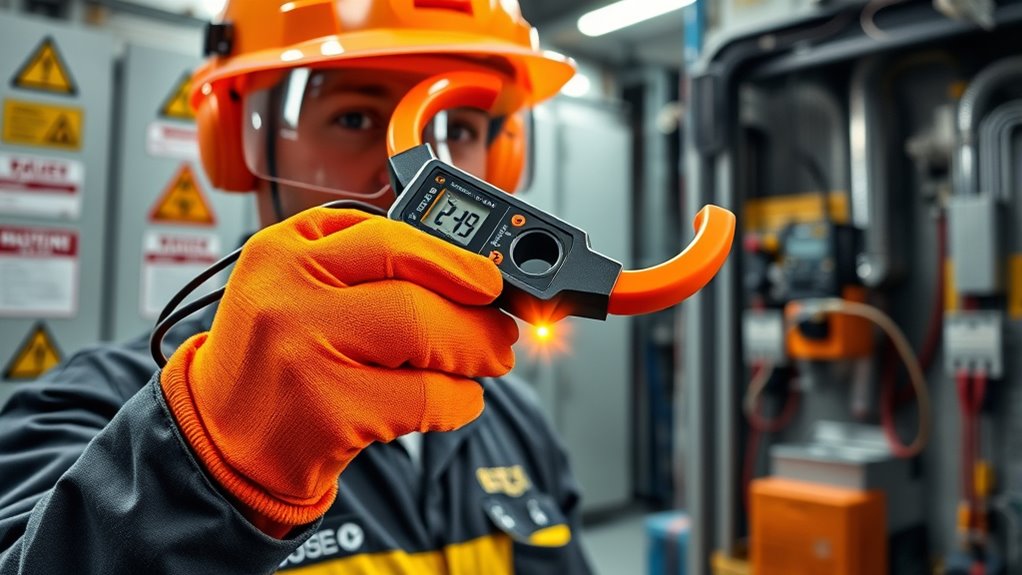
To guarantee safe operation with a clamp meter, you must always follow proper safety protocols, especially when working around live electrical circuits. Always wear personal protective equipment such as insulated gloves and safety glasses to protect against shocks and arc flashes. Before use, inspect the clamp meter for damage or defects. Follow electrical safety procedures by de-energizing circuits when possible and ensuring your hands and tools are dry. Keep a safe distance from energized parts and avoid touching conductive parts while measuring. Use the correct settings on your clamp meter for different measurements. Never bypass safety features or take shortcuts, and always stay alert. Prioritize safety at all times to prevent accidents and ensure accurate readings. Incorporating industry transformations like AI automation can further enhance safety protocols and operational efficiency.
Maintenance and Troubleshooting
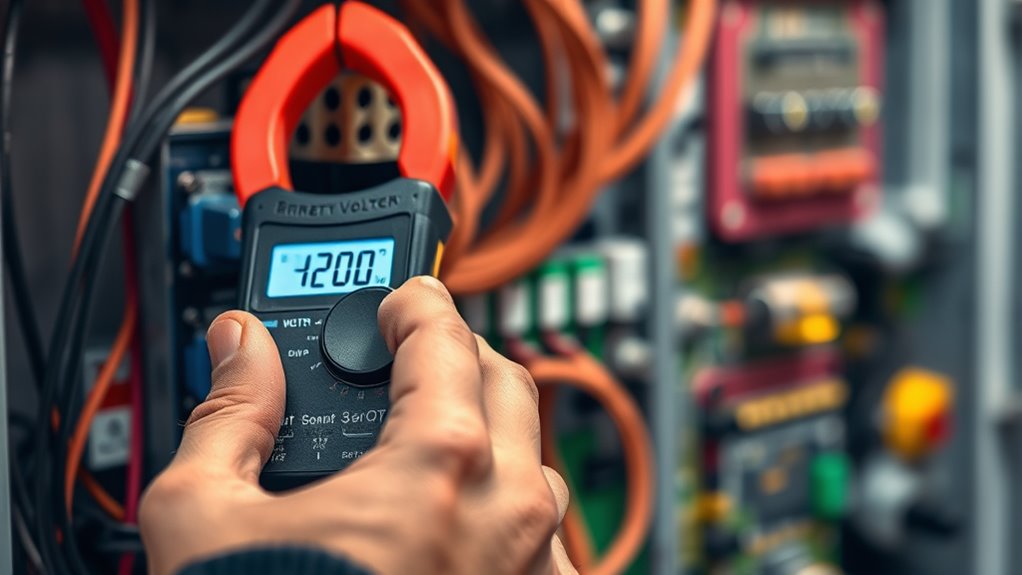
Regular maintenance of your clamp meter guarantees it stays accurate and reliable over time. Historically, clamp meters have been essential in electrical troubleshooting and maintenance, so ensuring their precision is crucial. To keep it in top shape, perform regular calibration procedures, which help verify its accuracy against known standards. If you notice inconsistent readings or suspect damage, troubleshoot by inspecting the clamps, leads, and display for wear or dirt. Replace damaged parts promptly. Calibration procedures can be done using a known current source or professional calibration services. Proper maintenance extends your device’s lifespan and maintains measurement integrity, preventing costly errors. Staying vigilant with routine checks ensures your clamp meter remains a dependable tool for all your electrical testing needs. Additionally, understanding measurement accuracy and how it can be affected by external factors helps ensure reliable readings over time.
Frequently Asked Questions
Can Clamp Meters Measure Voltage Directly?
Clamp meters can’t measure voltage directly, so you need to use different settings or tools for that. When working with electrical systems, always follow safety precautions to avoid shocks or injuries. Before using your clamp meter, verify it’s properly calibrated according to the manufacturer’s calibration procedures for accurate readings. Remember, safety and proper calibration are key to reliable measurements, especially when switching between measuring current and voltage.
Are Clamp Meters Suitable for Measuring DC Current?
You might wonder if clamp meters are suitable for measuring DC current. The answer is yes, but only if your clamp meter specifically supports DC measurement, as most are designed for AC. Always follow safety precautions, including wearing proper protective gear and ensuring the meter is properly rated for DC. This way, you can safely perform accurate DC measurement without risking damage to the device or yourself.
How Accurate Are Clamp Meter Readings?
Accuracy is the compass guiding your clamp meter readings, but like all tools, it has its limits. You might think you’re measuring precisely, yet measurement limitations and proper calibration procedures influence results. Regular calibration ensures trusted accuracy, while ignoring calibration can turn your readings into a game of chance. So, trust your clamp meter’s readings, but remember, even the sharpest needle is only as good as the calibration behind it.
What Is the Maximum Current a Clamp Meter Can Measure?
The maximum current a clamp meter can measure depends on its current limits and measurement range. Most standard models can handle currents up to 600 amps, while some heavy-duty meters measure up to 2000 amps or more. Always check the specifications before use to avoid overloading the device. Keep in mind that exceeding the current limits can damage your clamp meter and lead to inaccurate readings.
Can Clamp Meters Be Used Underwater?
Sure, you might think clamp meters are waterproof since they’re so handy, but don’t be fooled. Their waterproof features are limited, and you shouldn’t use them underwater. Environmental limitations mean they’re designed for dry or mildly damp conditions only. Water, especially submerged, can damage the device or cause inaccurate readings. Always check the manufacturer’s specifications—your clamp meter isn’t a waterproof gadget and isn’t meant for underwater use.
Conclusion
Mastering your clamp meter is like tuning a finely crafted instrument—you’ll get better with practice. By understanding its functions, choosing the right tool, and following safety tips, you’ll confidently navigate electrical measurements. Remember, proper preparation and maintenance keep your tool working smoothly, like a well-oiled machine. With each use, you’ll build expertise, turning complex readings into simple insights—your trusty compass in the world of electricity. Keep practicing, and let your skills shine bright.