
To manage cords and hoses effectively, keep them organized with hooks, reels, or straps to prevent tangling and damage. Store hoses on wall-mounted reels or retractable systems to avoid kinks and wear, while labeling and coiling cords neatly to save space and reduce hazards. Regularly inspect and maintain your cords and hoses to guarantee safety and longevity. Keep exploring tips to improve your workspace organization even further.
Key Takeaways
- Use wall-mounted hooks, reels, or velcro straps to keep cords and hoses neatly coiled and off the floor.
- Label cords for quick identification and easier management during projects.
- Store hoses on retractable reels or wall-mounted systems to prevent kinks and damage.
- Regularly inspect and repair damaged cords and hoses to ensure safety and longevity.
- Maintain an organized workspace by routinely reviewing and reorganizing storage solutions.
Have you ever tripped over a tangled cord or struggled to find the right hose in your workshop? If so, you’re not alone. Managing cords and hoses can quickly turn into a frustrating task if you don’t have a system in place. The key to a safer, more efficient workspace starts with good cord organization and effective hose storage. When cords and hoses are neatly stored, you save time, reduce hazards, and prolong their lifespan.
Neatly organized cords and hoses save time, prevent hazards, and extend their lifespan.
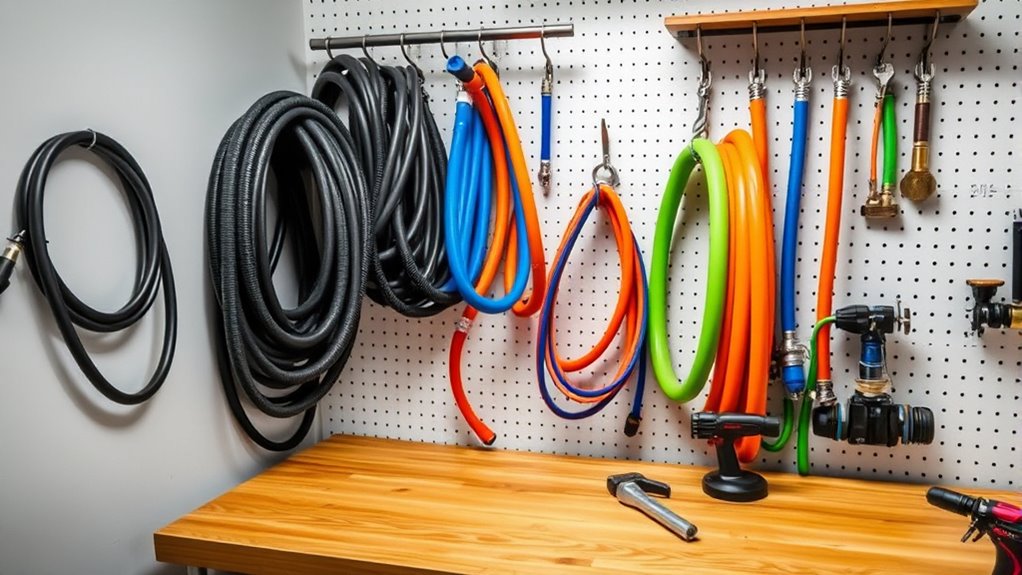
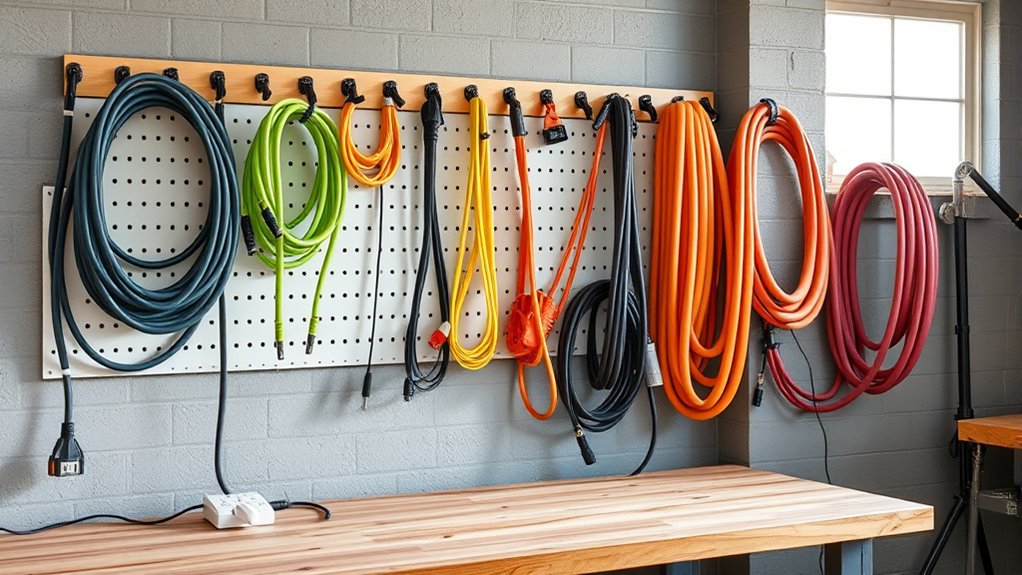
Start by evaluating your current setup. Are your cords sprawling across the floor, creating tripping hazards? Do your hoses kink or get damaged because they’re crammed into a cluttered corner? Once you identify the problem areas, you can implement practical solutions. For cord organization, consider using cable reels, hooks, or velcro straps to keep cords off the ground and neatly coiled. Installing wall-mounted hooks or pegboards makes it easy to hang cords when they’re not in use, preventing tangles and damage. Labeling cords can also help you quickly identify the right one for specific tools or projects, reducing unnecessary unplugging and replugging.
Hose storage benefits just as much from thoughtful planning. Use wall-mounted hose reels or retractable hose systems to keep hoses off the floor and prevent kinks. These devices not only make it easier to unwind and rewind hoses but also protect them from wear and tear. When hoses are stored properly, they last longer and perform better. Make sure to choose a storage solution that matches your workspace size and hose length; compact reels work well for smaller workshops, while larger, more robust systems suit expansive setups.
Routine maintenance is essential to keep your cords and hoses in top shape. Regularly inspect for frays, cracks, or damage. When you notice a problem, repair or replace the item promptly. Cleaning cords and hoses after heavy use prevents dirt and debris from causing deterioration. Always coil cords and hoses carefully—avoid tight bends or kinks that could weaken the material over time. Proper storage not only prolongs their life but also keeps your workspace safer and more organized. Incorporating cord management strategies similar to those recommended for other tools can further enhance your workshop’s safety and efficiency.
Incorporating proper cord organization and hose storage into your workshop routine might take a little effort initially, but the benefits are undeniable. You’ll spend less time untangling and searching, and you’ll create a cleaner, safer environment. With everything stored neatly and systematically, your tools and supplies will be easier to access, and you’ll reduce the risk of accidents. Managing cords and hoses isn’t just about tidiness—it’s about creating a more productive, safer workspace where you can focus on what matters most: your projects.
Frequently Asked Questions
What Are the Best Materials for Durable Cord Organizers?
You should choose durable cord organizers made from high-quality materials like nylon or silicone. These materials excel at cord retention, preventing tangles and slips, while also maintaining hose flexibility. Nylon is tough and resistant to wear, making it ideal for heavy-duty use. Silicone offers excellent flexibility and durability, perfect for hoses that need to bend without cracking. Both options keep your cords and hoses organized and protected efficiently.
How Often Should Workshop Cords and Hoses Be Inspected?
You should inspect your cords and hoses at least once a month to guarantee safety and proper function. During cord inspection, look for fraying, cuts, or exposed wires, and replace damaged cords immediately. For hose maintenance, check for leaks, cracks, or worn-out fittings. Regular inspections prevent accidents and prolong the lifespan of your tools. Incorporate these checks into your routine to keep your workshop safe and efficient.
Are There Safety Standards for Cord Management in Workshops?
Managing cords in your workshop is like weaving safety into every task, and yes, there are safety standards you must follow. OSHA and NFPA set guidelines for proper cord management to prevent tripping hazards and electrical accidents. You should guarantee cords are organized, not frayed, and kept away from water. Adhering to these standards keeps your workspace safe and compliant, reducing risks for everyone.
How Can I Prevent Tripping Hazards From Cords and Hoses?
To prevent tripping hazards, focus on trip hazard mitigation by using effective cord routing techniques. Keep cords and hoses close to walls or under workbenches, and secure loose cords with cable clips or cord covers. Regularly inspect and replace damaged cords, and avoid creating tight loops or tangles. By organizing and securing cords properly, you create a safer workspace and reduce the risk of accidents.
What Are Eco-Friendly Options for Disposing of Old Cords and Hoses?
Think of old cords and hoses as treasures needing proper disposal. You can participate in recycling programs that specially handle electronic and rubber waste, ensuring they don’t clog landfills. Opt for biodegradable alternatives made from natural materials that break down more quickly and safely. By choosing these eco-friendly options, you help protect the environment, turning waste into a beneficial resource instead of harmful clutter in our ecosystems.
Conclusion
By keeping cords and hoses organized, you not only improve safety and efficiency but also discover that a tidy workspace naturally feels more inviting. It’s no coincidence that when everything is in its place, your tasks become smoother and more enjoyable. So, take a moment to tidy up—you might just find that the simple act of managing cords and hoses transforms your entire workshop experience, making it safer, cleaner, and more inspiring every day.