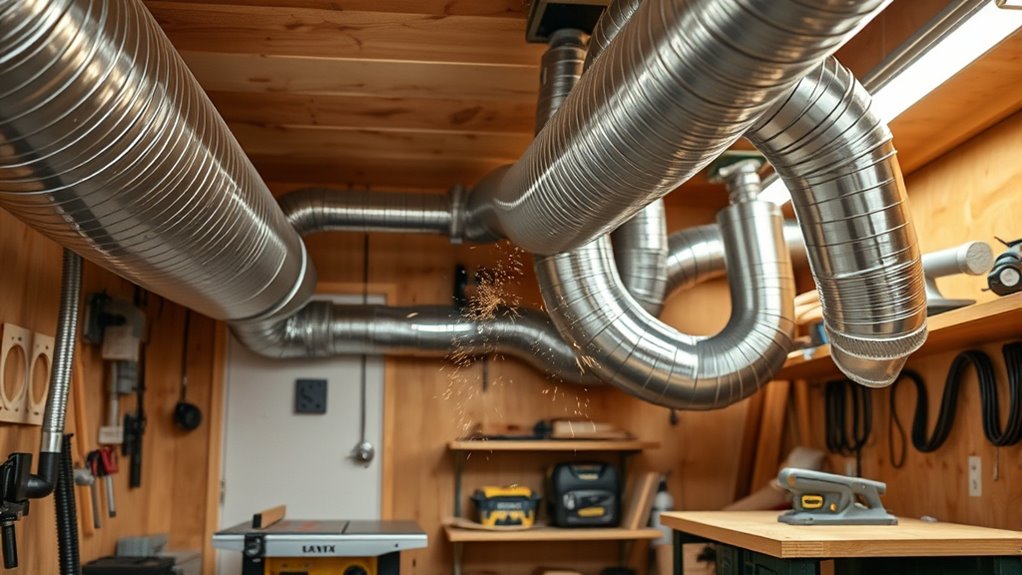

For small workshops, choose portable dust collectors or upgraded shop vacuums with high-efficiency filters to keep dust under control. Guarantee proper ducting and good airflow design to maximize efficiency. Regularly check and clean filters and hoses to maintain performance. Always wear PPE during cleanup, and follow safety protocols for dust disposal. Implementing these solutions can greatly improve air quality and protect your tools—discover more ways to optimize your workspace safety and cleanliness as you continue.
Key Takeaways
- Choose portable dust collectors for flexibility and space-saving in small workshops.
- Opt for high-efficiency filters, like HEPA, to effectively capture fine dust particles.
- Regularly maintain and clean filters and hoses to ensure optimal dust collection performance.
- Design a simple duct system to direct dust efficiently from tools to the collection unit.
- Use personal protective equipment and establish safety protocols during dust disposal and cleanup.
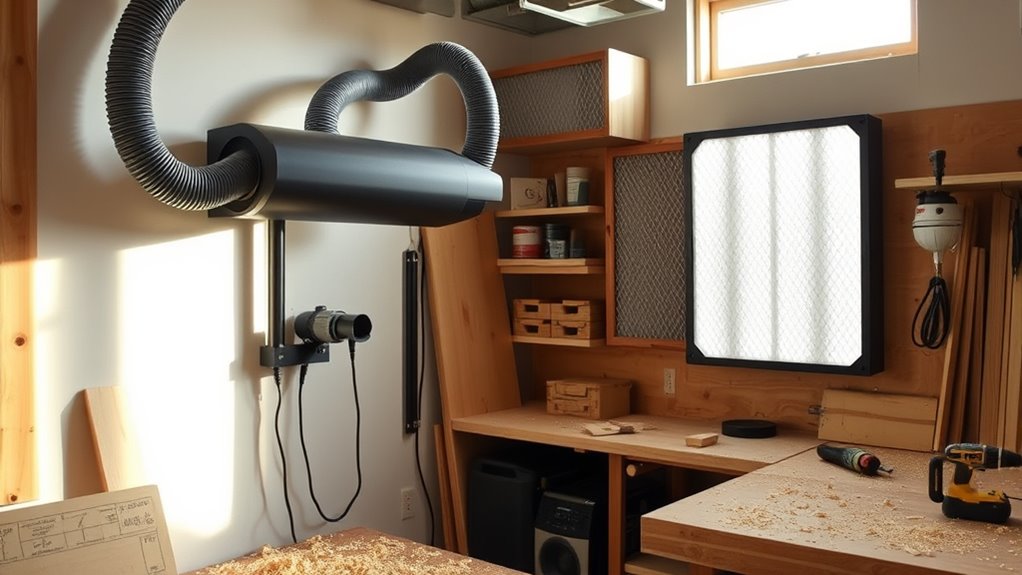
Dust collection solutions are vital for maintaining a clean and safe workspace, especially in woodworking shops, manufacturing plants, and other environments where airborne particles can pose health risks. When working with wood, metal, or other materials, dust and debris become inevitable, and without proper management, they can quickly accumulate, creating hazards for you and anyone else in the space. Implementing an effective dust collection system improves air quality and helps you stay compliant with safety regulations. Proper air filtration plays a key role in this process, capturing fine particles before they can circulate through the air, reducing health risks like respiratory issues. It’s not just about cleanliness; it’s about safeguarding your health, your tools, and your environment.
Dust collection systems are essential for safety, air quality, and tool longevity in workshops and industrial environments.
You need to prioritize air filtration as part of your overall safety protocols. Good air filtration systems trap dust at the source or immediately after it becomes airborne, preventing it from settling on surfaces or being inhaled. HEPA filters, for example, are highly effective at capturing tiny particles, including those that can penetrate deep into your lungs. When selecting your dust collection setup, consider the size of your workspace and the volume of dust generated. Smaller workshops benefit from portable units that can be easily moved around, while larger shops might require more thorough, central systems that connect to multiple machines. Whichever system you choose, ensure it’s properly maintained and regularly checked for efficiency. Optimizing airflow and ensuring proper duct design can significantly improve dust collection efficiency as well.
In addition to investing in quality equipment, you should establish clear safety protocols. Always wear personal protective equipment, such as masks and goggles, especially when working with or cleaning out dust collection bins. Make it a habit to inspect and clean filters and hoses routinely, ensuring they’re free of blockages and functioning effectively. Proper training on how to operate and maintain your dust collection system is essential for safety and performance. You should also set up designated areas for dust disposal, adhering to local regulations and environmental standards. This minimizes the risk of dust becoming airborne during cleanup or disposal activities.
Integrating a well-designed air filtration system with strict safety protocols creates a safer, healthier workspace. It reduces the risk of respiratory problems, fire hazards, and equipment damage caused by dust buildup. By staying proactive with your dust management efforts, you’re not only protecting your health but also extending the lifespan of your tools and improving overall productivity. Remember, dust collection isn’t just an accessory—it’s a fundamental part of a complete safety strategy that keeps your workshop clean, safe, and efficient. Properly designed dust collection systems, especially those with effective filtration, can make a significant difference in maintaining a healthy environment.
Frequently Asked Questions
What Is the Ideal Size for a Small Workshop Dust Collector?
You should opt for a small workshop dust collector with around 1.5 to 3 horsepower, providing 400-600 CFM airflow. This size balances power and efficiency, helping you maintain ideal airflow. Regular filter maintenance ensures consistent performance, preventing clogs that reduce airflow. Investing in a unit that’s easy to access for filter cleaning helps you stay on top of filter maintenance, guaranteeing your dust collector works effectively and keeps your workspace clean.
How Often Should I Replace or Clean Dust Filters?
You should replace or clean your dust filters based on their filter lifespan, typically every 1 to 3 months, depending on usage. Establish a maintenance schedule to inspect filters regularly for buildup or damage. If you notice reduced airflow or increased dust in your workshop, it’s time for a cleaning or replacement. Consistent maintenance guarantees ideal dust collection, improves air quality, and extends your filter’s lifespan.
Can Portable Dust Collectors Effectively Handle Multiple Tools?
Sure, your portable dust collector can handle multiple tools—if you enjoy constant noise and barely enough portable capacity to impress your neighbors. In reality, they often struggle with simultaneous use, leading to clogged filters and reduced efficiency. You’ll find that noise levels spike and dust collection diminishes quickly. For serious woodworking, investing in a more robust system guarantees safety, cleaner air, and less frustration when juggling multiple tools.
What Safety Measures Are Recommended for Dust Collection Systems?
You should guarantee your dust collection system includes proper air filtration to maintain air quality and reduce airborne dust. Regularly clean and replace filters to prevent buildup that could pose fire hazards. Install a fire extinguisher nearby and keep the area free of combustible materials. Use spark-resistant tools and avoid smoking or open flames near your system. These safety measures help protect you from fire hazards and promote a safer workshop environment.
Are There Eco-Friendly or Low-Emission Dust Collection Options Available?
Yes, eco-friendly dust collection options are available. You can choose recyclable filters that reduce waste and biodegradable dust bags that decompose naturally, making your workshop greener. While traditional systems focus on efficiency, these eco-conscious choices offer a sustainable alternative. Imagine cleaning your workspace with systems that protect the environment, blending practicality with responsibility. Embrace these low-emission options to minimize your ecological footprint without sacrificing performance.
Conclusion
In your small workshop, choosing the right dust collection system is like planting a seed for safety and cleanliness. Remember, a clean workspace isn’t just tidy—it’s a haven for creativity and productivity. Don’t let dust be the silent thief of your craftsmanship. By investing in the right solution, you’re not just protecting your health—you’re building a foundation for success. After all, a cleaner workshop is a workshop where your talents can truly shine.