When tackling DIY projects, always wear essential safety gear like safety glasses or goggles to protect your eyes from debris, hearing protection to prevent damage from loud tools, gloves for hand safety, and sturdy clothing that keeps loose items away from machinery. Keep long hair tied back and wear proper footwear like work boots to avoid accidents. Prioritizing safety gear keeps you protected and confident as you work—continue exploring to learn more safety tips.
Key Takeaways
- Always wear safety glasses or goggles to protect eyes from debris and dust.
- Use hearing protection like earplugs or earmuffs when operating loud tools.
- Wear gloves suitable for the task to shield hands from sharp edges and splinters.
- Dress in proper, fitted clothing and tie back long hair to prevent entanglement.
- Keep your workspace well-lit, clean, and organized to reduce hazards and improve safety.
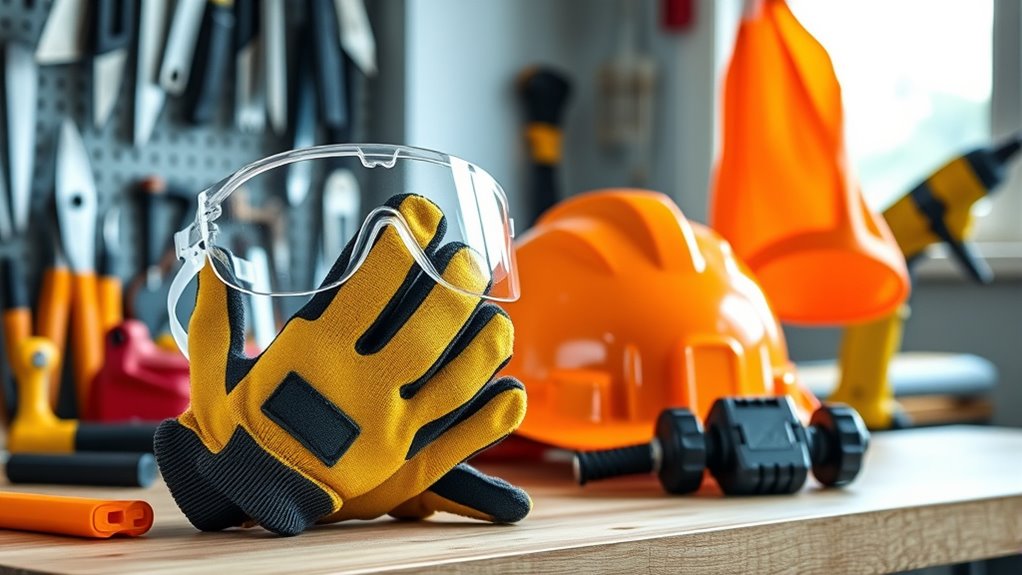
Starting on DIY projects can be rewarding, but safety should always come first. Before you pick up any tools or jump into your task, make sure you’re equipped with the right personal protective equipment (PPE). PPE acts as your first line of defense against potential injuries, whether you’re cutting, sanding, or assembling. Safety glasses or goggles are essential to protect your eyes from flying debris, dust, or splinters. Hearing protection, like earplugs or earmuffs, is vital when using loud power tools to prevent long-term hearing damage. Gloves can shield your hands from sharp edges, splinters, and minor cuts, but be cautious—some tools require a firm grip and may be unsafe to use with gloves, so always check the manufacturer’s recommendations.
Investing in PPE isn’t just about wearing the right gear; it’s about understanding tool safety tips that can keep accidents at bay. For example, always inspect your tools before use. Loose wires, worn blades, or damaged cords can lead to mishaps. Keep your workspace clean and free of clutter to avoid trips and falls, and ensure your work area is well-lit. When operating power tools, hold them firmly with both hands and follow the manufacturer’s instructions carefully. Never bypass safety features like blade guards or switches, as these are designed to protect you from harm. Disconnect power tools from the outlet when changing blades or bits, and unplug them when not in use. This simple tip prevents accidental startups, which are common causes of injuries.
Another key safety tip is to stay focused and avoid distractions. Multi-tasking or rushing through a project increases the risk of mistakes and accidents. Take your time, and don’t force tools or materials if they’re not cooperating. If you’re unsure about a technique or tool, look up tutorials or ask someone experienced for guidance. Proper training and adherence to safety tips can make all the difference in avoiding injuries.
Additionally, understanding the horsepower of electric dirt bikes can help you appreciate the importance of safety gear when operating powerful equipment. Proper safety measures are crucial regardless of the project or tool involved.
Finally, always wear appropriate clothing—avoid loose sleeves or jewelry that could get caught in machinery. Long hair should be tied back, and sturdy work boots should be worn to protect your feet. Remember, safety gear isn’t just an accessory; it’s an essential part of your DIY toolkit. By prioritizing PPE and following tool safety tips, you reduce your chances of injury and ensure your project is successful. Keep safety at the forefront, and enjoy your DIY journey with confidence and peace of mind.
Frequently Asked Questions
How Do I Choose the Right Safety Gear for My Specific Project?
When choosing safety gear for your project, start by identifying the specific hazards involved, like sharp tools or fumes. Consider safety gear compatibility to make certain it fits well and provides proper protection. Always pick gear designed for your project’s risks, such as goggles for debris or gloves for chemicals. This way, you stay safe and comfortable, reducing injury risks and making your DIY experience both effective and enjoyable.
Are There Affordable Safety Gear Options for Beginners?
You’re wondering if there are budget options for beginner safety gear, and the answer is yes. You can find affordable safety gear like safety glasses, gloves, and masks at hardware stores or online, often designed for beginners. Look for basic, reliable options that meet safety standards without breaking the bank. Prioritizing essential gear guarantees your safety while keeping costs low, making your DIY projects safer and more enjoyable.
How Often Should I Replace or Upgrade My Safety Equipment?
You should regularly review your safety gear’s maintenance schedules and replace or upgrade items as needed. Check for wear and tear, and follow manufacturer guidelines on warranties—they often specify lifespan or conditions that require replacement. For items like helmets or gloves, replace them immediately if damaged. Staying proactive guarantees your safety gear remains effective, so don’t delay upgrades when warranties or maintenance cues indicate it’s time.
Can Safety Gear Be Reused or Cleaned After Use?
Did you know that improperly cleaned safety gear can harbor bacteria or chemicals? After use, you should follow cleaning tips specific to each item—like washing gloves with soap and water or disinfecting goggles with an alcohol-based cleaner. Reuse guidelines suggest inspecting gear for damage before reuse, ensuring it remains effective. Proper cleaning not only extends the life of your safety equipment but also keeps you protected during every project.
What Safety Gear Is Necessary for Electrical DIY Projects?
For electrical DIY projects, you need safety gear like insulated gloves and eye protection to prevent shocks and sparks. Always turn off the circuit breaker and verify the power is off before working. Use tools with proper insulation techniques, and understand different circuit breaker types to guarantee safety. This gear helps protect you from electric shocks and accidental short circuits, making your project safer and more manageable.
Conclusion
Remember, wearing the right safety gear can reduce injuries by up to 70%. Whether you’re sawing, sanding, or handling chemicals, always prioritize your safety. Investing in quality gloves, goggles, and masks not only protects you but also keeps your projects moving smoothly. Don’t take shortcuts—your safety gear is your best defense. Stay protected, stay confident, and enjoy your DIY projects with peace of mind!