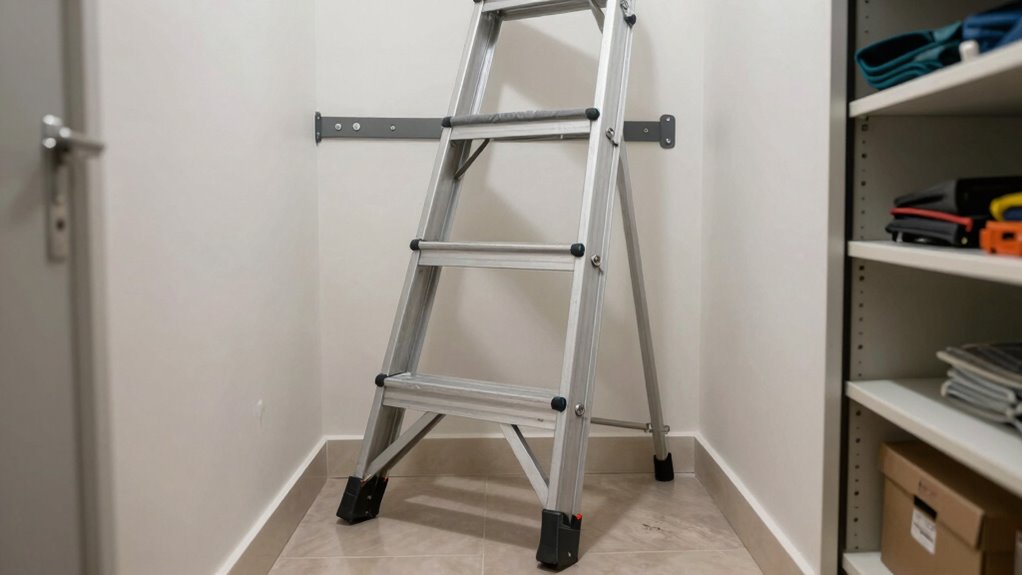

To store ladders safely in tight spaces, focus on proper weight distribution and secure placement. Keep heavier ladders on sturdy hooks or wall brackets, and store lighter ones horizontally if possible. Always secure ladders to prevent slipping or falling, especially in cramped areas. Avoid clutter around your storage zone to reduce tripping hazards. Proper handling and storage techniques help prevent accidents and extend your ladder’s lifespan. Stay with us to uncover the little-known rule that can make all the difference.
Key Takeaways
- Always secure ladders horizontally or with appropriate wall brackets to prevent slipping or falling in tight storage areas.
- Store ladders at a safe angle when vertical, ensuring they are well-secured to avoid tipping.
- Choose lighter ladders that meet safety standards for easier handling in confined spaces.
- Regularly inspect and maintain ladders to prevent damage that could compromise safety during storage.
- Keep storage areas clutter-free to reduce tripping hazards and facilitate safe ladder access and handling.

Storing ladders safely in tight spaces can be challenging, but with the right approach, you can prevent accidents and save space. One of the most overlooked aspects of ladder storage safety is understanding how ladder weight impacts stability and ease of handling. Heavy ladders may seem sturdy, but they can be difficult to maneuver into small storage areas, increasing the risk of dropping or damaging the ladder, or even injuring yourself. Conversely, lightweight ladders are easier to store, but they often lack the durability needed for safety. Striking a balance between ladder weight and storage safety is essential. You want a ladder that’s manageable to handle but also stable enough to prevent tipping or collapsing when in use or stored.
The key to safer storage in tight spaces is to choose a ladder that matches your specific needs and the space available. When you pick a ladder, consider its weight and how it will be stored. If your storage area is limited, look for models with a lighter weight but still meet safety standards. This makes lifting and positioning easier, reducing strain and the chance of accidents. Proper storage safety doesn’t stop at choosing the right ladder; it also involves how you store it. Always secure your ladder when stored in tight spaces, especially if it’s leaning against a wall or stored vertically. Use wall brackets or hooks designed for ladder storage, which keep the ladder stable and prevent it from falling unexpectedly.
Moreover, the little-known rule for safer ladder storage in tight spaces is to always store a ladder horizontally if space allows. Horizontal storage prevents the ladder from falling or slipping and minimizes strain on the ladder’s rungs or rails. When stored vertically, ensure the ladder is well-secured and not leaning at a dangerous angle, which can cause instability. Remember, the ladder’s weight plays a role here; if it’s heavy, you’ll want to avoid lifting or repositioning it frequently, so secure storage becomes even more critical. Additionally, understanding ladder weight and how it affects safety can help you make better storage decisions. Regularly checking the ladder’s construction can also reveal potential safety concerns before they become problematic. Incorporating proper storage techniques into your routine ensures long-term safety and effectiveness. Furthermore, being aware of the storage environment can help prevent damage caused by humidity or temperature fluctuations, extending your ladder’s lifespan. It’s also beneficial to consider how weight distribution impacts the overall stability during storage and handling.
Finally, always keep the storage area clear of clutter to reduce tripping hazards and ensure easy access. Regularly inspect your stored ladder for any damage or wear, especially if it’s stored in a cramped space where damage can go unnoticed. By understanding how ladder weight influences storage safety and following proper storage techniques, you can keep your workspace safer and extend the life of your ladder. Taking these precautions helps prevent accidents and makes handling your ladder in tight spaces much more manageable.
ladder wall brackets for storage
As an affiliate, we earn on qualifying purchases.
As an affiliate, we earn on qualifying purchases.
Frequently Asked Questions
What Types of Ladders Are Safest for Tight Storage?
You should choose lightweight, collapsible step ladders or extension ladders with locking mechanisms for tight storage. These types prioritize ladder stability, making them safer to store in small spaces. Always guarantee they’re stored securely to prevent falls or damage. Proper storage safety involves keeping ladders in a dry, level area, and avoiding leaning or stacking them improperly. This way, you minimize risks and maintain ideal stability whenever you need to use your ladder.
How Often Should I Inspect Stored Ladders?
You should inspect your stored ladders at least every three to six months, depending on ladder material and storage location. Metal ladders in damp basements need more frequent checks, while fiberglass or aluminum ones stored in dry areas are less vulnerable. Regular inspections catch rust, cracks, or loose rungs early, ensuring safe use later. Think of inspections as a safeguard, protecting you from potential accidents caused by unnoticed damage.
Are There Specific Tools to Help With Ladder Storage?
Yes, there are specific tools to help with ladder storage. You can use storage accessories like wall mounts, hooks, or racks designed for space-saving solutions. These tools keep your ladder secure and organized, especially in tight spaces. By investing in the right storage accessories, you guarantee your ladder stays in good condition, easily accessible, and safely stored, reducing the risk of accidents and maximizing your available storage area.
How Do Weather Conditions Affect Ladder Storage Safety?
Weather impact markedly influences ladder storage safety. Rain, snow, and humidity can cause rust, weaken materials, and make ladders slippery, increasing accident risks. To guarantee safety, you should follow storage precautions like keeping ladders in a dry, sheltered place, off the ground, and protected from the elements. Regularly inspect your ladders for damage caused by weather, and store them properly to maintain their integrity and safety.
Can DIY Modifications Improve Ladder Storage Safety?
Yes, DIY modifications can boost ladder storage safety. Think of it like adding stabilizers to a bike—improving ladder stability and preventing accidents. You can install wall hooks, anti-slip pads, or custom racks to enhance storage organization, making your ladder secure and easy to access. These simple tweaks reduce the risk of falls and damage, ensuring your ladder stays safe in tight spaces and during use.
lightweight safety ladders
As an affiliate, we earn on qualifying purchases.
As an affiliate, we earn on qualifying purchases.
Conclusion
By following this simple rule, you’ll keep your ladder secure and your space safer—think of it as the secret thread that weaves safety into every corner of your workspace. When your ladder is stored properly, it’s like a silent guardian, always ready but never in the way. Remember, a well-placed ladder isn’t just stored; it’s protected, ensuring your next project begins on a foundation of safety and confidence.
heavy-duty ladder hooks
As an affiliate, we earn on qualifying purchases.
As an affiliate, we earn on qualifying purchases.
ladder storage safety accessories
As an affiliate, we earn on qualifying purchases.
As an affiliate, we earn on qualifying purchases.