

To organize your painting and finishing station, assess your available space and assign specific zones for tasks like mixing, drying, and storing supplies. Use labeled containers, shelves, and wall racks to keep brushes, paints, and tools within easy reach. Maintain safety by ensuring proper ventilation, storing hazardous materials safely, and keeping pathways clear. Keeping your workspace tidy boosts efficiency and safety; stick with it, and you’ll discover how to create a well-structured setup for professional results.
Key Takeaways
- Designate specific zones for painting, drying, mixing, and storage to streamline workflow.
- Use labeled containers, shelves, and wall-mounted racks to organize tools and supplies efficiently.
- Ensure proper ventilation and safety equipment are in place to maintain a safe working environment.
- Store paints, solvents, and hazardous materials in airtight containers away from heat sources.
- Maintain clear pathways, regular cleanliness, and safety checks to promote organization and safety.
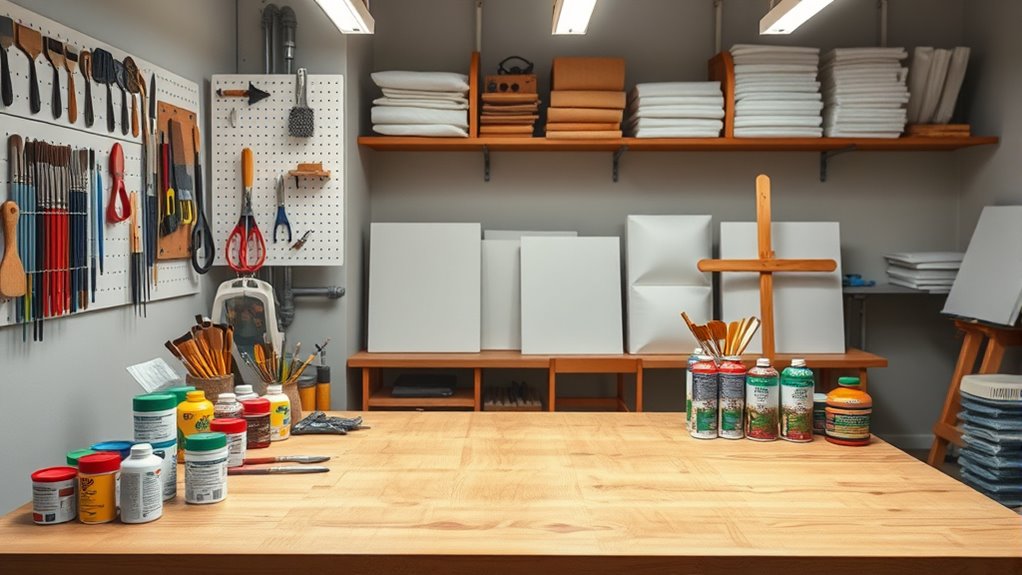
Setting up an efficient painting and finishing station is crucial for achieving professional results and maintaining safety. When you organize your workspace properly, you streamline your workflow, reduce clutter, and minimize the risk of accidents. A key part of this organization involves implementing effective storage solutions and adhering to safety protocols. These elements guarantee that everything you need is within reach and that your workspace remains safe throughout your project.
Start by evaluating your space and identifying areas for storage. You want storage solutions that keep your paints, brushes, rollers, and finishing tools organized and protected. Use labeled containers, shelves, and drawers to categorize supplies by type or project stage. For example, invest in stackable bins for small items like brushes and screws, and install wall-mounted racks for larger tools. These solutions help you quickly locate what you need, avoid unnecessary movement, and prevent spills or damage. Additionally, consider using airtight containers for solvents and paints to prevent fumes from escaping and to prolong shelf life. Incorporating proper ventilation is essential for safe and comfortable working conditions, especially when working with solvents or paints with strong odors.
Organize your supplies with labeled containers, shelves, and airtight storage for paints and tools.
Safety protocols are equally crucial. Before you begin, ensure your station is well-ventilated to prevent inhalation of fumes, especially when working with solvents or paints with strong odors. Keep fire extinguishers nearby and make sure all electrical outlets and tools are in good condition to prevent sparks or short circuits. Wear appropriate personal protective equipment, such as masks, gloves, and goggles, to shield yourself from harmful chemicals and splatters. Establish clear pathways within your workspace to avoid trips and falls, and keep hazardous materials stored away from heat sources or open flames. Regularly inspect your area for spills or debris, and clean up promptly to maintain a safe environment.
Implementing a layout that promotes safety and efficiency involves designating specific zones within your station. Set aside a dedicated area for mixing and thinning paints, separate from your drying or storage zones. Keep waste disposal containers nearby for empty cans, used brushes, and solvent-soaked rags, but ensure they’re sealed and stored away from ignition sources. Organize your tools so that brushes, rollers, and tapes are stored upright or in designated containers, preventing cross-contamination and damage. This systematic approach reduces clutter and enhances your focus, making your work more precise and less stressful.
Frequently Asked Questions
What Safety Precautions Should I Take at the Station?
You should always wear personal protective equipment like gloves, masks, and safety goggles to shield yourself from fumes and splashes. Make sure your ventilation systems are functioning properly to reduce inhalation of harmful solvents. Keep your workspace clean and free of debris, and work in well-ventilated areas. Regularly check your safety gear and ventilation, and follow all safety guidelines to prevent accidents and health issues at your station.
How Do I Choose the Right Lighting for Painting Areas?
You should prioritize natural light and task lighting when choosing lighting for your painting area. Natural light provides true color perception and reduces eye strain, so position your station near windows if possible. Add bright, focused task lights with adjustable brightness for detailed work. Use daylight bulbs for consistent color accuracy. Combining natural light with well-placed task lighting ensures ideal visibility, making your painting process more precise and comfortable.
What Are the Best Storage Solutions for Paints and Brushes?
A well-organized space is like a neatly packed toolbox. You should use a sturdy paint rack to keep your paints sorted by color and type, making them easy to find. For brushes, a dedicated brush holder keeps them upright and prevents damage. Consider adding small containers for brushes and accessories, and use labels to identify everything. This setup guarantees your supplies stay tidy and accessible, boosting your efficiency.
How Can I Prevent Dust From Settling on Fresh Paint?
To prevent dust from settling on fresh paint, you should implement dust control measures like covering nearby surfaces and sealing vents. Keep the area clean and free of debris, and use a clean, lint-free cloth for surface preparation before painting. Consider using plastic sheeting or a temporary enclosure to shield your work. These steps help guarantee a smooth finish by reducing airborne dust and maintaining proper surface preparation.
What Are the Environmental Considerations for Disposal of Paint?
Imagine your paint waste as a river flowing toward the environment—careful disposal makes it possible to keep it from turning toxic. You should always opt for eco-friendly disposal methods, like taking leftover paint to a certified recycling center or following local hazardous waste guidelines. This way, you prevent harmful chemicals from seeping into soil and water, protecting your community and the planet. Being responsible ensures your creative process leaves a positive mark.
Conclusion
By organizing your painting and finishing station, you turn chaos into a well-oiled machine. With everything in its place, you’ll work more efficiently, like a maestro conducting a symphony. Keep your tools accessible and your space tidy, and you’ll find your creativity flows smoother than ever. A clutter-free station is your secret weapon for flawless finishes and faster projects. So, take control today, and watch your craftsmanship shine brighter than ever before.