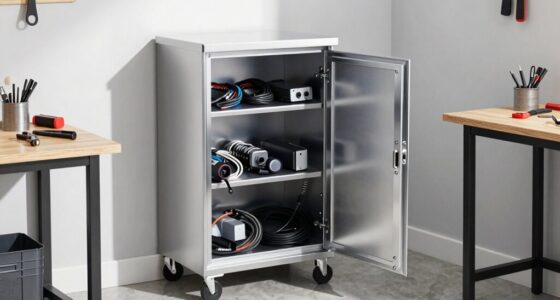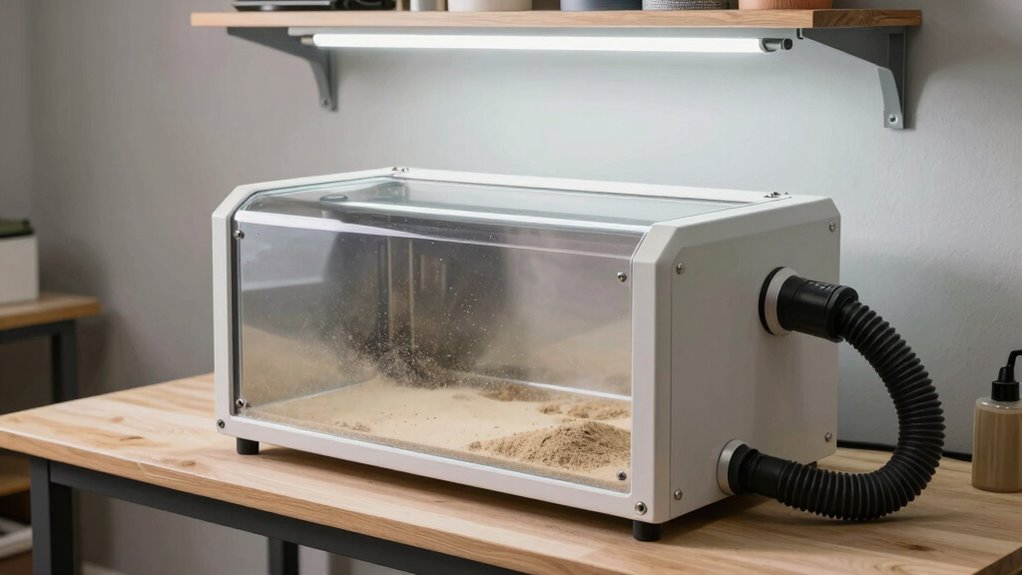

To set up a cleaner sanding station, position your dust collection system close to the sander and use flexible hoses to prevent airflow restrictions. Secure all connections tightly and make sure your filter can trap fine dust particles. Wear safety gear like respirators and goggles to protect yourself and keep your workspace well-ventilated with exhaust fans or open windows. Regularly empty dust containers and maintain your system for peak performance—continue to discover more tips for a safer, cleaner sanding environment.
Key Takeaways
- Position the dust collector close to the sander and secure all connections to prevent dust leaks.
- Use a high-quality, properly filtered dust collection system that captures fine particles at the source.
- Ensure workspace ventilation with exhaust fans or open windows to reduce airborne dust.
- Wear appropriate personal protective gear like respirators and safety goggles during sanding.
- Regularly empty dust containers and clean the workspace to maintain a dust-free environment.
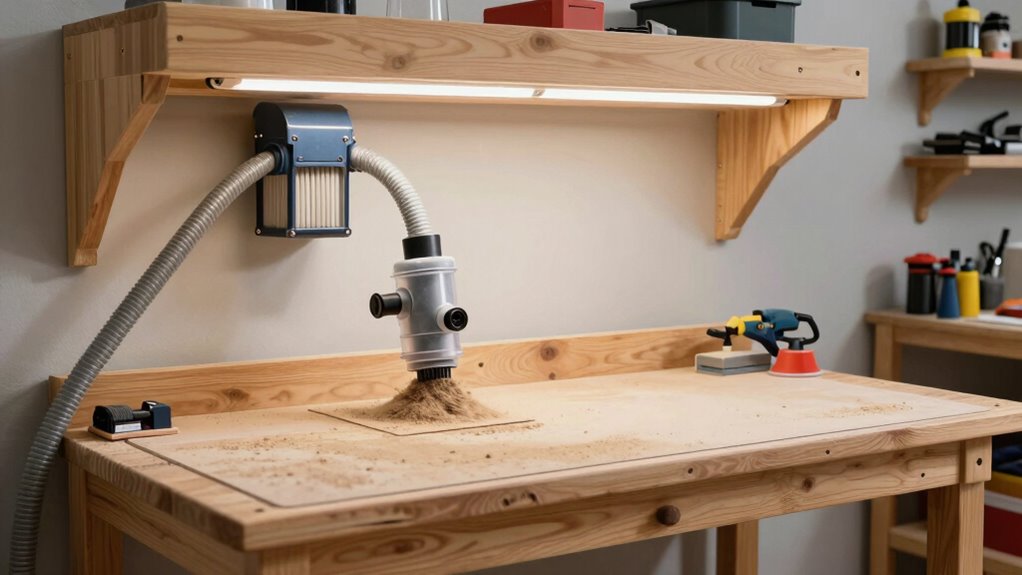
Creating a cleaner sanding station starts with understanding the importance of proper setup to keep your workspace tidy and your projects efficient. When you focus on reducing airborne dust, you not only improve the quality of your work but also protect your health. Dust collection systems are essential for capturing dust at the source, preventing it from floating around your workspace. Invest in a quality dust collector or attach shop vacuums directly to your sander to immediately suck up particles as you work. Proper dust collection minimizes the amount of airborne debris, making your environment safer and cleaner. Remember, no matter how effective your dust collection setup is, you should always wear the right safety gear. Respirators or dust masks help prevent inhaling fine dust particles that can irritate your lungs or cause long-term health issues. Safety glasses or goggles are equally important to shield your eyes from dust and splinters that might fly up during sanding.
To set up a more efficient and cleaner sanding station, start by positioning your dust collection system as close to your sander as possible. Use flexible hoses or ducts that don’t restrict airflow but are long enough to keep the collector out of your way. Secure all connections tightly to prevent dust from escaping through gaps, and ensure your dust collector has a proper filter to trap fine particles. You might also consider using a dust bag or container that’s easy to empty, so you’re not overwhelmed by dust buildup during prolonged sanding sessions. Keep your work area well-ventilated by opening windows or using exhaust fans, which help carry airborne dust away from your breathing zone. Additionally, selecting the right dust collection system can significantly improve your setup’s efficiency and effectiveness. An effective system will also help maintain a healthier environment by reducing airborne dust. Implementing proper air quality management practices in your workspace further enhances safety and cleanliness.
In addition to dust collection, adopting a systematic approach to sanding will keep dust levels low. Sand in short bursts and avoid continuous sanding for extended periods, which can generate excessive dust. Use the correct grit of sandpaper for your project, as finer grits produce less dust and a smoother finish. Position your workpiece on a stable, elevated surface or workbench to contain dust within a confined area. Regularly clean your workspace with a vacuum or damp cloth—never dry dust with a broom, as it can stir up airborne particles. Keep safety gear within reach and make it a habit to wear your mask, goggles, and gloves at all times. With thoughtful setup and proper safety measures, you’ll enjoy a cleaner, safer, and more productive sanding environment.
dust collection system for sander
As an affiliate, we earn on qualifying purchases.
As an affiliate, we earn on qualifying purchases.
Frequently Asked Questions
What Types of Dust Collection Systems Are Most Effective for Sanding?
The most effective dust collection systems for sanding combine dust containment with air filtration. You should look for systems that trap dust at the source, like shop vacuums with HEPA filters or dedicated dust extractors, to minimize airborne particles. Additionally, using high-efficiency air filtration units in your workspace helps remove residual dust from the air, ensuring cleaner air quality and safer sanding conditions.
How Can I Reduce Noise When Setting up My Sanding Station?
Did you know that noise from power tools can reach over 100 decibels, risking hearing damage? To reduce noise at your sanding station, focus on vibration reduction techniques and install soundproof enclosures around your equipment. These measures considerably dampen sound, making your workspace more comfortable. Using vibration-dampening mounts and sealing gaps in enclosures further minimizes noise transmission, creating a quieter, safer environment for your projects.
Are There Specific Tools That Produce Less Airborne Dust?
You should focus on dust suppression and tool selection to reduce airborne dust. Choose tools with built-in dust extraction features, like vacuum-compatible sanders, which actively capture dust at the source. Opt for tools that create less abrasive dust, such as orbital sanders over belt sanders, and always connect dust collection systems. Proper tool selection and effective dust suppression techniques help keep your workspace cleaner and safer.
How Often Should I Clean or Replace Filters in Dust Collectors?
You should clean or replace filters in your dust collector at least once a month—more often if you’re sanding heavily or working in a dusty environment. Regular filter maintenance is essential to keep dust containment at its peak, preventing airborne dust from escaping and clogging the system. Neglecting this could turn your workspace into a cloud of dust, making your sanding station a safer, cleaner place to work.
What Safety Gear Is Recommended for a Cleaner Sanding Environment?
You should wear respiratory protection, like a dust mask or respirator, to prevent inhaling fine sanding particles. Protective clothing, such as long sleeves, gloves, and a dust apron, helps keep dust off your skin and clothes. Make sure your gear fits well and is rated for dust protection. This safety equipment minimizes health risks, keeps your workspace cleaner, and makes sanding safer and more comfortable for you.
shop vacuum for woodworking dust
As an affiliate, we earn on qualifying purchases.
As an affiliate, we earn on qualifying purchases.
Conclusion
By implementing a well-organized sanding station with proper dust management, you can markedly improve your workspace air quality. Using dust collection systems and strategic setup reduces airborne particles, making sanding safer and cleaner. Did you know that airborne dust particles can stay suspended in the air for hours, increasing health risks? Investing in these simple upgrades not only protects your health but also extends the lifespan of your tools, creating a more efficient and safer environment for your projects.
respirator mask for woodworking
As an affiliate, we earn on qualifying purchases.
As an affiliate, we earn on qualifying purchases.
air filtration exhaust fan
As an affiliate, we earn on qualifying purchases.
As an affiliate, we earn on qualifying purchases.