
When selecting extension cords for your power tools, match the cord gauge and length to your tool’s power needs. Use thicker gauges (like 10 or 12) for high-powered tools and outdoor-rated cords for outdoor projects. Always inspect cords for damage, avoid overloading, and keep cords away from water and tripping hazards. Properly chosen cords guarantee safety and peak tool performance. Keep going to discover more tips for safe and effective use.

Get business pricing on tools and workshop supplies
- Business-only prices and quantity discounts
- Tax-exempt purchasing
- Multiple users, one account, clear invoices
Key Takeaways
- Match the extension cord gauge to the power requirements of your tools; thicker gauges (10-12) for high-power tools.
- Use outdoor-rated cords for outdoor work to ensure proper insulation and weather resistance.
- Avoid overloading cords by checking their amperage ratings and not daisy chaining multiple cords.
- Regularly inspect cords for damage, such as cuts or frays, and replace damaged ones immediately.
- Keep cords uncoiled or loosely coiled, secured properly, and away from water or high-traffic areas to ensure safety.
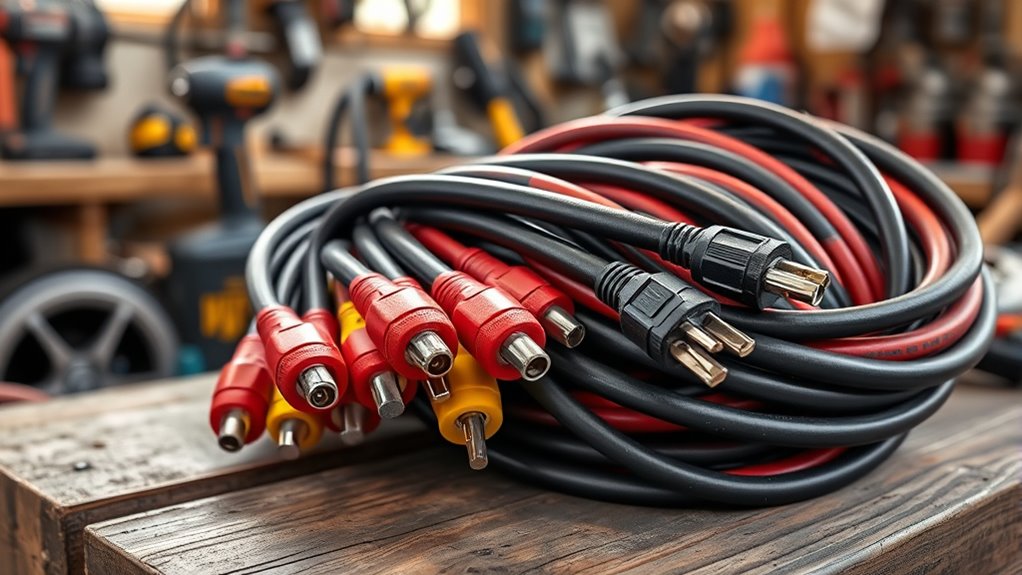
Choosing the right extension cord for your power tools is vital to guarantee safety, performance, and efficiency. The key factor to contemplate is the wire gauge, which directly impacts how much current the cord can safely carry. A thicker wire gauge, such as 10 or 12, is suitable for high-powered tools because it reduces the risk of overheating and voltage drops. Conversely, lighter-duty tools that draw less current can often use cords with a higher gauge number, like 14 or 16. Always match the wire gauge to the power requirements of your tools; using an undersized cord can cause overheating, damage your tools, or even create safety hazards.
Safety tips are just as significant as selecting the right wire gauge. Before plugging in your extension cord, inspect it for any damage, such as cuts, frays, or exposed wires. Damaged cords should be replaced immediately to prevent electrical shocks or fires. When setting up your extension cord, keep it uncoiled or loosely coiled; tightly wound cords can generate heat and degrade over time. Avoid running cords through areas where they can be stepped on or pinched, which can damage the insulation and expose live wires. Keep cords away from water and wet surfaces, as moisture increases the risk of electric shock. If you’re working outdoors, ensure your extension cord is rated for outdoor use—these cords are designed with insulation that can withstand the elements.
Another safety tip involves proper connection practices. Always connect your power tools directly to the extension cord, and avoid daisy chaining multiple cords together, which can overload the system and cause voltage drops. Use grounded cords and outlets when working with tools that require grounding to prevent electrical shocks. When using extension cords in a workshop or construction site, consider using cord covers or tape to secure the cord to the floor, reducing tripping hazards. Also, avoid overloading the extension cord; check the amperage rating and avoid exceeding it, especially when using multiple tools or high-powered equipment simultaneously. Additionally, understanding the importance of projector technology in related fields highlights how proper electrical safety practices are essential for optimal performance and safety.
Products Worth Considering

Roborock Q10 S5+ Robot Vacuum and Mop with 10,000 Pa Suction

Dyson Airwrap i.d. Multi-Styler with Bluetooth Connectivity

eufy C28 Robot Vacuum and Mop with 15,000 Pa Suction
As an affiliate, we earn on qualifying purchases.
Frequently Asked Questions
Can I Use Outdoor Extension Cords Indoors?
You might wonder if outdoor extension cords are safe for indoor use, but it’s not advised. Outdoor cords are designed for outdoor conditions, so they may lack the indoor safety features you need, like proper insulation and cord durability. Using them indoors could pose electrical hazards or fire risks. Always choose extension cords specifically rated for indoor use to ensure safety and durability, protecting yourself and your home.
How Do I Prevent Extension Cords From Overheating?
Sure, preventing extension cords from overheating is as simple as ignoring common sense, right? Actually, you want to select a cord with the right cord gauge and keep the cord length as short as possible. Thicker gauges handle more current, reducing heat. Avoid daisy-chaining cords, and don’t overload them. These steps help keep your extension cords cool, safe, and functioning perfectly—no irony needed.
Are There Extension Cords With Built-In Surge Protection?
Yes, some extension cords come with built-in surge protectors that safeguard your power tools from power surges. These cords feature integrated surge protection technology, which helps prevent damage caused by sudden voltage spikes. When choosing an extension cord, look for one labeled with surge protector features, ensuring your tools are protected from electrical issues. This added feature provides peace of mind and enhances safety during your projects.
What’s the Best Way to Store Extension Cords Safely?
Think of your extension cords as a garden hose—you want them to stay neat and tangle-free. To store them safely, use cord management techniques like winding them in a figure-eight pattern or using a cord reel. Keep them in a dry, cool place away from direct sunlight. Storage solutions like hooks or wall-mounted organizers prevent tripping hazards and preserve the cords’ longevity, making your workspace safer and more efficient.
How Often Should I Replace Worn-Out Extension Cords?
You should replace worn-out extension cords as soon as you notice issues with cord condition, such as fraying, cuts, or exposed wires. Regularly inspecting cords helps determine the replacement frequency needed to guarantee safety. Don’t wait until a cord fails completely; frequent checks allow you to replace cords early, preventing electrical hazards. Always prioritize cord condition over age, and replace cords immediately if any damage is visible.
Conclusion
Choosing the right extension cord isn’t just a small detail—it’s the secret weapon to ensuring your power tools run smoothly and safely. By considering gauge, length, and outdoor ratings, you’ll keep your projects flowing like a well-oiled machine. Don’t settle for a subpar cord that could turn into a disaster—think of it as the backbone of your toolbox. Pick wisely, and you’ll have power at your fingertips that’s stronger than a superhero’s punch!