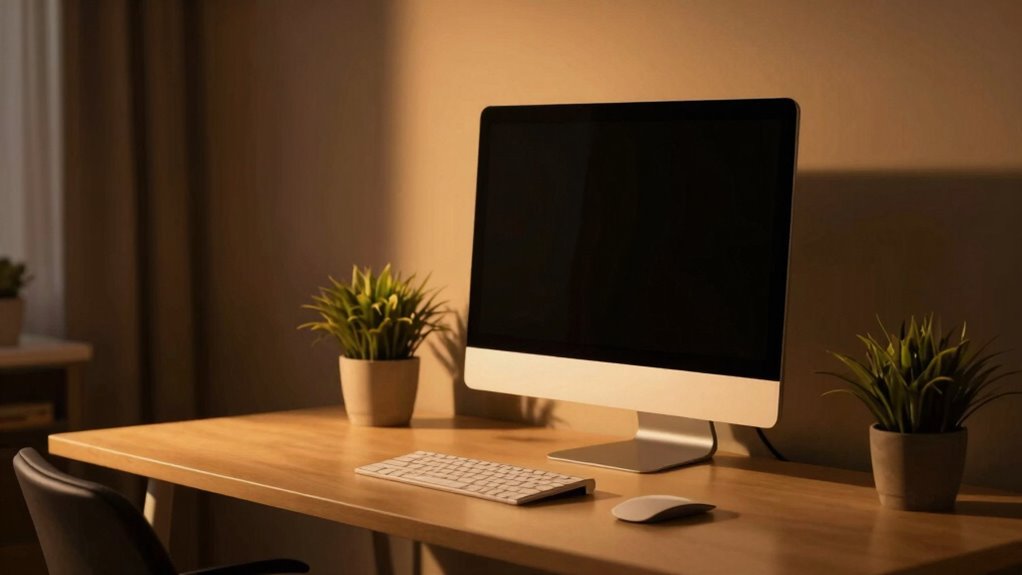

To instantly reduce eye strain, follow the rule of avoiding glare by positioning your lights correctly. Keep light sources away from your direct line of sight and reflective surfaces, like screens or glossy desks. Use diffusers or lampshades to soften harsh light. Make certain the illumination is evenly distributed across your workspace, preventing eyes from constantly adjusting. This simple setup makes a big difference, and if you stick around, you’ll discover even more ways to protect your eyes effectively.
Key Takeaways
- Use adjustable task lighting to focus light directly where needed, reducing glare and uneven brightness.
- Ensure ambient lighting is evenly distributed to prevent harsh contrasts and eye fatigue.
- Position lights to avoid reflections and direct glare on screens and surfaces.
- Choose lighting with a color temperature around 5000K–6500K for a natural, alert environment.
- Incorporate diffusers or lampshades to soften light and minimize harsh shadows and reflections.

Poor lighting conditions can substantially contribute to eye strain, especially if you spend long hours working or reading indoors. One of the most effective lighting rules you can follow is to guarantee your environment is lit with a balance of light that minimizes strain on your eyes. This involves paying close attention to two key factors: color temperature and glare reduction. By adjusting these elements, you can create a visual setting that’s easier on your eyes and helps prevent fatigue.
Proper lighting with balanced color temperature and minimal glare reduces eye strain and enhances visual comfort.
First, understanding color temperature is vital. The right color temperature can make a significant difference in how comfortable your eyes feel during extended periods of work. Cooler temperatures, around 5000K to 6500K, mimic natural daylight and promote alertness, making them ideal for workspaces. However, if your environment feels too stark or harsh, switching to warmer tones, around 2700K to 3000K, can soften the light, reducing eye strain and creating a more relaxing atmosphere. The goal is to find a balance that provides sufficient illumination without overwhelming your senses or causing discomfort. Additionally, lighting quality plays an important role in ensuring your eyes aren’t strained by poor illumination. Proper lighting design can also help distribute light evenly across your workspace, further reducing eye fatigue. Incorporating ergonomic lighting principles can optimize comfort and efficiency. Furthermore, selecting lights with appropriate luminance levels can prevent your eyes from constantly adjusting to varying brightness levels, which can lead to discomfort over time.
Glare reduction is another essential aspect of the one lighting rule that helps you protect your eyes. Glare occurs when bright light sources reflect off shiny surfaces or come directly into your line of sight, forcing your eyes to constantly adjust and strain. To combat this, position your light sources so they don’t shine directly into your eyes or onto reflective surfaces. Use matte finishes on screens and desks, and consider installing diffusers or lampshades that soften the light. Adjustable task lighting can also be a game-changer, allowing you to direct light precisely where you need it without creating harsh reflections or overly bright spots. Additionally, understanding lighting design principles can further enhance your workspace to minimize eye strain.
Combining proper color temperature with glare reduction techniques creates a harmonious lighting environment that supports eye health. It’s about creating a space where the light complements your work rather than fights against your eyes. If your workspace is too bright or unevenly lit, your eyes will have to work harder to focus and adapt, leading to fatigue and discomfort. But by simply adjusting the color temperature of your lighting and reducing glare, you can drastically improve visual comfort. Paying attention to lighting setup can also contribute significantly to a more ergonomic workspace environment.
In essence, this one lighting rule—focusing on appropriate color temperature and glare reduction—is straightforward yet powerful. It’s a simple change that can instantly make your work or reading sessions more comfortable, helping to prevent eye strain and maintain your eye health over the long term. Paying attention to these details means you’re taking proactive steps to protect your vision while enhancing your overall workspace environment.
adjustable task desk lamp
As an affiliate, we earn on qualifying purchases.
As an affiliate, we earn on qualifying purchases.
Frequently Asked Questions
Does This Lighting Rule Apply to Both Work and Home Settings?
Yes, this lighting rule applies to both work and home settings. You should balance ambient lighting, which provides overall illumination, with task lighting that focuses on specific activities. In your workspace, use adjustable task lights to reduce eye strain, and at home, guarantee ambient lighting isn’t too harsh or dim. Properly combining both types of lighting helps you stay comfortable and minimizes eye fatigue, no matter where you are.
Can This Rule Help With Headaches Caused by Eye Strain?
Imagine a simple switch that can turn your eye strain into relief—yes, this lighting rule can help with headaches caused by eye strain. When you follow it, you reduce glare and harsh shadows, which are culprits behind discomfort. Proper lighting creates a calming environment, promoting headache relief. So, implementing this rule not only eases eye strain but also offers a practical way to keep headaches at bay, giving your eyes the comfort they deserve.
Is This Lighting Rule Suitable for People With Sensitive Eyes?
Yes, this lighting rule is suitable for people with sensitive eyes. It encourages you to make simple lighting adjustments, such as reducing brightness or avoiding harsh glare, which can considerably ease discomfort. By creating a softer, more balanced lighting environment, you help protect your sensitive eyes and reduce strain. Implementing these adjustments regularly can make a noticeable difference, making your workspace more comfortable and less tiring for your eyes.
What Type of Light Bulbs Are Recommended for This Rule?
You should choose soft white or warm LED light bulbs for recommended lighting. These light bulb types emit a gentle, non-glare light that reduces eye strain and creates a comfortable workspace. Avoid harsh, cool-toned bulbs like daylight or bright white, which can cause discomfort. Opt for dimmable LEDs if possible, so you can adjust the brightness to suit your needs and maintain a soothing environment.
How Quickly Can I Expect to See Improvements in Eye Comfort?
You can expect to notice improvements in eye comfort within just a few days of implementing the lighting rule. By choosing bulbs with the right color temperature and flicker reduction features, your eyes will strain less during prolonged use. Consistent use of such lighting creates a more comfortable environment, reducing fatigue, headaches, and eye discomfort. Stick with this change, and you’ll likely see a significant difference in how your eyes feel daily.
glare reducing desk lamp with diffuser
As an affiliate, we earn on qualifying purchases.
As an affiliate, we earn on qualifying purchases.
Conclusion
Remember, following the one shop lighting rule isn’t just about seeing clearly; it’s about protecting your eyes from unnecessary strain. Think of your eyes as a delicate garden—if you nurture them with proper light, they flourish. So, don’t let poor lighting be the villain in your daily story. Instead, embrace this simple rule and turn your workspace into a haven of comfort and clarity. After all, your eyes deserve the best care—don’t they?
color temperature 5000K LED light bulb
As an affiliate, we earn on qualifying purchases.
As an affiliate, we earn on qualifying purchases.
anti-reflective matte monitor screen
As an affiliate, we earn on qualifying purchases.
As an affiliate, we earn on qualifying purchases.