
TL;DR

Get business pricing on tools and workshop supplies
- Business-only prices and quantity discounts
- Tax-exempt purchasing
- Multiple users, one account, clear invoices
A Family Handyman report describes ways to use citric acid to tackle mineral deposits and some rust stains around the home, including in kettles, showerheads and toilets. The acidic cleaner can damage natural stone, finished wood and some other surfaces, so test cautiously and check product and appliance instructions.
Family Handyman has published guidance on using citric acid to remove limescale, hard-water spots and some rust stains from household items, while warning that the acidic cleaner can damage certain surfaces. The report includes advice from cleaning professionals on applications ranging from descaling coffee makers to treating toilet-bowl deposits, making surface compatibility and thorough rinsing central to safe use.
The report describes citric acid as an acid found naturally in citrus fruits and also manufactured for use in food and cleaning products. It is commonly sold in powder or crystalline form. Its main household use, according to the article, is breaking down mineral deposits left by hard water. The report calls the product inexpensive but advises users to test it in an inconspicuous spot and consult manufacturers’ instructions, especially for metal-finish fixtures.
For a coffee maker, Seattle Green Cleaning Fairy owner Enrique Gonzalez recommends adding one to two tablespoons of citric acid to a full water tank, running one brewing cycle, then running two cycles with plain water. For an electric kettle, the article advises adding the same amount to water, bringing it to a boil and letting it simmer for 15 to 20 minutes. Empty and rinse the kettle, then boil and discard clean water before using it again.
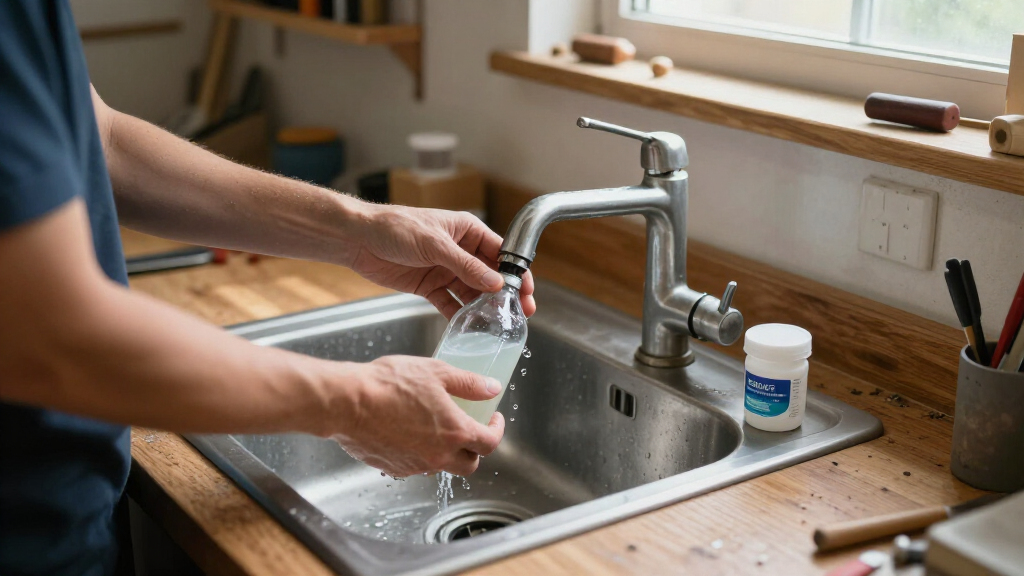
For faucets, the report suggests mixing one to two teaspoons with a cup of warm water, applying it with a soft damp cloth and leaving it for three to five minutes before wiping. Showerheads can be soaked in a solution of one tablespoon in two cups of warm water, then rinsed and flushed with hot water. For glass shower doors, the article recommends applying a solution of one tablespoon in two cups of warm water for up to five minutes, without letting it dry, then wiping with a nonabrasive cloth or sponge and drying the glass.
Where Citric Acid Can Help
The suggested uses focus on a recurring household problem: mineral buildup from hard water. Deposits can collect inside appliances and on faucets, showerheads and glass, while the article also describes using citric acid for soap scum and some rust stains. The methods give readers specific quantities and contact times rather than relying on a single all-purpose cleaning recipe.
The practical benefit comes with a material risk. The report cautions that citric acid is corrosive and can etch or discolor marble and granite, strip protective finishes from finished wood, and affect other vulnerable surfaces. Its instructions also repeatedly call for rinsing and drying, which helps limit residue and new water spots. These precautions matter because a cleaner suited to mineral deposits is not suitable for every surface.
Products Worth Considering

Levoit Vital 100S-P Air Purifier with Washable Pre-Filter

iRobot Roomba 105 Combo Robot Vacuum and Mop

Philips Hue Play HDMI Sync Box 4K with 65-Inch Play Gradient Light Strip
As an affiliate, we earn on qualifying purchases.
How the Report Frames the Cleaner
The article presents citric acid as a cleaning option for scale and mineral stains, drawing on comments from Sofia Martinez, owner of Sparkly Maid Austin; Gonzalez; and Terry Klymkiv of Alpha Cleaning Company. Martinez says citric acid can descale a kettle, remove spots from glass and shine stainless-steel sinks. Those statements are expert guidance quoted in the report, not independent test results included in the supplied material.
Recipes differ by task. For dishwasher cleaning, Gonzalez advises cleaning the filter first, placing a bowl containing a couple of tablespoons of citric acid on the upper rack of an empty machine, and running a hot cycle. For rust, Klymkiv recommends applying a water-and-citric-acid paste for 20 minutes, scrubbing gently with a soft brush and rinsing; the steps may be repeated. For toilets, he suggests adding two to three tablespoons of powder, leaving it for at least 30 minutes or overnight, then brushing and flushing.
“Citric acid can descale an electric kettle, remove spots from glass and even shine up stainless-steel sinks.”
— Sofia Martinez, owner of Sparkly Maid Austin, as quoted by Family Handyman
Surface Safety Still Depends
The supplied report does not provide independent testing, comparative performance data or a complete list of compatible appliance materials and finishes. It advises checking manufacturers’ instructions and testing an inconspicuous area, but does not specify how every product or surface may respond. It explicitly warns against using citric acid on natural stone such as marble or granite and finished wood. The source text also begins a warning about electronics screens but cuts off before giving the full explanation, so it does not support a complete account of that caution.
The advice should not be read as a guarantee that every recipe is safe for every appliance. The article’s instructions vary by task, and users should follow the relevant manufacturer’s guidance where available. The extent to which citric acid removes a particular deposit may also depend on the surface and the buildup; the supplied material gives no measured success rates.
Check Labels Before Cleaning
The report offers household recipes rather than announcing a product launch or a change in cleaning guidance. Before trying one, readers should check the appliance or surface instructions, test an inconspicuous area when appropriate, and avoid the materials the article identifies as vulnerable. Follow each recipe’s stated contact time, then rinse thoroughly and dry the surface where instructed.
Further details about electronics-screen compatibility and any additional surface warnings are not available in the supplied excerpt. Readers considering use on a surface not covered by the report will need to consult its manufacturer or a qualified cleaning professional rather than assume citric acid is safe.
Key Questions
What is citric acid used for around the home?
The Family Handyman report describes using it to address limescale and hard-water deposits on items such as kettles, coffee makers, faucets, showerheads, dishwasher interiors, glass and stainless-steel sinks. It also gives methods for some rust stains, soap scum and toilet mineral deposits.
Can I use citric acid on marble or granite?
The report says to avoid using citric acid on natural stone, including marble and granite, because it may etch or discolor the surface.
How do I descale an electric kettle with citric acid?
The report recommends adding one to two tablespoons to a kettle filled with water, bringing the mixture to a boil and simmering it for 15 to 20 minutes. Empty and rinse the kettle, then boil and discard clean water. Check the kettle manufacturer’s instructions before cleaning.
Is citric acid safe for every household surface?
No. The report describes citric acid as corrosive and warns against using it on natural stone and finished wood. It advises testing an inconspicuous area and checking manufacturer instructions, particularly for metal-finish fixtures.
Source: rss