
To store your tool batteries without harming their lifespan, keep them partially charged at around 40-60%, and avoid fully draining or overcharging. Store them in a cool, dry place with stable temperatures between 50°F and 77°F, away from direct sunlight or temperature swings. Use protective containers with silica gel to prevent moisture. Regularly check their charge levels and condition, so you can learn the best practices for long-lasting performance.
Key Takeaways
- Store batteries partially charged at 40-60% to prevent stress on the chemistry.
- Keep batteries in a cool, stable environment between 50°F to 77°F (10°C to 25°C).
- Remove batteries from tools during long-term storage to avoid accidental discharges.
- Use protective containers with silica gel or desiccants to prevent moisture and corrosion.
- Periodically check and recharge batteries to maintain optimal charge levels and health.
Proper storage of your tool batteries can reliably extend their lifespan and guarantee they’re ready when you need them. To do this effectively, understanding the basics of battery chemistry is key. Different types of batteries—like lithium-ion, nickel-cadmium, or nickel-metal hydride—each have distinct storage needs. Lithium-ion batteries, for example, are sensitive to over-discharging and overcharging, which can degrade their capacity over time. Nickel-based batteries tend to suffer from memory effect if stored improperly, so knowing the specific chemistry of your batteries helps you choose the right storage approach.
Proper storage extends battery life by understanding each type’s unique needs and avoiding overcharging or improper handling.
One of the most important factors in preserving your batteries is controlling storage temperature. Extreme heat accelerates chemical reactions inside the battery, leading to faster degradation and potential safety hazards. Conversely, storing batteries in very cold environments can temporarily reduce their capacity but generally causes less damage than heat. Ideally, you want to keep your tool batteries in a cool, dry place with a stable temperature, typically around 50°F to 77°F (10°C to 25°C). Avoid garages or sheds that can experience temperature swings or direct sunlight, as these conditions can harm the battery’s internal chemistry. Additionally, temperature stability is crucial for preventing capacity loss and ensuring consistent performance.
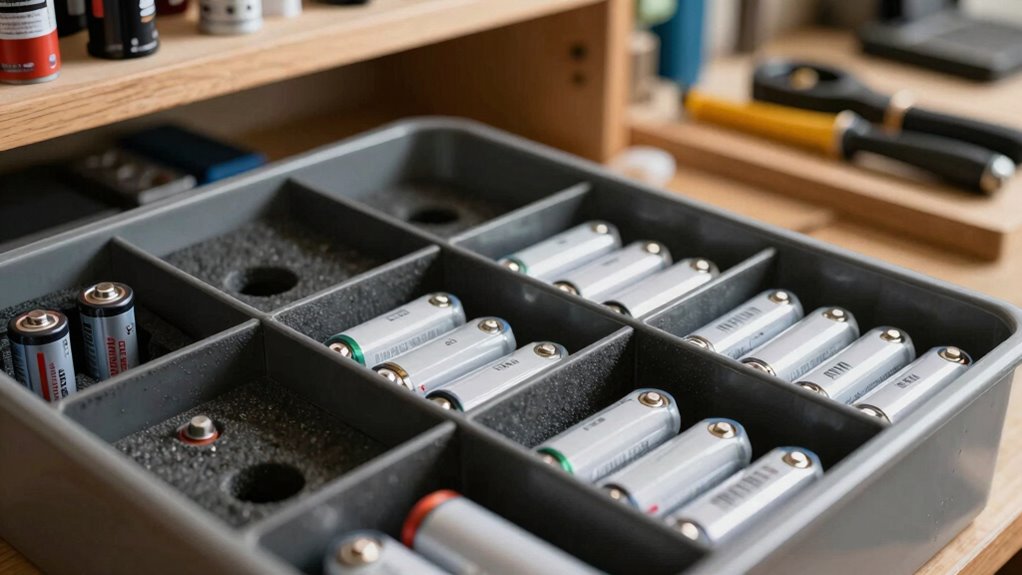
Before storing your batteries, make sure they are partially charged—around 40-60%. Fully charging or completely draining them before storage can stress the battery chemistry, especially in lithium-ion types. For long-term storage, it’s best to remove the batteries from the tools and store them separately. Keep them in a protective container or a plastic bag with a small amount of silica gel or desiccant to control humidity. This prevents corrosion and maintains a stable environment around the battery. Additionally, understanding the battery chemistry of your batteries helps you optimize their storage and prolong their life. Being aware of the state of charge during storage is also crucial to prevent capacity loss over time. Ensuring proper battery maintenance can significantly extend the overall lifespan of your batteries.
Another tip is to periodically check your stored batteries, especially if you plan to keep them for several months. Recharge partially if their charge drops below the recommended level, but avoid overcharging. Also, inspect for any swelling, leaks, or corrosion, which are signs that the battery might be compromised and should be safely disposed of. Regularly monitoring battery health can help catch issues early and prevent sudden failures. By following these guidelines—considering battery chemistry, maintaining suitable storage temperature, and proper handling—you’ll extend your tool batteries’ lifespan and ensure they’re reliable when you need them most. Proper storage isn’t just about protecting your investment; it’s about making sure your tools are always ready to perform.
lithium-ion battery storage container
As an affiliate, we earn on qualifying purchases.
As an affiliate, we earn on qualifying purchases.
Frequently Asked Questions
How Often Should I Check My Stored Tool Batteries?
You should check your stored tool batteries every three to six months to guarantee proper battery maintenance. During these checks, inspect for any signs of corrosion or damage, and recharge them if they’ve dropped below 50%. Using the right storage techniques, like keeping batteries in a cool, dry place and avoiding full discharges, helps extend their lifespan. Regular checks keep your batteries healthy and ready when you need them.
Can Temperature Fluctuations Damage My Stored Batteries?
Temperature fluctuations are like a rollercoaster ride for your batteries—they can cause damage over time. Sudden changes can lead to expansion and contraction, harming the internal components. To protect your batteries, use proper battery insulation and maintain temperature stability where you store them. Keeping storage in a cool, consistent environment minimizes stress, extending your batteries’ lifespan and ensuring they’re ready when you need them most.
Should I Store Batteries in Their Original Packaging?
Storing batteries in their original packaging is a good idea because it offers some battery insulation and helps protect them from temperature fluctuations. If you prefer, use storage containers designed for batteries, which provide extra insulation and prevent physical damage. Just make certain the containers are cool, dry, and away from direct sunlight. Proper storage preserves battery life and keeps them safe for future use.
Is It Better to Store Batteries Fully Charged or Completely Drained?
It’s better to store batteries partially charged, around 40-60%, for ideal battery maintenance. Fully charged or drained batteries can degrade faster over time. Use proper storage techniques by keeping them in a cool, dry place away from direct sunlight. This approach helps prevent capacity loss and prolongs their lifespan. Regularly check and recharge your batteries as needed, ensuring they stay in good condition for your tools.
How Do I Prevent Corrosion During Long-Term Storage?
Like a knight preparing for battle, you can prevent corrosion during long-term storage by applying battery insulation, such as dielectric grease or anti-corrosion tape, on the terminals. Store your batteries in a cool, dry place, away from humidity and metal contacts that could cause corrosion. Regularly check for any signs of corrosion and clean with a brush if needed. These steps safeguard your batteries’ longevity, much like armor shields a knight.
silica gel desiccant for batteries
As an affiliate, we earn on qualifying purchases.
As an affiliate, we earn on qualifying purchases.
Conclusion
Think of your tool batteries as seeds waiting to bloom. Store them in a cool, dry place, just like nurturing soil that encourages growth. By giving them proper care, you’re not just preserving their lifespan—you’re planting the future of your projects. When you tend to your batteries with patience and attention, you’re cultivating a garden of reliable power. Handle them well, and watch your tools thrive, ready to blossom whenever you need them most.
tool battery maintenance kit
As an affiliate, we earn on qualifying purchases.
As an affiliate, we earn on qualifying purchases.
battery storage case for power tools
As an affiliate, we earn on qualifying purchases.
As an affiliate, we earn on qualifying purchases.