
To choose and use clamps effectively, first identify the specific task, material, and project size to select the right clamp type—such as bar, C-clamp, or spring clamp. Always check clamps for damage, apply even pressure gradually, and avoid over-tightening to prevent damage. Use pads to protect your workpieces and follow safety precautions. Mastering these techniques guarantees safer, more efficient projects, and understanding more details can help you improve your clamping skills further.
Key Takeaways
- Select the appropriate clamp type based on project size, material, and holding requirements.
- Ensure clamps are in good condition, free from damage, and suitable for the task.
- Gradually tighten clamps to apply even pressure, avoiding over-tightening that can damage materials.
- Use pads or scrap wood to prevent marring or indentations on workpieces.
- Follow safety protocols, including wearing protective gear and maintaining an organized workspace.
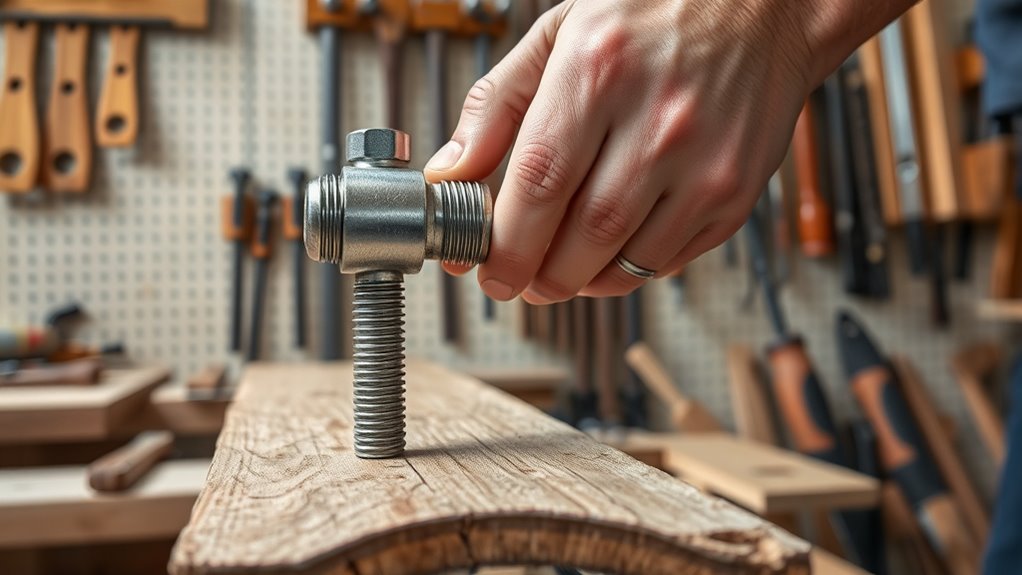
Choosing the right clamps is essential for securing materials effectively and ensuring a successful project. With so many clamp types available, selecting the correct one can make all the difference in your work. Each type of clamp is designed for specific tasks, whether you’re holding wood pieces together, securing materials to a work surface, or applying pressure during gluing. Understanding the differences between clamp types helps you pick the right tool for your project, which in turn improves safety, efficiency, and the quality of your results.
When selecting clamps, it’s important to contemplate safety considerations along with functionality. Using the wrong clamp or applying excessive pressure can cause damage to your materials or pose safety risks. For example, spring clamps are great for quick, light holds but may not provide enough strength for heavy-duty tasks. Conversely, C-clamps or bar clamps can exert significant pressure, but you need to be cautious to avoid over-tightening, which can deform or crack your workpieces. Always check that your clamps are in good condition, with no cracks or worn parts, as damaged clamps can slip or fail during use, leading to potential injuries.
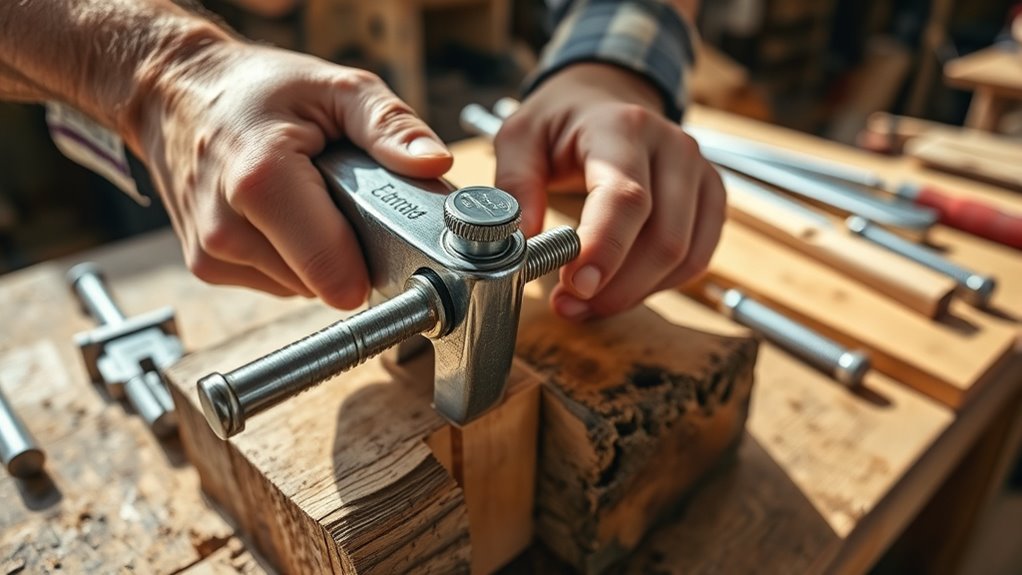
Different clamp types serve different purposes. Bar clamps, for example, are versatile and can hold large pieces securely with adjustable arms, making them ideal for woodworking projects. C-clamps are excellent for holding smaller pieces firmly, especially when you need to apply a lot of pressure without movement. Spring clamps are lightweight and easy to use, perfect for holding thin materials or quick fixes. Pipe clamps are adjustable and suitable for larger projects, like furniture assembly, where you need even pressure across wide areas. Knowing which clamp type best suits your task allows you to work more efficiently and reduces the risk of accidents or damage.
Another safety consideration involves proper handling and application. Always tighten clamps gradually, avoiding sudden force that could cause slippage or material breakage. Use pads or scrap wood between the clamp jaws and your workpiece if necessary, to prevent marring or indentations. When you’re finished, release the clamps carefully to avoid sudden releases of tension that could cause injury or mishandling of your project. Remember to wear protective gear if working with high-pressure clamps or heavy-duty tools, and keep your workspace organized to prevent trips or falls. Additionally, understanding material properties can help you choose the most appropriate clamp to avoid damage during use.
woodworking clamps set
As an affiliate, we earn on qualifying purchases.
As an affiliate, we earn on qualifying purchases.
Frequently Asked Questions
How Do I Prevent Clamps From Damaging Delicate Surfaces?
To prevent clamps from damaging delicate surfaces, you should use protective padding between the clamp and the surface. Make sure to tighten the clamp gently, avoiding excessive pressure that could cause dents or scratches. Check regularly to ensure the padding stays in place and the pressure remains gentle. This approach helps you secure your work effectively without compromising the integrity of sensitive materials.
What Are the Best Clamps for Outdoor Woodworking Projects?
Think of outdoor woodworking clamps as loyal guardians protecting your project. For outdoor use, opt for corrosion-resistant materials like stainless steel or plastic-coated clamps, which withstand the elements. Consider bar clamps for their strength and versatility, and use clamp adjustment techniques to guarantee a snug fit without over-tightening. This way, your projects stay secure and weather-resistant, and your craftsmanship endures like a sturdy oak through seasons.
How Do I Choose the Right Clamp for Thick or Uneven Materials?
To select the appropriate clamp for thick or uneven materials, consider the material thickness and surface irregularity. Use deep-jaw or bar clamps for thicker pieces, as they provide ample space and strong grip. For uneven surfaces, opt for adjustable or spring clamps that conform better to irregular shapes. Always test the clamp’s pressure to avoid damaging your material, and make certain it distributes force evenly for a secure hold.
Can Clamps Be Reused After Heavy Use or Exposure to Elements?
Yes, you can reuse clamps after heavy use or exposure to elements, but check their durability and weather resistance first. Inspect for rust, corrosion, or weakened parts that could compromise their performance. If they’re still sturdy and free of damage, clean them thoroughly and store them properly to guarantee longevity. Weather-resistant clamps tend to last longer outdoors, but regular maintenance is key to keeping them effective for future projects.
What Safety Precautions Should I Take When Using Clamps?
Did you know that improper clamp use can cause injuries in 30% of workshop accidents? To stay safe, always wear personal protective equipment like gloves and eye protection. Make sure your workspace is secure and free of clutter before clamping. Check that clamps are in good condition, properly secured, and used for their intended purpose. Never over-tighten, and keep your hands clear of pinch points to prevent accidents.
C-clamp for woodworking
As an affiliate, we earn on qualifying purchases.
As an affiliate, we earn on qualifying purchases.
Conclusion
Remember, choosing the right clamp and using it properly can make all the difference in your project. With a keen eye and steady hand, you’ll turn your work into a masterpiece. Don’t forget, “A chain is only as strong as its weakest link,” so guarantee your clamps are secure and suited for the task. When you master this skill, you’ll see your craftsmanship grow stronger with each project you tackle.
spring clamps for crafts
As an affiliate, we earn on qualifying purchases.
As an affiliate, we earn on qualifying purchases.
bar clamps for furniture making
As an affiliate, we earn on qualifying purchases.
As an affiliate, we earn on qualifying purchases.