
To select the right fire extinguishers for your workshop, consider the specific hazards present, like electrical equipment or flammable liquids. Use ABC multipurpose extinguishers for general fires, and specialized extinguishers for metals or woods. Guarantee the extinguishers are properly sized and placed in accessible spots, free of obstructions. Regular maintenance and training are key to effective use. Keep learning to make the best safety choices for your workspace.
Key Takeaways
- Assess specific workshop hazards to determine the appropriate fire extinguisher types needed.
- Use ABC multipurpose extinguishers for electrical fires and general combustible materials.
- Select the correct extinguisher size and capacity for effective fire suppression.
- Ensure extinguishers are easily accessible, visible, and properly placed throughout the workshop.
- Regularly inspect and maintain extinguishers to guarantee operational readiness during emergencies.

Have you ever considered how quickly a fire can spread and the importance of being prepared? In a workshop setting, where flammable materials and tools are common, having the right fire safety measures in place is essential. One of the most critical aspects is selecting the proper fire extinguishers and maintaining them regularly. Fire extinguisher maintenance isn’t just about having the equipment on hand; it’s about ensuring it works when you need it most. You should check the pressure gauge, inspect for damage, and replace or service extinguishers according to the manufacturer’s recommendations. An outdated or faulty extinguisher could be useless during an emergency, so regular inspections are crucial.
Equally important are workplace fire drills. They’re not just routine procedures but opportunities to test your team’s readiness and identify potential safety gaps. Conducting fire drills helps everyone understand how to respond swiftly and correctly if a fire occurs. During these drills, you’re reminded of evacuation routes, the importance of staying calm, and how to use fire extinguishers effectively. Make sure your team knows where each extinguisher is located and understands the different types available for various fire classes. Practice using the correct extinguisher—whether it’s for electrical fires, flammable liquids, or ordinary combustibles—so that everyone can act confidently in an emergency.
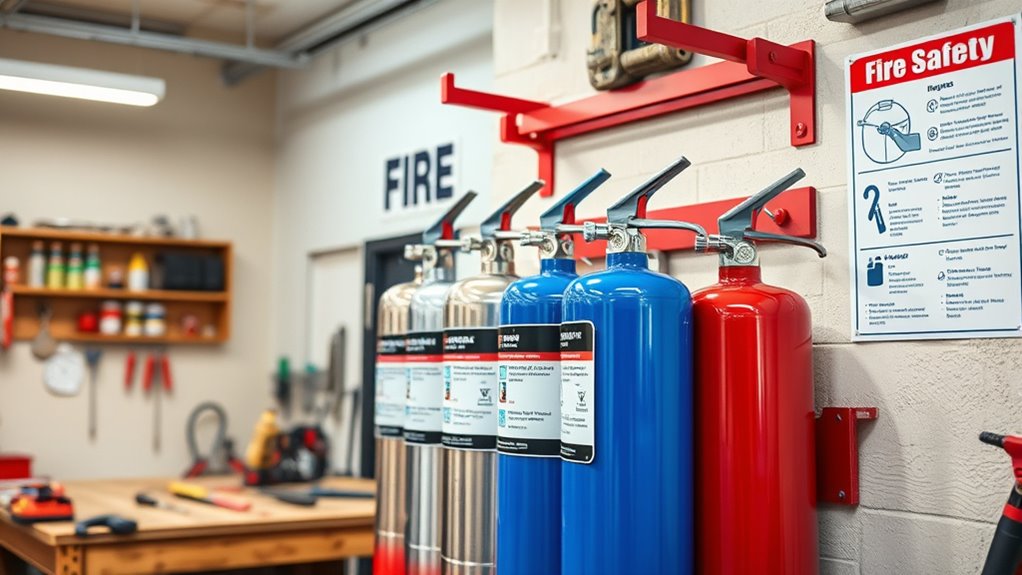
When selecting fire extinguishers for your workshop, consider the specific hazards present. For electrical fires, an ABC multipurpose extinguisher is versatile and effective. For flammable liquids like paints or solvents, a Class B extinguisher is necessary. If your workshop involves combustible metals or wood, you’ll need specialized extinguishers suited for those materials. Keep in mind that the size and placement of extinguishers matter; they should be easily accessible and visible without obstructing pathways. Proper training on how to operate each type ensures quick and effective use during a fire. Additionally, understanding the contrast ratio of your fire safety equipment can help assess how well the extinguishers will perform in different lighting conditions.
Frequently Asked Questions
How Often Should Fire Extinguishers Be Inspected and Maintained?
You should inspect your fire extinguishers monthly to guarantee they’re in good condition. Follow a regular inspection schedule, checking for any damage, pressure gauge readings, and accessibility. Additionally, perform maintenance procedures annually or as recommended by the manufacturer. Regular inspections and proper maintenance help ensure your extinguishers work effectively during an emergency, giving you peace of mind and complying with safety regulations.
Are There Specific Extinguishers Needed for Electrical Fires?
Think of electrical fires as sneaky sparks hiding in wires. You need a specialized extinguisher to combat them, like a superhero with a clear shield. For electrical safety, use Class C extinguishers, typically containing dry chemical agents. These extinguishers interrupt the fire’s electrical connection without causing harm or damage. Always verify your workshop has the right extinguisher types on hand to quickly neutralize electrical blazes.
What Is the Recommended Size of Extinguisher for a Workshop?
You should choose a fire extinguisher with a capacity of at least 5 pounds for your workshop. This size aligns with workshop safety standards, making certain you have enough firefighting power without being cumbersome. Larger extinguishers, like 10 or 15 pounds, provide more capacity for bigger fires, but 5-pound models are usually sufficient for most workshop hazards. Always guarantee your extinguisher is easily accessible and properly maintained.
Can Fire Extinguishers Be Reused After Activation?
You can’t reuse fire extinguishers after activation unless they are rechargeable types. Rechargeability considerations are vital, as reusable extinguishers are designed for refilling and reinspection, making them more cost-effective and environmentally friendly. Disposable extinguishers, on the other hand, are meant for single use and must be replaced once used. Always verify the extinguisher’s type and follow manufacturer instructions to guarantee safety and proper maintenance.
How Should Fire Extinguishers Be Properly Labeled and Stored?
You should guarantee fire extinguishers are properly labeled according to labeling standards, including clear instructions and maintenance info. Store them in accessible, visible locations, away from heat sources and potential obstructions. Follow storage best practices by securing extinguishers upright on brackets or in cabinets, and regularly check labels for legibility. Proper labeling and storage help you quickly identify and access extinguishers during emergencies, ensuring safety for everyone in your workshop.
Conclusion
Remember, choosing the right fire extinguisher is your modern-day shield like Athena’s armor, prepared to defend your workshop from unexpected flames. By understanding the types and proper use, you become a vigilant guardian, preventing small sparks from turning into uncontrollable fires. Don’t wait until the inferno strikes—equip yourself with the knowledge and tools to act swiftly. Stay safe, stay prepared, and let your workshop be as secure as the legendary fortress of Troy.