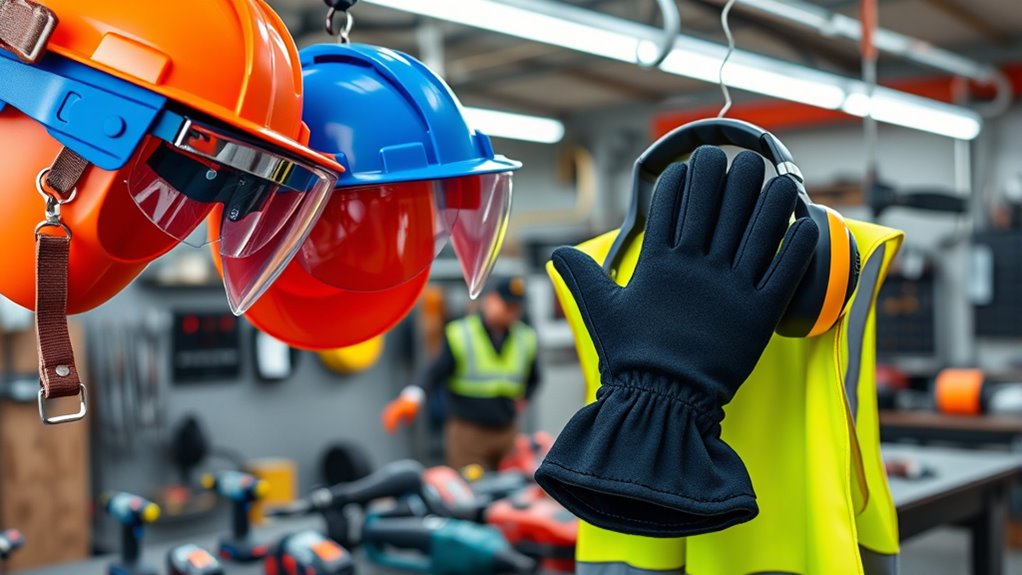
To stay safe in a workshop, you need essential gear like safety goggles or shields to protect your eyes, earplugs or earmuffs to guard your hearing, and masks to filter out harmful dust and fumes. Wear well-fitting gloves, steel-toed shoes, and protective clothing to shield your skin and limbs from injuries. Ensuring all gear meets safety standards and is in good shape is crucial. Keep exploring to discover detailed tips on choosing the right safety equipment for your workshop.
Key Takeaways
- Wear appropriate eye, face, hearing, respiratory, hand, foot, and body protection tailored to specific workshop tasks.
- Ensure safety gear fits properly, is made from durable materials, and meets safety standards for effective protection.
- Regularly inspect, clean, and maintain safety equipment, replacing damaged items immediately.
- Keep emergency equipment like first aid kits and fire extinguishers accessible and in good condition.
- Implement safety protocols, including clear signage, organized storage, and routine safety training for all workers.
Eye Protection Equipment
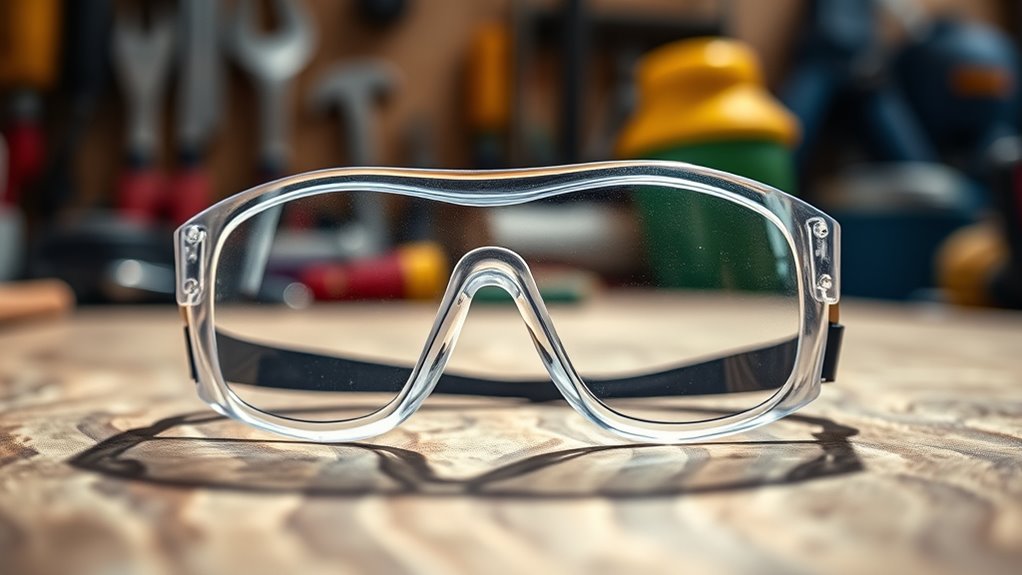
Why is eye protection essential in workshop safety? Your eyes are vulnerable to debris, sparks, and chemical splashes, making proper eye protection critical. Safety goggles are designed to shield your eyes from these hazards effectively. When you wear eye protection, you reduce the risk of injury that could impair your vision or cause permanent damage. Safety goggles fit snugly around your eyes, providing a barrier against flying particles or harmful splashes. Always choose eye protection suitable for the task at hand, and guarantee they fit comfortably without impairing your vision or movement. Remember, protecting your eyes isn’t just about compliance; it’s about preserving your sight and safety during every workshop project. Never compromise on eye protection—your vision depends on it. Recognizing the signs of eye fatigue can help prevent potential injuries before they occur.
Hearing Protection Devices
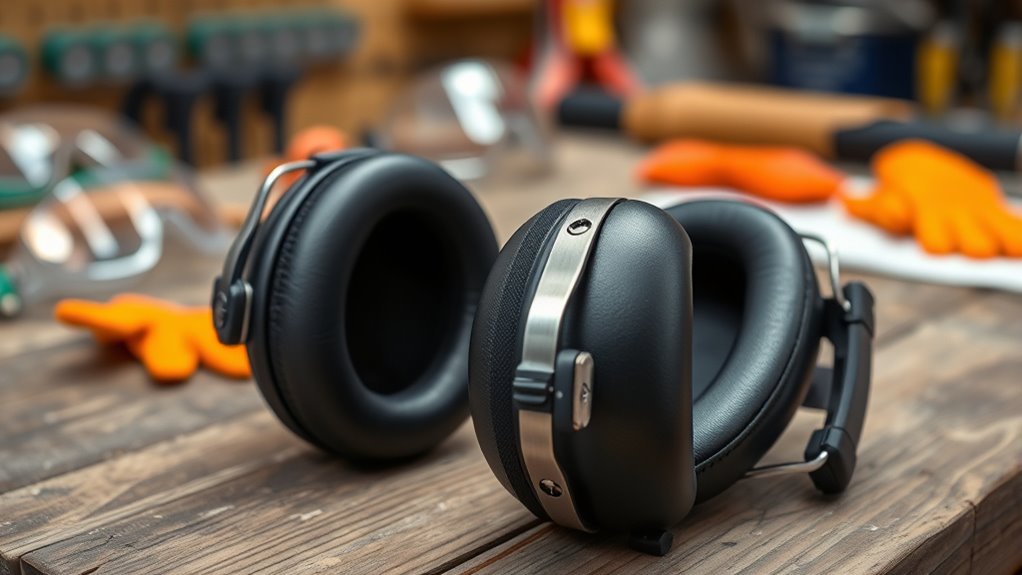
Have you ever considered how loud noises in the workshop can harm your hearing over time? Hearing protection devices are essential to shield your ears from damaging noise levels. Look for earplugs or earmuffs with effective noise reduction ratings to guarantee proper protection. Proper device maintenance is vital; clean earplugs regularly and inspect earmuffs for damage to keep them functioning correctly. Replace worn or damaged gear immediately to maintain peak noise reduction. Consistent use of hearing protection not only prevents hearing loss but also reduces fatigue caused by loud environments. Remember, your hearing health depends on your commitment to wearing and caring for your protection devices. Taking these simple steps makes a significant difference in preserving your hearing long-term. Regular inspection and proper storage of your gear help ensure it remains effective over time.
Respiratory Safety Gear
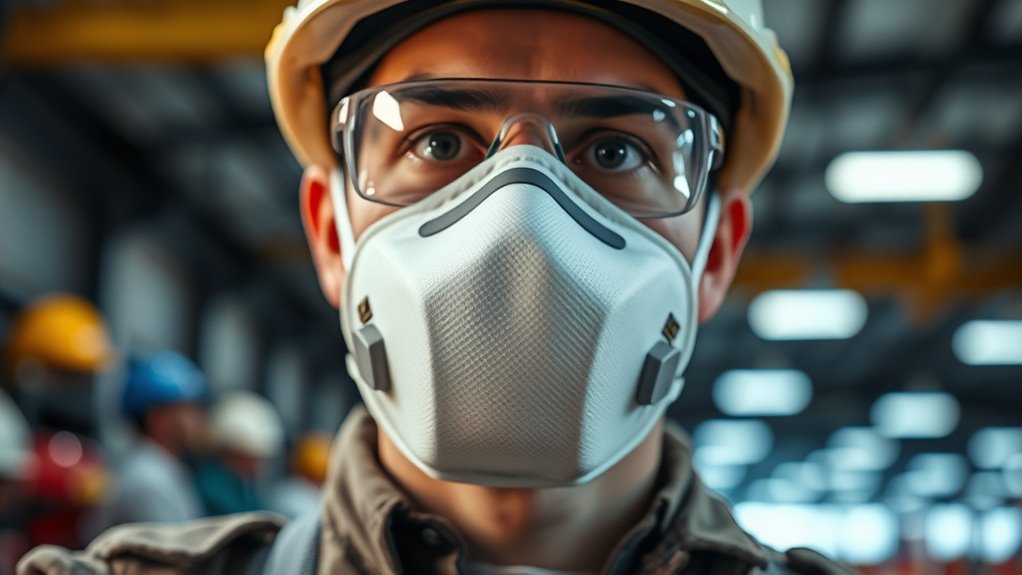
When choosing respiratory safety gear, you need to pick the right mask for your tasks. Protecting yourself from dust and chemicals is essential to prevent health issues. Make sure your mask offers proper filtration and fits comfortably for effective safety. Additionally, consider using snacks or other comfort-enhancing accessories to reduce fatigue during extended wear.
Proper Mask Selection
Choosing the right mask is vital for protecting yourself from respiratory hazards in the workshop. You need a mask with high filtering effectiveness to block harmful particles, fumes, or dust. When selecting, consider the mask’s fit—an improper fit reduces protection and can cause leaks. Make sure it comfortably seals around your nose and mouth. Proper mask maintenance is essential; regularly inspect for damage, replace filters as recommended, and clean reusable masks properly. This keeps the mask functioning at peak performance and maintains its filtering effectiveness. Additionally, understanding respiratory safety gear can help you choose the most appropriate mask for your specific environment. Remember, a well-chosen mask that fits correctly and is well-maintained greatly reduces your risk of inhaling dangerous substances, keeping you safer during your work. Proper selection and upkeep are key to reliable respiratory protection.
Dust and Chemical Protection
Proper mask selection helps protect you from respiratory hazards, but understanding the specific risks in your workshop is equally important. If you’re dealing with dust, choose masks with dust suppression features, such as N95 respirators, to filter airborne particles effectively. For chemical spills, use masks that provide chemical spill response protection—these often include cartridges designed to block harmful vapors and fumes. Always assess the types of dust and chemicals you encounter regularly to select the right gear. In addition, verify your masks fit correctly to prevent leaks. Regularly replace filters and cartridges to maintain effectiveness. Combining proper respiratory safety gear with good workshop practices helps you breathe easier and stay safe amid dust and chemical hazards. Continuous monitoring of AI safety measures can help identify potential vulnerabilities in safety equipment and protocols.
Hand and Finger Guards
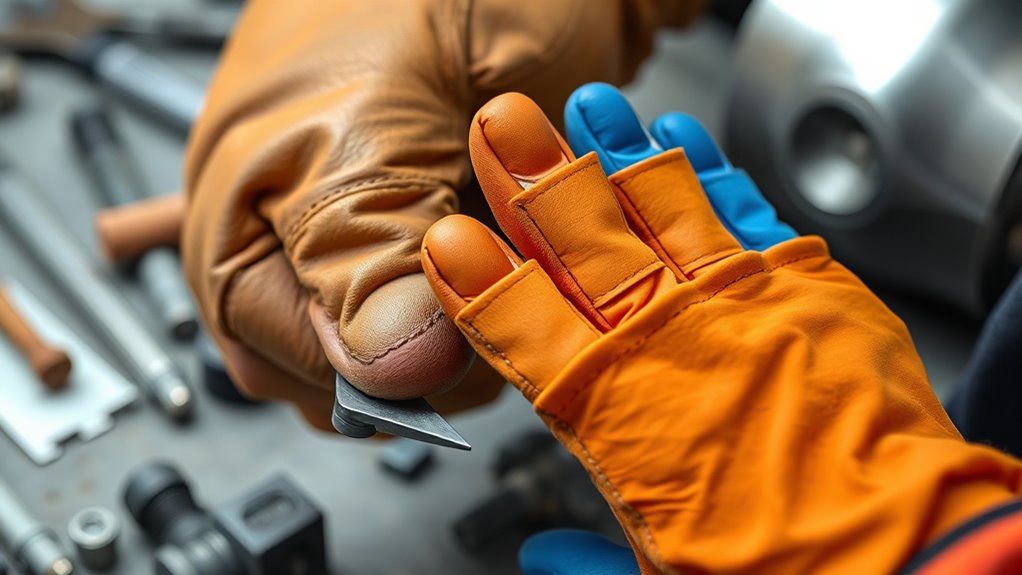
Choosing hand and finger guards that fit well and feel comfortable is essential for safety and work efficiency. You should also consider the durability of the material to make certain it provides adequate protection during tough tasks. Knowing when to wear these guards helps prevent injuries, especially during cutting, grinding, or handling sharp tools. Additionally, selecting appropriate safety gear that aligns with the specific activity ensures comprehensive protection.
Proper Fit and Comfort
Ensuring that hand and finger guards fit well and feel comfortable is essential for effective protection during workshops. Proper fit allows you to move freely without feeling restricted or risking slippage. To achieve this, focus on adjusting straps snugly but not too tight, and choose guards made from material with good flexibility. When guards fit properly, you’ll feel confident and protected throughout your work. Remember, discomfort can lead to distractions or removal, increasing injury risk. The right fit enhances your safety and performance. Additionally, selecting guards made with skin-friendly materials can help prevent irritation during prolonged use.
Material Durability and Safety
When selecting hand and finger guards, prioritizing material durability is essential for safety. You need guards made from materials with high strength to withstand cuts, impacts, and abrasions. Material strength guarantees that the guards won’t tear or break during demanding tasks, providing reliable protection. Always check that the guards meet established safety standards, which verify their durability and effectiveness. Durable materials like reinforced leather, high-performance plastics, and specialized composites offer the best protection. Weak or low-quality materials compromise safety and increase injury risk. By choosing guards with proven material strength and compliance with safety standards, you ensure your hands and fingers stay protected under tough working conditions, reducing the chance of accidents and injuries in the workshop. Additionally, understanding the different types of protective gear helps in selecting the most suitable option for specific tasks.
When to Wear Guards
You should wear hand and finger guards whenever you’re working with sharp, hot, or heavy materials that could cause cuts, burns, or crush injuries. Proper use of guards is essential for effective machine guarding and is often indicated by safety signage. Knowing when to wear guards helps prevent accidents and injuries. Consider these situations:
- Handling sharp tools or blades
- Working with hot surfaces or molten materials
- Operating heavy machinery with pinch points
- Performing tasks near moving or exposed parts
- Monitoring market trends and insights to stay informed about potential hazards in your environment
In these cases, guards provide a barrier against hazards. Always follow safety signage instructions, and don appropriate guards before starting. Using hand and finger guards at the right time minimizes risks and keeps your workspace safe.
Footwear for Workshop Safety
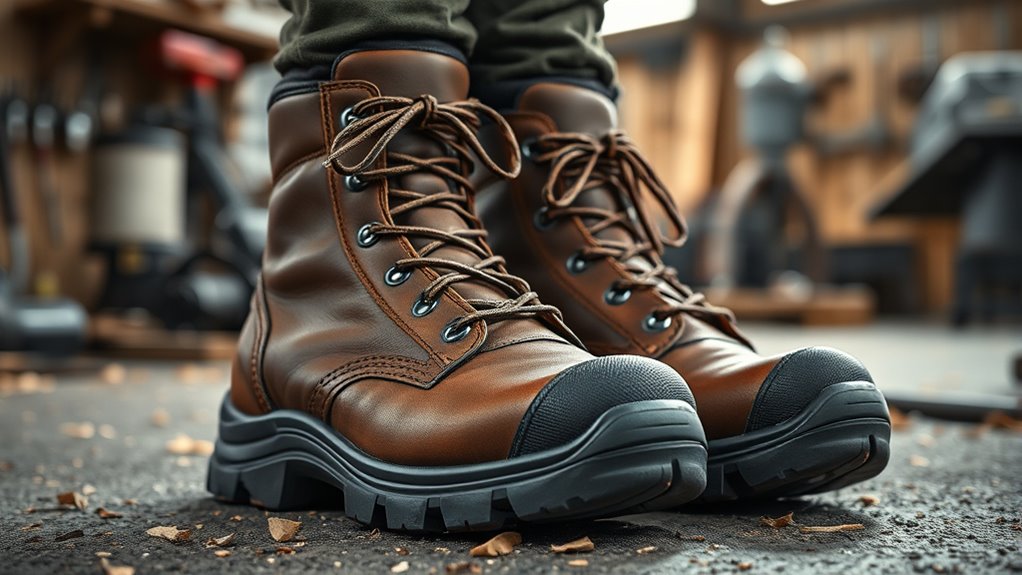
Choosing the right footwear is essential for staying safe in a workshop. You need safety footwear that provides protection from falling objects, sharp debris, and potential electrical hazards. Look for shoes with reinforced toes, such as steel or composite safety toes, to prevent injuries if something drops. Slip resistant shoes are equally important, as workshop floors can be slick from oil, water, or sawdust, increasing the risk of slips and falls. Ensure your footwear fits well and offers good grip. Avoid open-toed shoes or sneakers without proper protection. Invest in quality safety footwear designed for workshop environments, and always keep them in good condition. Proper footwear not only shields your feet but also boosts your confidence and efficiency while working. Additionally, selecting footwear with Slip Resistance features can significantly reduce the risk of accidents on slippery surfaces.
Protective Clothing and Aprons
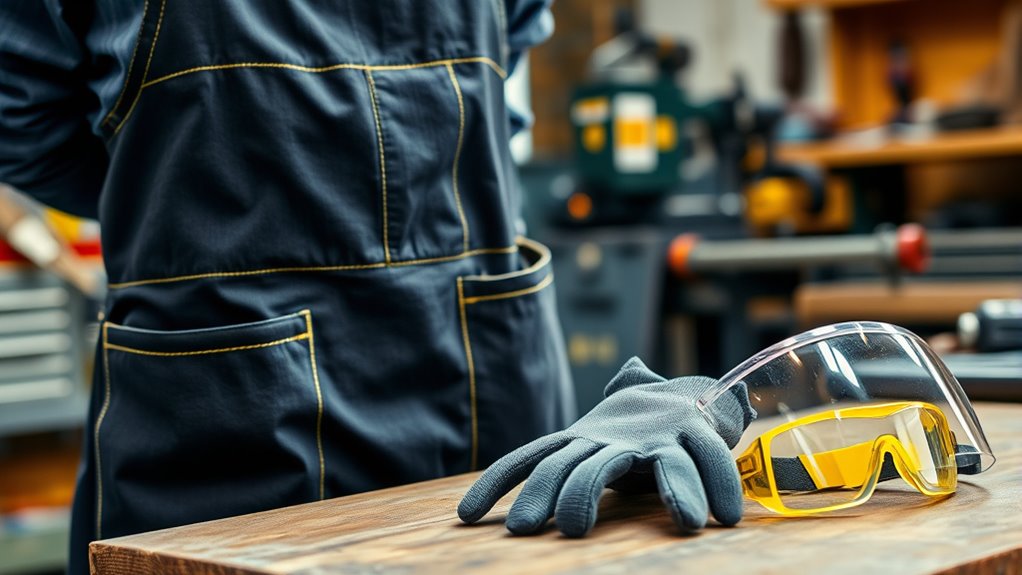
Ever consider how protective clothing and aprons can prevent serious injuries in the workshop? Wearing the right protective clothing is essential to shield your skin from sparks, chemicals, and sharp objects. Aprons provide an extra layer of defense against spills and debris, keeping you safe and clean. Here are four key benefits:
- Protects your torso and clothes from hazardous materials
- Reduces the risk of burns and cuts
- Keeps sparks and hot particles away from your skin
- Adds comfort and confidence during tasks
Choosing durable, flame-resistant protective clothing and sturdy aprons ensures you’re well-protected. Always wear appropriate gear for the job, and replace worn or damaged items promptly. Proper protective clothing and aprons are your first line of defense against workshop accidents. Incorporating safety gear into your routine can significantly minimize potential injuries.
Emergency and First Aid Supplies
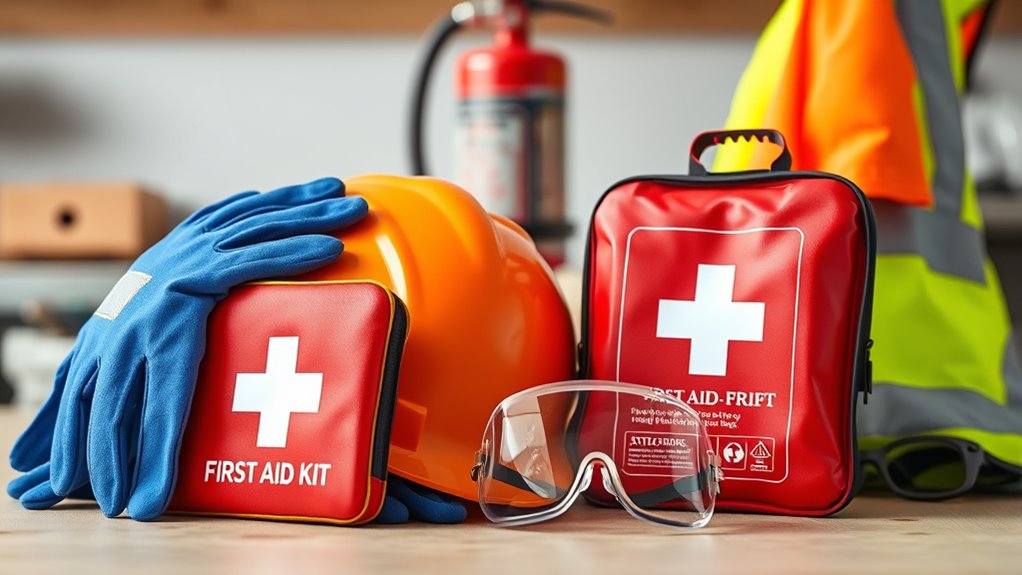
Having the right protective clothing and aprons in place helps prevent many injuries, but accidents can still happen. That’s why you need well-stocked emergency and first aid supplies nearby. Keep a fully stocked first aid kit with bandages, antiseptics, and gloves accessible at all times. Regular fire extinguisher maintenance is vital—ensure they’re inspected and ready to use in case of a fire. Also, plan your emergency exits carefully, making sure they’re unobstructed and clearly marked. Practice emergency exit planning so everyone knows how to evacuate quickly. Additionally, integrating automation’s role in business intelligence can help monitor safety equipment status in real-time, ensuring readiness at all times. Having these supplies and plans in place minimizes risks and guarantees you’re prepared to respond swiftly, reducing injury severity and maintaining safety in your workshop.
Frequently Asked Questions
How Often Should Safety Gear Be Inspected for Damage or Wear?
You should inspect your safety gear regularly to verify it’s in good condition. Typically, you need to check for damage or wear before each use, especially for items like gloves, goggles, and helmets. Follow the recommended inspection frequency for each piece, and don’t hesitate to replace gear if it shows signs of damage. Regular inspections help you identify when gear replacement is necessary, keeping you safe during your work.
Are There Specific Safety Standards for Different Workshop Tools?
You should check if there are specific safety standards for your workshop tools by consulting local workshop regulations and manufacturers’ guidelines. Personal protective equipment requirements vary depending on the tool, guaranteeing you use the right gear for each task. Adhering to these standards helps prevent accidents and ensures compliance. Regularly review and follow safety standards to keep your workspace safe and meet legal obligations.
Can Safety Gear Be Shared Among Workers, or Should It Be Personal?
Imagine the risks lurking around shared safety gear—you might think it’s fine, but think again. You should always use personal safety equipment rather than sharing gear, because it minimizes contamination and guarantees proper fit. Sharing safety gear can spread germs and compromise safety, putting you and your coworkers at risk. Protect yourself and others by always choosing your own gear—personal safety equipment is your best line of defense in any workshop.
What Maintenance Routines Are Recommended for Safety Equipment?
You should regularly inspect your safety equipment, following proper storage practices to prevent damage. Clean your gear according to manufacturer instructions, using appropriate cleaning procedures to remove dirt and contaminants. Replace any worn or damaged items promptly. Proper maintenance guarantees your safety gear remains effective, reduces the risk of injury, and extends its lifespan. Always store gear in a clean, dry place to maintain its integrity and readiness for use.
How Do I Choose the Right Size and Fit for Safety Gear?
Ever wonder how to guarantee your safety gear works effectively? Proper fitting is key—ill-fitting gear can compromise protection. You should try on different sizes and styles to find the right fit, prioritizing comfort considerations so you stay focused on your work. Check for snugness without discomfort, and make sure straps or closures are secure. Remember, the right size boosts both safety and confidence in your work environment.
Conclusion
By now, you see how essential each piece of safety gear is to keep you protected. Are you ready to prioritize your safety and gear up before starting your workshop tasks? Remember, taking these simple precautions not only prevents accidents but also guarantees you stay confident and secure while working. Don’t wait until it’s too late—equip yourself properly and make safety your top priority every time you step into the workshop.