
TL;DR

Get business pricing on tools and workshop supplies
- Business-only prices and quantity discounts
- Tax-exempt purchasing
- Multiple users, one account, clear invoices
In 2018, researchers and enthusiasts examined Soviet-era control rooms, revealing their distinctive vintage design and technological features. This exploration offers insights into Cold War-era engineering and Soviet aesthetics.
In 2018, a documentary and photographic project brought renewed attention to the vintage control rooms used by the Soviet Union, highlighting their distinctive design and technological features. This exploration sheds light on Cold War-era engineering and Soviet aesthetics, offering a visual and cultural perspective on a pivotal period in history.
The project, led by researchers and photographers, documented several Soviet control rooms, including those used for nuclear, military, and space programs. These control rooms are characterized by their extensive use of analog equipment, large control panels, and a distinctive Soviet-era aesthetic, with an emphasis on functionality and durability.
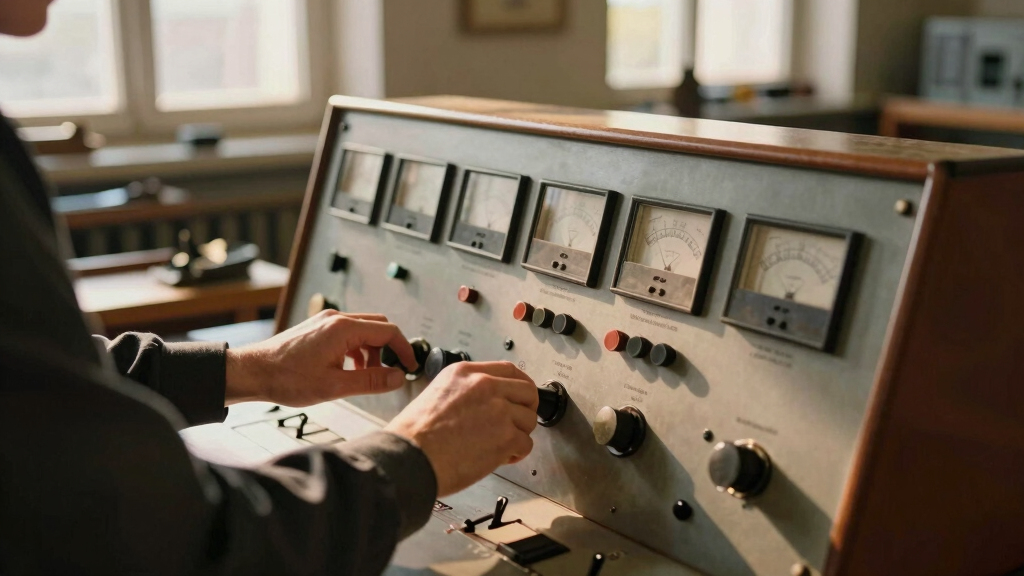
Many of these control rooms remain preserved or accessible for study and tourism, providing a rare glimpse into the operational environments of the Cold War. The photographs and footage from 2018 reveal the vintage appearance of these spaces, with rows of switches, dials, and indicator lights, reflecting the technological standards of the time.
Experts note that these control rooms played a crucial role in Soviet strategic operations, including missile launches and space missions. The preservation and documentation efforts aim to maintain historical memory and understand the technological evolution of Soviet engineering.
Cultural and Historical Impact of Soviet Control Room Design
This exploration matters because it offers a tangible connection to the Cold War era, illustrating the technological and aesthetic choices of the Soviet Union. The vintage control rooms symbolize a period of intense geopolitical tension and technological competition, and their preservation helps contextualize this history for future generations.
Additionally, the design reflects Soviet priorities—emphasizing durability, simplicity, and functionality—offering insights into Soviet engineering philosophies. The visual appeal of these spaces has also garnered interest from enthusiasts of vintage technology and architecture, contributing to broader cultural appreciation.
Products Worth Considering

Sonos Era 100 SL Compact Microphone-Free Speaker, Black

Levoit Core 600S-P Smart Air Purifier for Large Rooms

Sonos Era 100 Wireless Smart Speaker, Black
As an affiliate, we earn on qualifying purchases.
Historical Background of Soviet Control Rooms
Soviet control rooms were central to the operation of nuclear missile silos, space launch facilities, and military command centers during the Cold War. Built from the 1950s through the 1980s, these spaces were designed to operate under extreme conditions and included extensive analog instrumentation.
Prior to the 2018 documentation, many of these control rooms had fallen into disuse or disrepair, with some being classified or inaccessible. The resurgence of interest in 2018 was driven by both historical preservation efforts and fascination with Cold War technology.
Photographers and historians have emphasized that these spaces reflect Soviet technological priorities, with an emphasis on robustness over modern digital interfaces, which were less prevalent at the time.
“The Soviet control rooms from the 1960s and 70s are a testament to the engineering focus of that era—robust, straightforward, and built to last.”
— Dr. Ivan Petrov, Cold War historian
Unconfirmed Details About Control Room Preservation
It is not yet clear how many Soviet control rooms remain fully preserved or accessible for public viewing. Some sites are believed to be classified or in disrepair, and the extent of their preservation varies by location. The long-term plans for these sites are still under discussion among historians and preservationists.
Future Plans for Cold War Control Room Documentation
Researchers and preservationists plan to continue documenting Soviet control rooms, with efforts to restore and maintain some sites for educational and historical purposes. There is also interest in expanding digital archives and virtual tours to broaden access. Further studies are expected to clarify the number and condition of remaining control rooms.
Key Questions
Why are Soviet control rooms considered culturally significant?
Soviet control rooms are significant because they embody Cold War technological and aesthetic values, serving as physical symbols of Soviet strategic and engineering priorities during a tense geopolitical period.
Are any Soviet control rooms still operational today?
Most control rooms documented in 2018 are no longer operational; many are preserved as historical sites or are abandoned. Their operational status varies by location and security classification.
What makes these control rooms visually distinctive?
The control rooms feature extensive analog instrumentation, large control panels, and a utilitarian Soviet-era design that emphasizes function over form, creating a vintage aesthetic appreciated by enthusiasts.
How can the public access these control rooms?
Access is limited; some sites are open to guided tours or are part of museums, while others remain classified or inaccessible. Preservation efforts aim to increase public engagement through digital archives.
Source: hn