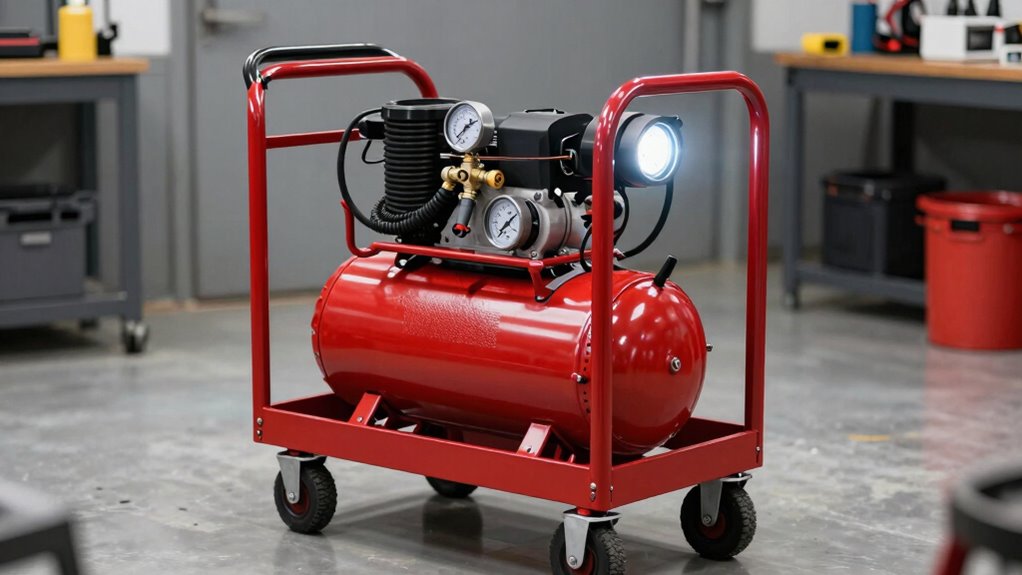

To build a useful mobile air compressor cart, start by selecting sturdy, weather-resistant materials and secure all components with proper fasteners. Use heavy-duty, locking casters for stability and plan for good ventilation. Design compartments or hooks for hoses and tools, ensuring easy access. Double-check all connections and consider ergonomic layout for safe maneuvering. Regular inspections keep your setup safe and functional. Keep going, and you’ll discover how every detail can boost your efficiency and safety.
Key Takeaways
- Select durable, weather-resistant materials and heavy-duty casters with locks for stability and mobility.
- Design ample airflow clearance and accessible controls to ensure safe and easy operation.
- Incorporate organized storage compartments and hooks for hoses, fittings, and accessories.
- Follow electrical safety standards and double-check all connections during assembly.
- Regularly inspect and maintain the cart for wear, damage, and component security.

Creating a mobile air compressor cart is a practical way to make your workspace more efficient and organized. It allows you to easily move your compressor wherever you need it, freeing up space and reducing clutter. But before you start building, it’s essential to consider safety precautions and material selection to guarantee your cart is both durable and safe to use.
First, focus on safety precautions. When constructing your cart, make sure all components are sturdy and can support the weight of the compressor and any additional tools you plan to store. Securely attaching wheels is essential—use heavy-duty casters with locking mechanisms to prevent unwanted movement during operation. Keep in mind that sharp edges or unstable structures can pose risks, so smooth out any rough areas and reinforce weak spots. Also, plan for proper ventilation around the compressor to prevent overheating and guarantee safe operation. When wiring or installing electrical components, follow proper electrical safety standards to avoid hazards. Additionally, choosing the right materials is crucial for durability and safety in your build. Selecting appropriate materials can significantly impact the overall stability and longevity of your cart, especially when exposed to various environmental conditions. Incorporating proper fastening techniques ensures the stability and safety of all components. It’s also beneficial to consider ergonomic design principles to make the cart easier and safer to maneuver and operate.
Ensure all components are sturdy, secure wheels with locks, and maintain proper ventilation for safe compressor operation.
In addition to safety and material choice, pay attention to the overall design. Guarantee there’s enough clearance around the compressor for proper airflow and easy access to controls and gauges. Incorporate compartments or hooks for storing hoses, fittings, and other accessories. When assembling, double-check each connection and attachment for stability. Regularly inspect your cart for signs of wear or damage, and address issues promptly to maintain safety and functionality. You can also improve your cart’s organization by integrating modular storage solutions tailored to your specific tools and accessories. Considering networking principles in your design can also help in organizing electrical components efficiently, reducing clutter and potential hazards.
heavy-duty locking caster wheels for compressor cart
As an affiliate, we earn on qualifying purchases.
As an affiliate, we earn on qualifying purchases.
Frequently Asked Questions
What Tools Are Necessary for Assembling the Cart?
You’ll need basic power tools like a drill, saw, and screwdriver to assemble your cart efficiently. Material selection is essential, so choose sturdy plywood or metal for durability. A measuring tape and clamps help with precise cuts and assembly. Make sure to have safety gear like goggles and gloves. With these tools and materials, you can confidently put together a functional, mobile air compressor cart that’s built to last.
How Do I Ensure the Cart’s Stability During Use?
To guarantee your cart’s stability during use, focus on material selection and weight distribution. Use sturdy, durable materials like metal or heavy-duty plastic to prevent tipping. Position the compressor and other weighty components low and centered for better balance. Additionally, choose a wide, stable base with lockable wheels to prevent movement. This approach keeps your cart steady, safe, and easy to maneuver, even under demanding conditions.
Can I Customize the Cart’s Size for Different Compressors?
Yes, you can customize the cart’s size for different compressors. Focus on appropriate material selection to guarantee durability and ease of customization. Consider adjusting the dimensions based on your compressor’s weight and size, maintaining balanced weight distribution for stability. Use sturdy, lightweight materials like steel or reinforced plywood, and tailor the frame and storage compartments to fit your specific compressor, ensuring safe and efficient mobility.
What Safety Precautions Should I Follow During Construction?
Imagine you’re building a sturdy bridge—you need strong, safe materials and careful planning. During construction, prioritize electrical safety by disconnecting power and avoiding loose wiring. Select durable, non-flammable materials for the frame, wheels, and handles. Always wear protective gear, work in a well-ventilated area, and double-check all connections. Safety isn’t just a step; it’s the foundation that keeps your project intact and secure.
How to Maintain the Air Compressor Cart Over Time?
To maintain your air compressor cart over time, regularly check and replace the air filter to guarantee peak performance. Keep hoses organized using proper storage solutions to prevent damage and tangling. Also, inspect for leaks and drain moisture from the tank frequently to avoid rust. Regular cleaning and timely component replacements will extend your cart’s lifespan and keep it running efficiently, so make these practices part of your routine.
ventilated tool storage compartments
As an affiliate, we earn on qualifying purchases.
As an affiliate, we earn on qualifying purchases.
Conclusion
Now that you’ve built your own mobile air compressor cart, you’re all set to tackle projects with ease and efficiency. With everything neatly in place and portable at your fingertips, you can truly get the ball rolling without missing a beat. Just remember, a well-made cart keeps your tools close and your work smooth sailing. So go ahead, put your new setup to the test and watch it make your tasks a whole lot easier—truly a cut above the rest.
ergonomic mobile air compressor cart
As an affiliate, we earn on qualifying purchases.
As an affiliate, we earn on qualifying purchases.
organized hose and tool hooks for workshop
As an affiliate, we earn on qualifying purchases.
As an affiliate, we earn on qualifying purchases.