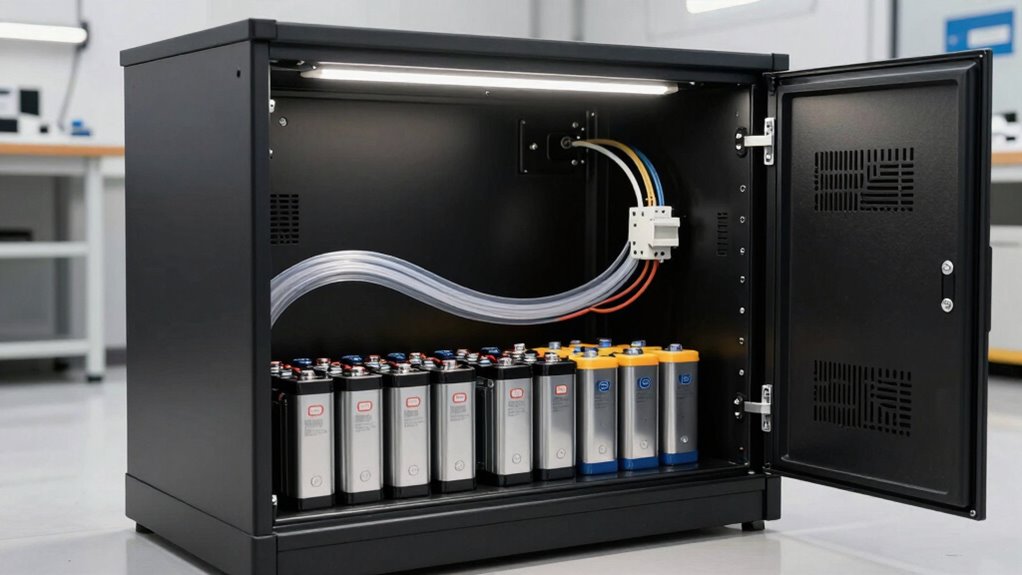

To build a safer battery storage cabinet, use durable, fire-resistant materials like metal, and install vents at the top and bottom for airflow. Keep batteries organized on non-conductive racks, with clear labels and secure wiring. Add temperature and voltage monitors for early warnings, and include fire extinguishers nearby. Regularly check and clean vents, and follow safety standards for construction and maintenance. Continuing will reveal more essential tips for a safe and efficient setup.
Key Takeaways
- Select fire-resistant, durable materials like metal or fire-retardant composites for the cabinet construction.
- Incorporate strategically placed vents and exhaust fans to ensure continuous airflow and heat dissipation.
- Properly organize batteries on non-conductive racks, maintaining adequate spacing and clear labeling for safety.
- Install monitoring systems for temperature and voltage, with early warning alerts for potential hazards.
- Follow safety standards, conduct regular inspections, and keep firefighting tools nearby to maintain ongoing safety.

Have you ever considered how to organize your battery storage safely and efficiently? Building a dedicated battery storage cabinet isn’t just about neatness; it’s about creating a secure environment that minimizes risks during charging and usage. Properly designed, your cabinet can greatly enhance battery safety by reducing the chances of overheating, fires, or harmful fumes. The first step is understanding that ventilation techniques play an essential role in maintaining a safe temperature inside the cabinet. Batteries, especially lithium-ion types, generate heat during charging and discharging, so good airflow is necessary to prevent thermal buildup.
Proper ventilation is key to safe, efficient battery storage and preventing overheating or fire hazards.
When constructing your cabinet, start by choosing durable, non-flammable materials like metal or fire-retardant composites. These materials contain potential fires and resist heat better than plastics or wood. Next, plan for adequate ventilation. Incorporate vents or small exhaust fans that promote continuous airflow, helping to dissipate heat and fumes. Position these vents strategically—preferably near the top of the cabinet, where hot air rises, and near the bottom, to draw in cooler air. If you opt for fans, ensure they are rated for continuous operation and are explosion-proof if there’s any risk of flammable gases.
Inside the cabinet, organize your batteries with proper spacing. Overcrowding can trap heat and compromise battery safety. Use non-conductive racks or shelves to keep batteries separated, reducing the risk of short circuits. Label each battery clearly and keep maintenance tools and fire extinguishers nearby, just in case. When wiring your batteries, use high-quality connectors and ensure all connections are tight and insulated. Proper wiring not only increases safety but also improves overall efficiency.
Additionally, install a monitoring system to track temperature and voltage levels inside your cabinet. This gives you early warning signs of potential issues, allowing you to act before problems escalate. Regular inspections are essential—check for signs of swelling, corrosion, or damage, and clean vents to maintain ideal airflow. Remember, safety isn’t a one-time setup; it’s an ongoing process that requires diligence. Incorporating proper maintenance practices can significantly extend the effectiveness of your safety measures.
Ensuring proper ventilation techniques and adhering to safety standards can help prevent dangerous situations and prolong your battery’s lifespan. Finally, always follow manufacturer guidelines and local electrical codes when building and installing your battery storage cabinet. Proper planning with an emphasis on ventilation techniques and battery safety measures ensures your setup is both secure and efficient. With the right design, you’ll protect your equipment, reduce fire hazards, and extend the lifespan of your batteries, making your energy storage both safe and reliable.
fire-resistant battery storage cabinet
As an affiliate, we earn on qualifying purchases.
As an affiliate, we earn on qualifying purchases.
Frequently Asked Questions
What Types of Batteries Are Safest for Storage Cabinets?
You should opt for lithium iron phosphate (LiFePO4) batteries, as their chemistry makes them safer for storage cabinets due to reduced fire risk and thermal stability. Follow storage best practices by keeping batteries in a cool, dry, well-ventilated area, away from flammable materials. Properly secure the batteries, avoid overcharging, and regularly inspect for damage. This guarantees safer, more reliable storage, minimizing hazards and prolonging battery life.
How Do I Prevent Overheating in the Cabinet?
To prevent overheating, think of your cabinet as a well-ventilated oasis. You should guarantee proper battery insulation to control heat buildup and install a temperature sensor that triggers ventilation fans when needed. Incorporate fire suppression systems, like a fire extinguisher or foam-based solutions, to quickly tackle any sparks. Regularly check the ventilation and insulation to keep temperatures stable and your batteries safe from overheating.
Can I Customize the Cabinet Size for Different Batteries?
Yes, you can customize the cabinet size for different batteries. Start by carefully measuring each battery’s dimensions and select durable materials like metal or heavy-duty plastic for safety and stability. Incorporate appropriate locking mechanisms to secure different-sized batteries and prevent unauthorized access. Adjust the internal compartments accordingly, ensuring proper ventilation and insulation. Custom sizing helps optimize space, safety, and organization, making your battery storage more efficient and tailored to your specific needs.
What Ventilation Options Are Recommended for Safety?
Ventilation options are crucial for battery fire prevention, ensuring safe operation within your cabinet. You should incorporate a well-designed ventilation system that includes exhaust fans and intake vents to promote airflow. Using a combination of passive and active ventilation creates a safety balance, preventing heat buildup and gas accumulation. Properly planned ventilation system design minimizes risks, helping your batteries stay cool and reducing the chance of fires, especially during charging or malfunction.
How Often Should I Inspect Stored Batteries?
You should inspect your stored batteries at least once every three to six months. During inspections, check for signs of corrosion, leaks, or swelling, and confirm the batteries are properly organized on your storage shelf. Proper storage shelf organization helps you quickly identify potential issues. Also, consider battery recycling protocols for damaged or expired batteries, and always handle inspections with safety in mind to prevent accidents or hazardous exposure.
ventilated battery storage enclosure
As an affiliate, we earn on qualifying purchases.
As an affiliate, we earn on qualifying purchases.
Conclusion
So, now you’re all set to become the hero of safe charging — or at least, the proud owner of a fancy battery cabinet. Just imagine impressing friends with your DIY skills while avoiding fiery explosions and mysterious battery leaks. Who knew that building a simple cabinet could turn you into a safety genius? Go ahead, celebrate your savvy. After all, in the wild world of batteries, a little caution goes a long way — and maybe a fire extinguisher too.
As an affiliate, we earn on qualifying purchases.
battery monitoring system for storage
As an affiliate, we earn on qualifying purchases.
As an affiliate, we earn on qualifying purchases.