
The hidden upgrade behind better dust collection and cleaner air is implementing a thorough safety and ventilation strategy. By capturing dust at the source with blast gates, sealing connections, and regularly maintaining filters, you reduce airborne particles and health risks. Upgrading filters or adding cyclone separators can boost performance without breaking the bank. Taking these steps not only safeguards your health but also prolongs your equipment’s life. Keep exploring to discover how these simple changes can transform your workshop environment.
Key Takeaways
- Installing dedicated collection ports and blast gates at source reduces dust escape and improves overall system efficiency.
- Incorporating air filtration and proper ventilation strategies disperses dust, enhancing air quality beyond just the collection system.
- Regular maintenance of filters, hoses, and blowers prevents performance decline and dust leaks.
- Cost-effective upgrades like cyclone separators and DIY collection hoods significantly boost dust separation.
- Prioritizing safety protocols and system sealing minimizes health risks and long-term equipment damage.

Improving dust collection in your shop can substantially enhance safety and cleanliness, making your workspace more efficient and comfortable. One of the most overlooked but essential upgrades lies in optimizing your dust collection system, which isn’t just about installing a bigger vacuum or more powerful tools. It’s about implementing the right safety protocols and managing your budget considerations to get the best results without overspending.
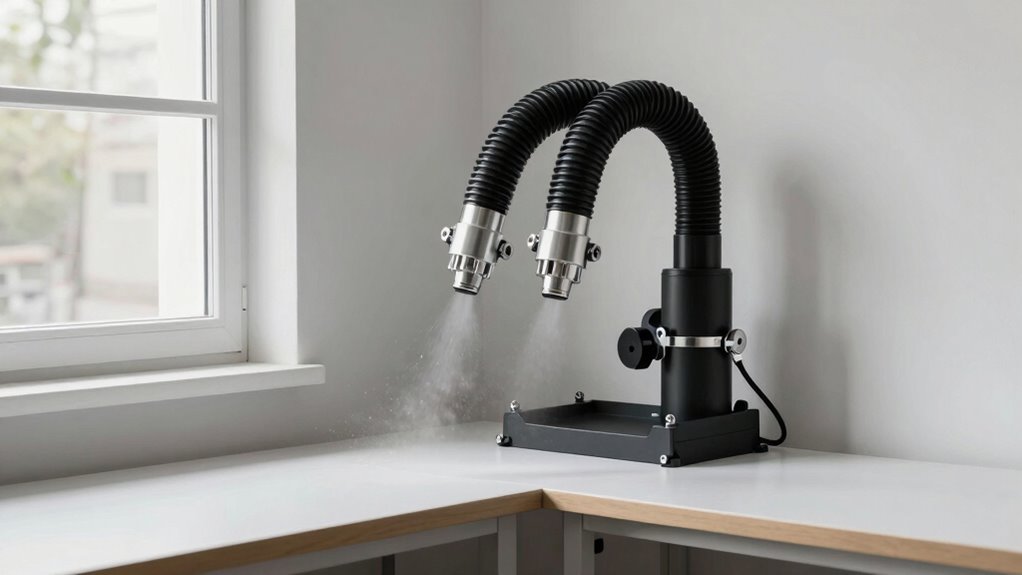
First, safety protocols should be your top priority. Dust particles, especially fine woodworking dust, pose serious health risks like respiratory issues and allergies. To combat this, you need to guarantee your dust collection system captures particles at the source—right where they’re generated. This might mean installing blast gates, flexible hoses, or dedicated collection ports for each tool. Properly sealing hoses and connections prevents leaks that can release dust into the air, keeping your shop air cleaner. Regularly inspecting and maintaining your system is equally important; clogged filters, worn hoses, or malfunctioning blowers reduce efficiency and increase health hazards. Establishing routine safety checks ensures your system performs reliably, protecting your health and that of anyone else in the shop. Additionally, understanding the importance of air quality management can help you make informed decisions about your dust collection setup. Recognizing the health risks of fine dust emphasizes the need for effective dust control measures. Incorporating air filtration systems can further improve overall air quality, especially in smaller or poorly ventilated spaces. Implementing proper ventilation strategies can also significantly reduce dust accumulation and improve overall air circulation. A well-designed ventilation plan can help disperse dust more effectively, contributing to a healthier workspace.
Prioritize safety by sealing hoses, installing blast gates, and performing regular system inspections to protect health and ensure reliable dust collection.
Budget considerations also play a noteworthy role in your shop upgrade. You don’t need the most expensive, top-of-the-line system to see a marked improvement. Instead, focus on strategic investments that maximize efficiency without breaking the bank. For example, upgrading filters or adding a cyclone separator can greatly boost dust separation and air quality at a relatively low cost. Consider DIY solutions for some components, like building custom collection hoods or using affordable hoses and fittings. Prioritize upgrades that offer the highest return on investment—like upgrading your filter system or adding a dedicated dust collector for high-dust-producing tools—before splurging on more elaborate setups. Planning your purchases carefully helps you stay within your budget while still achieving a cleaner, safer workspace. It’s also important to remember that cost-effective upgrades can often be achieved through simple modifications rather than expensive equipment.
The hidden upgrade behind better dust collection isn’t just about hardware; it’s about integrating safety protocols with smart budgeting. When you approach your shop improvements with this mindset, you’ll find that your workspace becomes not only cleaner but also safer and more comfortable to work in. You’ll notice the difference in air quality and feel more confident knowing you’re protecting your health. Plus, a well-planned upgrade reduces long-term costs by preventing costly health issues and equipment damage caused by dust buildup. So, look beyond the obvious and consider these less obvious, yet impactful, upgrades—your lungs, your tools, and your wallet will thank you.
dust collection blast gates
As an affiliate, we earn on qualifying purchases.
As an affiliate, we earn on qualifying purchases.
Frequently Asked Questions
How Much Does the Shop Upgrade Typically Cost?
The shop upgrade usually costs between $1,000 and $3,000, depending on the size and complexity of your dust collection systems. You’ll see a significant air quality improvement when you invest in better dust collection, reducing dust buildup and improving safety. While it’s an upfront expense, the long-term benefits of cleaner air and a healthier workspace make it worthwhile. Budget accordingly for quality equipment to get the best results.
Can I Install the Upgrade Myself?
You can definitely tackle the upgrade yourself if you’re comfortable with DIY installation; it’s a rewarding project that improves your shop’s air quality. Just keep in mind compatibility concerns—checking that your equipment fits and understanding the system’s requirements will save you headaches. Carefully read the instructions, gather the right tools, and take your time. With patience, you’ll enjoy cleaner air without needing professional help.
How Long Does the Installation Process Take?
The installation process typically takes around 4 to 6 hours, depending on your shop’s size and experience. You’ll focus on improving dust collection and airflow optimization, ensuring all components fit correctly. During this time, you’ll connect hoses, adjust ductwork, and test the system. Take your time to follow instructions carefully, and you’ll achieve better dust collection, cleaner air, and a more efficient workspace.
Will This Upgrade Fit All Types of Dust Collectors?
Did you know that over 80% of dust collector upgrades face compatibility concerns? This upgrade offers impressive versatility, but it doesn’t fit all dust collector models. Before proceeding, check your specific unit’s make and model. While many systems benefit from this enhancement, some may require additional adapters or modifications. Always verify compatibility to guarantee seamless integration and peak performance, making your dust collection system more efficient and healthier for your workspace.
Are There Any Maintenance Requirements After the Upgrade?
After the upgrade, you’ll need to perform maintenance regularly, typically every few months. The maintenance frequency depends on your dust collection usage and environment. You’ll mainly need to check and replace filters when they become dirty or clogged to maintain peak performance. Keeping up with filter replacement ensures your dust collector runs efficiently and prolongs its lifespan, helping you maintain cleaner air and a safer workspace.
cyclone separator for dust collection
As an affiliate, we earn on qualifying purchases.
As an affiliate, we earn on qualifying purchases.
Conclusion
Upgrading your dust collection system is like installing a gust of fresh air in your workshop, transforming it into a cleaner, safer space. With better filtration and airflow, you’ll notice less dust settling everywhere, making your projects more enjoyable and your health a top priority. Don’t overlook this hidden upgrade—it’s the secret to a more efficient, enjoyable shop. Once you see the difference, you’ll wonder how you ever worked without it!
air filtration system for workshop
As an affiliate, we earn on qualifying purchases.
As an affiliate, we earn on qualifying purchases.
shop ventilation kit
As an affiliate, we earn on qualifying purchases.
As an affiliate, we earn on qualifying purchases.