To prevent warping in your metal shed kit, start with a solid foundation that’s level, stable, and well-drained. Avoid using unstable or uneven bases like poorly prepared ground or inadequate materials. Instead, opt for a gravel bed or concrete slab that distributes weight evenly and resists shifting. Properly anchoring and ensuring good drainage can also boost your shed’s stability. Keep these tips in mind, and you’ll learn how to fix common foundation issues effectively.
Key Takeaways
- Using an uneven or unstable foundation causes metal shed warping over time.
- Properly prepare and level the base before installing the shed to prevent structural distortion.
- Incorporate drainage solutions to avoid moisture buildup that leads to warping.
- Choose durable, weather-resistant materials like concrete or treated wood for the foundation.
- Regularly check and maintain the foundation to ensure long-term stability and prevent warping.
Why Your Metal Shed Needs a Solid Foundation to Avoid Warping

A solid foundation is essential for your metal shed because it keeps the structure level and stable. Proper foundation considerations prevent shifting, warping, and damage over time. When choosing materials, opt for durable options like concrete, gravel, or treated wood that resist moisture and decay. The right material selection ensures your shed remains sturdy, even in harsh weather. It’s important to take into account the ground’s stability and drainage to avoid water pooling or shifting soil. A well-chosen foundation not only supports the weight of your shed but also distributes it evenly, preventing warping caused by uneven pressure. Additionally, understanding the importance of foundation integrity helps ensure your shed’s longevity and resistance to environmental stresses. Ensuring proper soil compaction beneath the foundation can significantly improve its stability. By prioritizing foundation considerations and selecting the proper materials, you set the stage for a long-lasting, warp-free metal shed.
How to Check If Your Existing Foundation Is Still Stable

To determine if your existing foundation is still stable, start by inspecting the surface for cracks, uneven spots, or signs of shifting. During a thorough foundation inspection, look for visible cracks in the concrete or ground, which could indicate movement. Check for any bulges, sinking, or high spots that suggest uneven settling. Pay attention to the soil stability beneath the foundation—if the soil appears loose, eroded, or cracked, it may no longer support your shed properly. Use a level or straightedge to verify if the foundation’s surface remains flat. If you notice any signs of instability, it’s essential to address the issues before installing or repairing your metal shed to prevent future warping or structural problems.
Common Mistakes That Cause Metal Shed Foundations to Warp
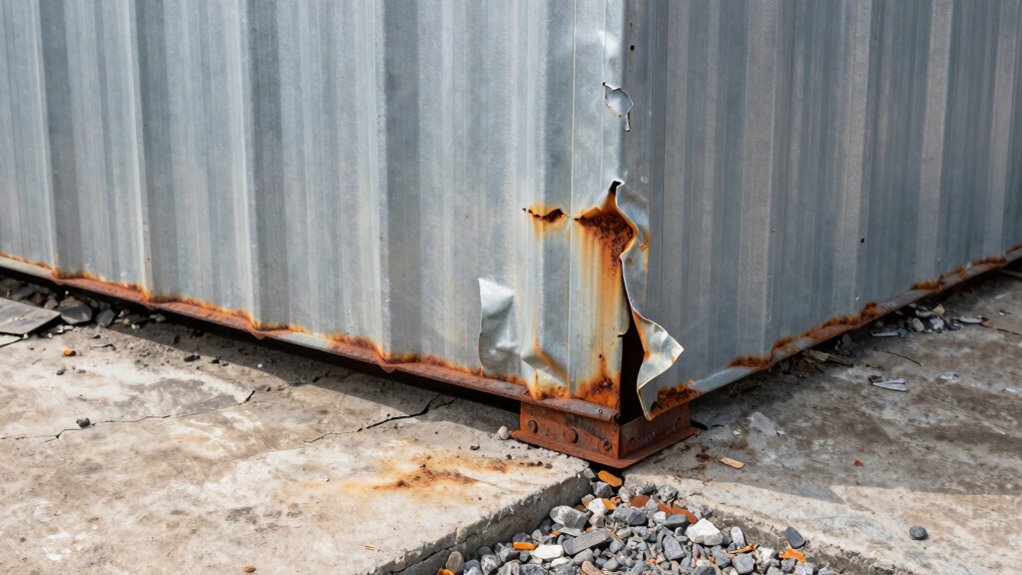
Using an unstable or improperly prepared foundation often leads to warping in metal shed structures. One common mistake is allowing excessive foundation moisture, which can cause the base to swell or shift over time, putting stress on the shed walls. Additionally, poor anchoring techniques—such as uneven or shallow anchors—fail to secure the shed properly, making it more susceptible to movement and warping. When the foundation is not level or is unevenly damp, the metal panels can bend or twist under pressure. To avoid these issues, guarantee proper drainage around your foundation to control moisture levels and use correct anchoring methods that firmly secure your shed, preventing shifting and warping. Proper foundation stability is essential for long-lasting, warp-free sheds, especially considering the importance of maintaining structural integrity over time. Ensuring proper site grading helps direct water away from the foundation, further minimizing moisture-related problems and supporting overall building durability.
The Best Materials and Methods for a Durable Shed Foundation

To build a durable shed foundation, choosing the right materials and methods is essential. Using a gravel bed guarantees stability, while pressure-treated lumber prevents rot and damage. Additionally, properly leveling your foundation guarantees your shed stays straight and warping-free over time. Incorporating high-quality waterproofing techniques can further protect your shed from moisture-related issues and extend its lifespan. Applying moisture barriers around the base can significantly reduce the risk of water infiltration and foundation damage. Ensuring proper drainage solutions around your shed is also crucial to prevent water accumulation that can compromise the foundation. Selecting the appropriate foundation materials ensures long-term durability and minimizes maintenance needs. Understanding soil stability is vital to choosing the best foundation approach for your specific location.
Gravel Bed Stability
A well-constructed gravel bed forms the foundation of a durable shed by providing stability and proper drainage. When planning your metal shed placement, choosing the right foundation material is vital. Gravel is ideal because it prevents water accumulation and minimizes shifting over time. To guarantee stability, spread a 4-6 inch layer of compacted gravel, leveling it carefully. Use a tamper or plate compactor to secure a firm base. Proper drainage stops water from pooling around or under your shed, reducing the risk of warping or foundation damage. Avoid loose or uneven gravel, which can cause the shed to settle unevenly. A stable gravel bed ensures your metal shed remains level, protecting it from warping and extending its lifespan.
Pressure-Treated Lumber Use
Pressure-treated lumber is the top choice for building a durable shed foundation because it resists rot, decay, and insect damage. Using high-quality pressure-treated lumber ensures your foundation lasts longer and maintains stability. When selecting foundation materials, look for lumber treated with preservatives that prevent moisture absorption. Consider these key points:
- Choose lumber rated for ground contact for added protection
- Use 4×4 or 6×6 posts for stronger support
- Ensure pressure-treated wood is free of excessive knots or splits
- Avoid untreated wood to prevent premature decay
- Seal cut ends to enhance longevity and prevent moisture ingress
- Selecting pressure-treated lumber with proper certification can further guarantee its resistance and durability.
Proper Foundation Leveling
Achieving a perfectly level foundation is vital for the stability and longevity of your shed. Start with a thorough foundation inspection to identify any uneven spots or dips. Use leveling techniques such as a long carpenter’s level or a laser level to guarantee accuracy across the entire area. If the ground isn’t flat, consider adding gravel or sand to create a stable, well-drained base. When pouring concrete, use forms and a screed to achieve a flat surface. For wood foundations, shim or adjust the foundation posts until they are uniformly level. Remember, even small deviations can cause warping or structural issues later. Taking the time to properly level your foundation now prevents costly repairs and guarantees your shed remains sturdy and durable. Additionally, understanding foundation requirements can help ensure your shed remains stable over time. Proper material selection for your foundation plays a crucial role in resisting warping and enhancing durability. Selecting the right foundation materials and techniques will provide a solid base that minimizes the risk of warping or shifting in the future. It is also beneficial to consider mismatch of materials, as incompatible materials can lead to foundation issues over time.
How to Fix or Install a Foundation That Won’t Warp

To guarantee your metal shed foundation stays flat and durable, proper installation is essential. Start with quality foundation materials, such as concrete slabs or treated wood, to prevent warping. Use correct installation techniques, including leveling the surface thoroughly and ensuring proper drainage. Avoid shortcuts that can cause uneven settling.
Key steps include:
- Select sturdy, weather-resistant foundation materials
- Prepare a level site before installation
- Compact the base to prevent shifting
- Use a level to check for flatness throughout installation
- Incorporate drainage solutions to avoid water damage
When to Call a Professional for Foundation Repairs

While minor issues like small cracks or slight warping might be manageable on your own, you should call a professional when foundation problems worsen or show signs of significant damage. If you notice large cracks, uneven settling, or persistent water intrusion, it’s time for a thorough foundation inspection. A professional can accurately assess the extent of the damage and identify underlying issues that could lead to further warping or structural failure. Don’t delay seeking a professional consultation, as early intervention can save you money and prevent more extensive repairs later. Trust experienced specialists to evaluate your foundation’s condition and recommend the best course of action. Recognizing when to seek expert help ensures your shed remains stable and free from costly damage.
Frequently Asked Questions
Can Uneven Ground Cause Metal Shed Warping?
Yes, uneven ground can cause your metal shed to warp. When you don’t prioritize ground leveling, the foundation loses stability, leading to uneven weight distribution. This instability puts stress on the shed’s structure, resulting in warping over time. To prevent this, make certain proper ground leveling before installation, creating a stable foundation. A level, firm base guarantees foundation stability, keeping your shed straight and free from warping issues.
How Long Does a Typical Metal Shed Foundation Last?
A typical metal shed foundation lasts as long as a dependable friendship, usually 15-20 years. Your foundation’s lifespan depends on the materials used and soil stability. Concrete foundations often last longer, resisting weather and shifting ground, while wood or gravel may need more frequent repairs. Ensuring a solid, level base from quality materials and stable soil helps extend your shed’s durability, preventing warping and structural issues over time.
Are There Specific Climate Conditions That Increase Warping Risk?
Yes, climate impact and weather patterns definitely increase warping risk. If you live in areas with high humidity, frequent rain, or extreme temperature fluctuations, your metal shed foundation is more vulnerable. These conditions cause expansion and contraction, which can lead to warping over time. To prevent this, make sure your foundation is properly installed on a level, stable surface and consider climate-specific treatments or materials to withstand local weather patterns effectively.
Can DIY Foundation Repairs Be Effective Long-Term?
You can make DIY foundation repairs that last if you choose the right foundation materials and assess soil stability carefully. For example, a homeowner reinforced a shed’s base using concrete blocks and improved soil drainage, preventing future shifting. Properly addressing soil conditions and selecting durable materials guarantees your repair holds long-term. However, complex issues might require professional help to guarantee lasting stability and prevent warping.
What Signs Indicate Foundation Failure Before Warping Occurs?
You should watch for uneven floors, cracks in walls or concrete, and gaps around doors and windows, as these signs indicate potential foundation failure. Keep an eye on foundation leveling issues and soil stability around your shed or home. If you notice these problems early, you can address them before warping happens, saving you time and money. Regular inspections are key to catching foundation issues before they worsen.
Conclusion
A solid foundation is essential to prevent your metal shed from warping or suffering damage. Did you know that over 60% of shed issues stem from foundation problems? By ensuring your foundation is stable and properly installed, you can avoid costly repairs and extend your shed’s lifespan. Take the time to check, fix, or upgrade your foundation now—it’s a small step that saves you big headaches later. Don’t wait until warping becomes a costly problem.