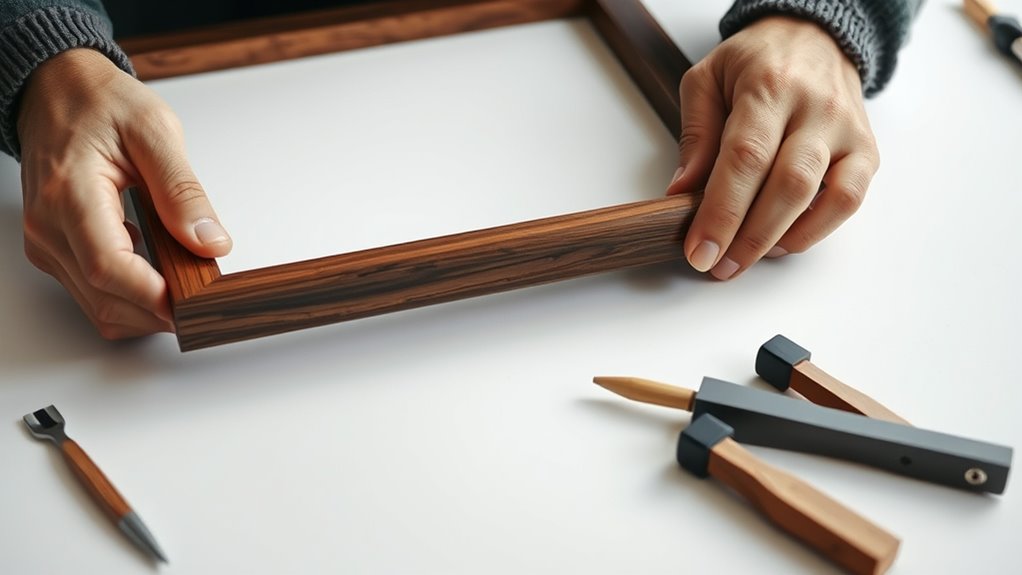

To build custom picture frames, start by selecting your preferred molding style and measuring your artwork and matting accurately. Cut the molding with mitered 45-degree angles at the correct lengths, then assemble the corners securely with glue or nails, ensuring the frame is square. Attach the mat and artwork inside the frame, secure everything with clips or points, and add hardware for hanging. Keep following the steps to perfect your framing project and achieve a professional finish.

Get business pricing on tools and workshop supplies
- Business-only prices and quantity discounts
- Tax-exempt purchasing
- Multiple users, one account, clear invoices
Key Takeaways
- Measure artwork and select appropriate molding sizes to ensure a perfect fit.
- Cut frame molding with mitered 45-degree corners and secure joints with glue or nails.
- Attach the matting and artwork to a backing board before assembling the frame.
- Secure the assembled frame to the backing with framing points or clips for stability.
- Add hanging hardware and finishing touches for a polished, professional display.
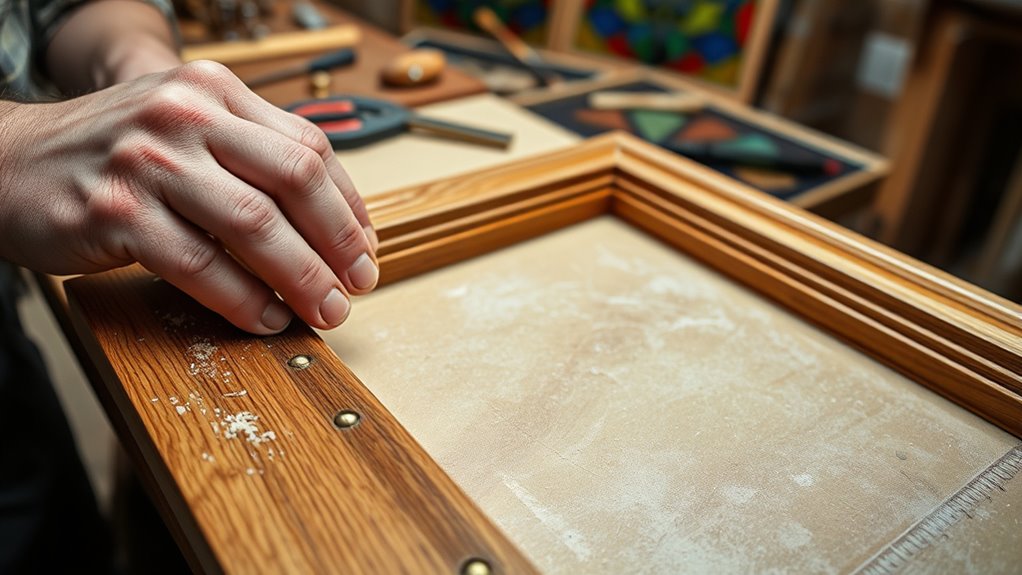
Ever wondered how to create a picture frame that perfectly complements your artwork or photograph? Building a custom frame gives you the power to match your piece’s style, size, and personality. The first step involves understanding your matting options, which play an essential role in how your artwork is presented. Matting not only adds a visual buffer between the art and the frame but also enhances depth and focus. You can choose from various matting options such as single or double mats, different colors, textures, and even acid-free materials that preserve your artwork over time. Selecting the right matting depends on the artwork’s style and the mood you want to convey, whether it’s a sleek modern look or a classic, layered appearance. Once you’ve decided on your matting, you’ll need to choose the appropriate frame molding types, which influence the overall aesthetic and structural integrity of your custom frame.
Frame molding types come in a variety of styles, from simple flat profiles to ornate, carved designs. If you prefer a minimalist look, a clean, narrow molding made of wood or metal might suit your needs. For a more traditional or decorative appearance, consider molding with intricate carvings or decorative edges. The material of the molding—wood, metal, or composite—also impacts the durability and style. Wood moldings can be stained or painted to match your decor, while metal moldings offer a sleek, contemporary feel. When selecting a molding type, think about the scale of your artwork; larger pieces often require sturdier, wider moldings for balance, whereas smaller works may look better with delicate, narrow frames.
To build your custom frame, start by measuring your artwork precisely, including the matting if you’re using one. Cut your chosen molding to the correct length, mitering the corners at 45 degrees to create clean, seamless joints. Use a quality glue or nail gun to secure the corners, and verify the frame is square by measuring diagonals. Next, attach your matting to the backing board, then place your artwork or photograph within the mat opening. Secure everything in place with framing points or clips, ensuring that nothing shifts over time. Finally, attach the completed frame to the backing, and add any hanging hardware needed for display. Building a custom picture frame might require some tools and patience, but it’s a rewarding process that guarantees a perfect fit and style tailored specifically to your artwork.
As an affiliate, we earn on qualifying purchases.
Frequently Asked Questions
What Tools Are Essential for Framing Projects?
For framing projects, you need essential tools like a miter saw or miter box to make precise miter joints. A measuring tape and square guarantee accurate cuts, while a staple gun or glue helps secure the frame. Framing tips include cutting at perfect angles and sanding edges smoothly. These tools make your work easier and help you create professional-looking frames with clean miter joints and proper alignment.
How Do I Choose the Right Frame Material?
Choosing the right frame material is like selecting the perfect outfit for a special event—you want it to complement and enhance. Explore your options, such as wood, metal, or plastic, each offering unique textures and finishes. Consider your artwork and your artistic framing techniques; a delicate watercolor may shine in a light wood frame, while bold photographs might pop in sleek metal. Match the material to your style for a truly personalized touch.
Can I Reuse Old Frames for New Art?
Yes, you can reuse old frames for new art by recycling materials and doing frame refurbishment. First, clean the frame thoroughly, then assess its condition. If it’s sturdy, you can repaint or re-stain it to match your new artwork. Remove any old backing or glass if needed, and replace them with fresh materials. Reusing frames not only saves money but also adds character to your display through sustainable practices.
What Are Common Mistakes to Avoid?
When selecting matting techniques and framing styles, avoid common mistakes like choosing mismatched colors or improper sizes that can distract from your artwork. Guarantee measurements are precise to prevent gaps or overlaps. Don’t rush the process—plan your layout carefully. Also, steer clear of using low-quality materials that may damage your art over time. Paying attention to these details helps you create a polished, professional-looking display that enhances your piece.
How Do I Secure Artwork Inside the Frame?
Securing artwork inside a frame is like anchoring a ship in harbor. You’ll want to choose the right mounting techniques, such as hinging or using corner mounts, to keep it steady. Framing adhesives, like archival glue or mounting strips, help prevent shifting or sagging. Carefully position your artwork, apply your chosen adhesives, and make sure everything is flush and secure. This way, your masterpiece stays safe and beautifully displayed.
As an affiliate, we earn on qualifying purchases.
Conclusion
Now that you know the basics of building your own custom picture frame, imagine the possibilities that await. Will you choose an intricate design or a sleek, minimalist style? The choice is yours, and the only limit is your creativity. As you put the finishing touches on your masterpiece, ask yourself—what masterpiece will you create next? The journey of crafting unique, personal frames has just begun—are you ready to see where it takes you?
As an affiliate, we earn on qualifying purchases.
As an affiliate, we earn on qualifying purchases.
Fall yard work Picks
leaf blowers
As an affiliate, we earn on qualifying purchases.