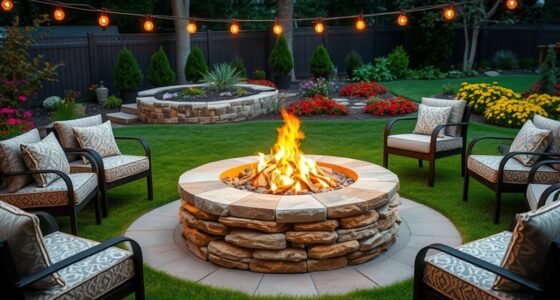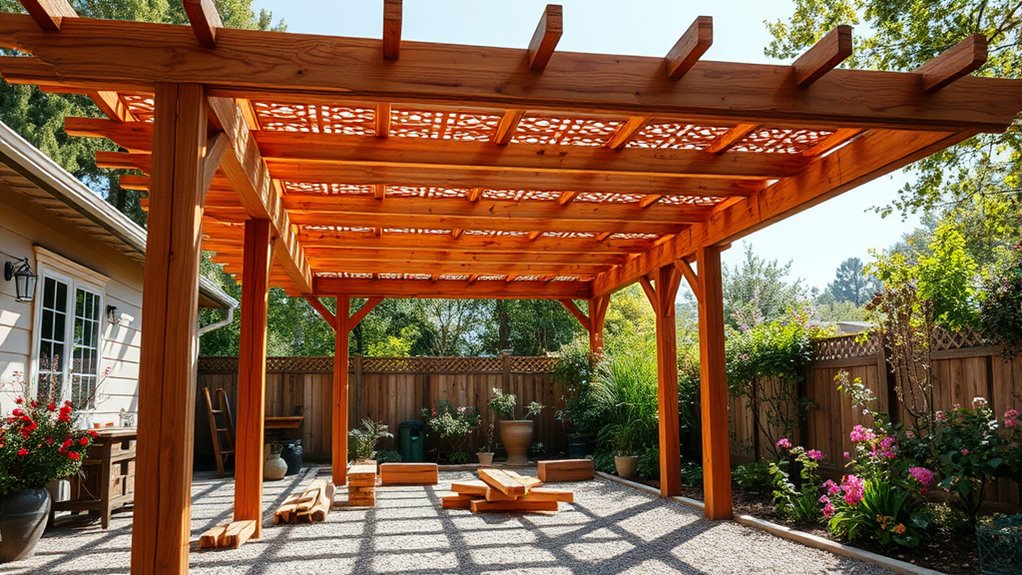

To build a pergola for shade and style, start by choosing a suitable location, then design and gather materials like wood or metal. Assemble sturdy posts and beams, ensuring stability with proper anchors. Incorporate decorative lighting such as string lights or lanterns to add ambiance, and select climbing plants like jasmine or wisteria to create natural shade. Carefully plan the placement of elements for visual harmony and safety. If you continue, you’ll discover tips to personalize your outdoor sanctuary further.
Key Takeaways
- Choose a design style and plan the layout to complement your outdoor space.
- Install sturdy posts and beams, ensuring proper anchoring for stability.
- Incorporate climbing plants and greenery to provide natural shade and enhance aesthetics.
- Add decorative lighting such as fairy lights or lanterns to create ambiance and extend usability.
- Integrate matching fixtures and thoughtful plant placement for a cohesive, stylish look.
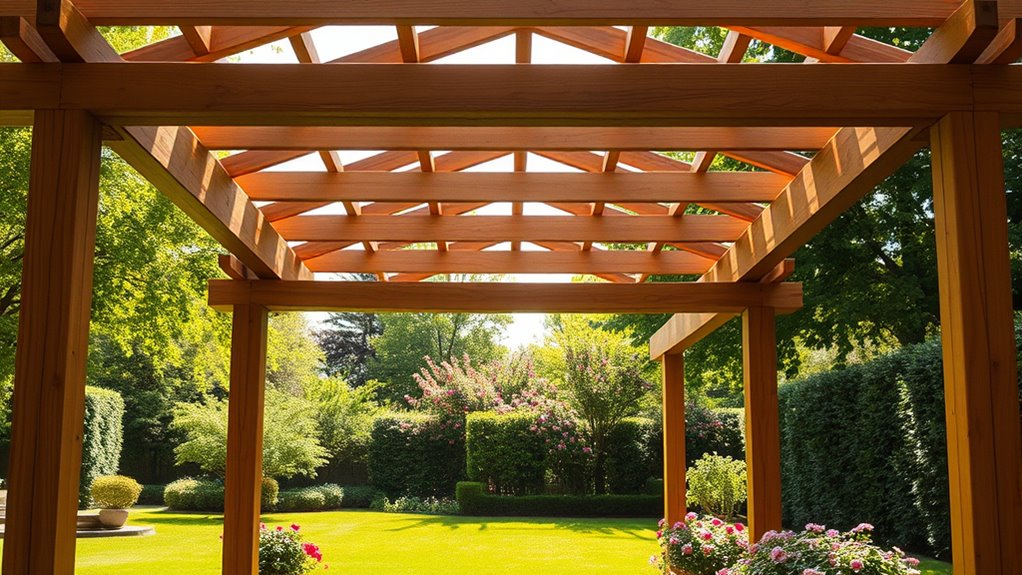
Building a pergola is a rewarding project that can transform your outdoor space into a stylish retreat. When designing yours, consider how you’ll incorporate decorative lighting to create ambiance after sunset. String lights, lanterns, or fairy lights can be woven through the beams or hung from the rafters, adding a warm glow that invites relaxation. Choose lighting fixtures that complement your overall aesthetic, whether it’s modern, rustic, or bohemian. The right decorative lighting not only enhances the visual appeal but also extends the usability of your pergola into the evening hours, making your outdoor area cozy and inviting. Incorporating decorative lighting strategically can also help highlight your plants and architecture, creating a cohesive design. Plant selection plays a critical role in making your pergola feel lush and vibrant. Opt for climbing plants like wisteria, jasmine, or clematis that can grow along the beams and create natural shade. These plants not only add beauty but also help soften the structure’s lines, giving your pergola a more integrated look with your garden. When choosing plants, consider their growth habits, sun requirements, and maintenance needs. For instance, if you want quick coverage, annuals or fast-growing vines may be suitable, but if you prefer a more permanent solution, look into perennials that will flourish year after year. Think about how the plants will interact with your space—if you want privacy, denser foliage can serve as a natural screen, while flowering varieties bring color and fragrance. In addition, the placement of lighting and plants should be planned to maximize their visual impact and ensure safety. Incorporating decorative lighting along with thoughtful plant selection allows you to personalize your pergola’s atmosphere. As your plants grow over time, they’ll form a living canopy, enhancing the shade and providing a sense of enclosure. Meanwhile, strategic placement of lighting fixtures can highlight your plants’ beauty and create dramatic effects at night. Hang lanterns among the vines or install LED strips along the beams for a sleek, modern look. Keep in mind the placement of both lighting and plants to maximize their impact, ensuring pathways remain clear and that your seating areas are well-lit without glare. Building your pergola with these elements in mind results in a space that’s both functional and aesthetically pleasing. The combination of decorative lighting and carefully selected plants transforms your outdoor area into a sanctuary perfect for entertaining, relaxing, or simply enjoying nature. With thoughtful planning, your pergola will become a focal point that reflects your style and enhances your outdoor living experience.
Frequently Asked Questions
What Materials Are Best for a Durable Pergola?
For a durable pergola, you should choose wood options like cedar, redwood, or pressure-treated lumber because they resist rot and pests. Metal materials like aluminum or steel also offer strength and longevity, especially if you want a modern look. Combining these materials can give you a sturdy, weather-resistant structure. Make sure to seal or coat your materials to enhance durability and keep your pergola looking great for years to come.
How Much Does It Cost to Build a Pergola?
Building a pergola costs between $1,500 and $4,500, depending on your design and materials. Think of your pergola as a frame for dreams—each beam symbolizing your taste and style. When considering pergola design and landscape integration, you’ll want to budget for quality materials and custom touches. Your investment transforms your outdoor space into a sanctuary, blending practical shade with the beauty of your landscape, turning a simple structure into a personal masterpiece.
Can I Build a Pergola Without Professional Help?
Yes, you can build a pergola without professional help. Start with DIY tips like choosing the right design inspiration and planning your space carefully. Gather quality materials, follow detailed instructions, and use proper safety gear. Take your time to measure and level everything accurately. With patience and research, you can create a beautiful, functional pergola that adds shade and style to your outdoor space.
What Permits Are Needed for Pergola Construction?
Before you start your pergola design, check local regulations to see if permits are required. Usually, building permits depend on the pergola’s size, height, and placement, especially if it’s close to property lines or involves landscaping integration. You might need approval from your city or county. Consulting your local building department guarantees your project adheres to codes, helping you avoid future complications and enjoy your shaded oasis with peace of mind.
How Do I Maintain and Clean My Pergola?
To maintain and clean your pergola, regularly inspect for damage and clear away debris. Use a gentle outdoor furniture cleaner on the wood or metal surfaces, and wash with a hose to remove dirt. Apply a protective sealant annually to preserve the finish. Incorporate your outdoor furniture for comfort and consider gardening tips like planting climbing plants to enhance shade and style, making your pergola a beautiful outdoor retreat.
Conclusion
Building a pergola adds shade, boosts style, and creates a welcoming outdoor oasis. It offers comfort, enhances privacy, and elevates your landscape. By choosing quality materials, planning carefully, and executing each step with care, you guarantee durability, beauty, and functionality. A well-built pergola transforms your outdoor space into a retreat, a gathering spot, and a personal sanctuary. Embrace the process, enjoy the results, and relive the satisfaction of creating something beautiful, practical, and uniquely yours.