To build a DIY greenhouse from polycarbonate panels, start by designing a sturdy frame using durable materials like aluminum or wood. Install adjustable or automated vents for proper airflow, and seal the panels with weatherstripping to prevent drafts. Incorporate insulation techniques such as reflective barriers inside the structure to trap heat. Combining good ventilation and insulation will help create a stable environment for your plants. Keep exploring to discover detailed steps for a successful greenhouse construction.
Key Takeaways
- Use multi-wall polycarbonate panels for superior insulation and lightweight durability.
- Incorporate adjustable roof vents and side windows for customizable airflow and temperature control.
- Seal panel edges with foam weatherstripping to prevent drafts and improve insulation.
- Install automated ventilation linked to sensors to maintain optimal internal conditions.
- Build insulated foundations and add removable thermal blankets for enhanced cold-weather protection.
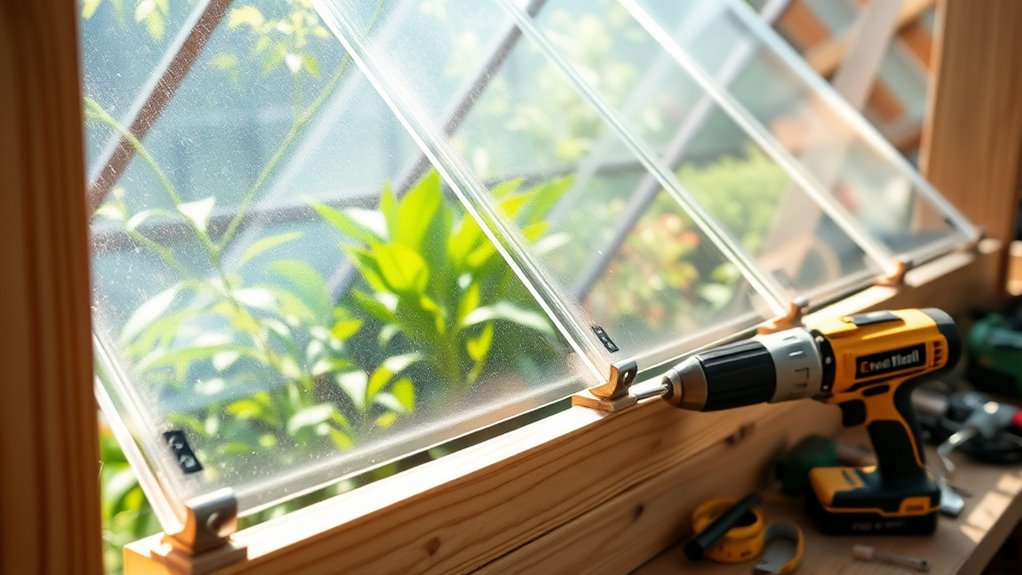
Building a DIY greenhouse from polycarbonate panels is a practical way to extend your growing season and protect plants from harsh weather. When designing your greenhouse, paying attention to ventilation strategies is vital. Proper airflow prevents humidity buildup, reduces the risk of mold, and keeps your plants healthy. You might consider installing adjustable roof vents or side windows that can be opened and closed as needed. Automated vents connected to a temperature sensor can help regulate airflow without your constant intervention. Additionally, incorporating louvered vents on the sides ensures a steady cross-flow of air, which keeps temperatures consistent and prevents overheating during sunny days. Good ventilation not only benefits plant health but also helps manage pests and disease. Including air circulation techniques in your design further enhances your greenhouse’s effectiveness.
Equally important are insulating techniques to maintain a stable environment inside your greenhouse. Polycarbonate panels are excellent for insulation because they trap air within their multi-wall structure, providing better thermal efficiency than single-pane glass. To maximize insulation, you can install foam weatherstripping around the panels’ edges to seal any gaps that might let in drafts. Using a radiant barrier or reflective insulation on the interior can also reflect heat back into the space during colder months, helping you save on heating costs. For additional insulation, consider building a foundation or base from insulated materials, which prevents cold from seeping in from the ground. Covering the panels with removable thermal blankets during particularly cold nights can further protect your plants without compromising ventilation during warmer days.
When planning your greenhouse, think about how ventilation strategies and insulating techniques work together. For example, you may want to open vents during the day to promote cooling and close them at night to trap heat. Similarly, insulating the structure helps stabilize temperatures, making ventilation even more effective by preventing rapid fluctuations. Ensuring your panels are properly sealed with weatherproofing materials enhances both insulation and ventilation efficiency. You’ll find that combining these elements creates an environment where your plants can thrive year-round, regardless of external weather conditions. By balancing good airflow with insulation, you’ll maintain a consistent temperature and humidity level, which is essential for healthy plant growth.
Ultimately, a well-ventilated and insulated DIY greenhouse from polycarbonate panels becomes a reliable space for gardening success. With thoughtful planning around ventilation strategies and insulating techniques, you’ll enjoy a more controllable environment that encourages robust growth and extends your gardening season well beyond the typical outdoor limits.
Frequently Asked Questions
What Tools Are Necessary for Assembling the Greenhouse?
You’ll need a basic tools overview to assemble your greenhouse, including a drill, screwdriver, measuring tape, level, and a saw for cutting panels. Assembly tips suggest using a ladder for higher sections and wearing safety gear. Make sure to have a pencil for marking and clamps to hold panels in place. These tools make the process smoother, ensuring your DIY greenhouse is sturdy and well-built.
How Do I Ensure Proper Ventilation in the Greenhouse?
You can’t afford to ignore proper ventilation if you want a thriving greenhouse! Install high-quality ventilation systems like exhaust fans, and add adjustable vents for perfect airflow management. Keep air moving constantly to prevent overheating and humidity buildup. Position vents strategically, near the roof and sides, to create a breeze that circulates fresh air all around. With these steps, your plants will stay happy, healthy, and growing like crazy!
Can I Customize the Size of the Greenhouse?
Yes, you can customize the size of your greenhouse by adjusting panel sizing and overall dimensions. Greenhouse customization allows you to tailor the structure to fit your space and needs. With panel sizing flexibility, you can cut polycarbonate panels to match your desired dimensions, ensuring a perfect fit. Just be sure to measure carefully and follow proper cutting techniques to maintain panel integrity and achieve a sturdy, functional greenhouse.
What Is the Estimated Cost of Building This Greenhouse?
The cost estimate for building your DIY greenhouse varies based on size, materials, and tools. Typically, you might spend between $500 and $2,000, but budget planning helps you allocate funds efficiently. Factor in polycarbonate panels, framing, fasteners, and additional supplies. To stay on track, list all materials and compare prices, allowing flexibility for extras or upgrades. This way, you’ll guarantee your project stays within your desired budget.
How Do I Maintain and Clean Polycarbonate Panels?
Did you know that properly maintained polycarbonate panels can last up to 10-15 years? To keep them in top shape, regularly clean with a soft cloth and mild soap, avoiding abrasive cleaners that can scratch the surface. Use gentle cleaning techniques and make certain UV protection remains intact by avoiding harsh chemicals. Rinse thoroughly with water and dry with a soft towel for a clear, durable finish.
Conclusion
Building a DIY greenhouse from polycarbonate panels is a rewarding project that can boost your gardening success. While some believe polycarbonate’s UV resistance diminishes over time, recent studies suggest it retains durability longer than traditional glass. By choosing quality panels and proper installation, you can create a sturdy, efficient greenhouse that lasts. So, don’t just take the theory at face value—trust the evidence and enjoy your sustainable, personalized growing space for years to come.