Building a simple French cleat wall is a game-changer for tool organization. You install sturdy, level cleats along your wall studs and attach hooks, shelves, or bins to create a customizable setup. This system keeps your workspace tidy, tools visible, and easily accessible, boosting safety and efficiency. As your needs change, you can quickly adjust or expand the setup without damage. Keep going to discover how this straightforward upgrade can redefine your workspace.
Key Takeaways
- A French cleat wall maximizes storage efficiency with customizable hooks, shelves, and bins for easy tool access and organization.
- Installing sturdy, level cleats along wall studs creates a secure, expandable system that adapts to evolving workshop needs.
- The modular design allows quick rearrangement of tools and accessories without damaging the wall or requiring additional modifications.
- Securely hung tools improve safety by reducing falling hazards and keeping the workspace tidy and visually accessible.
- The simple, long-lasting setup transforms cluttered areas into inspiring, well-organized workspaces that encourage ongoing improvements.
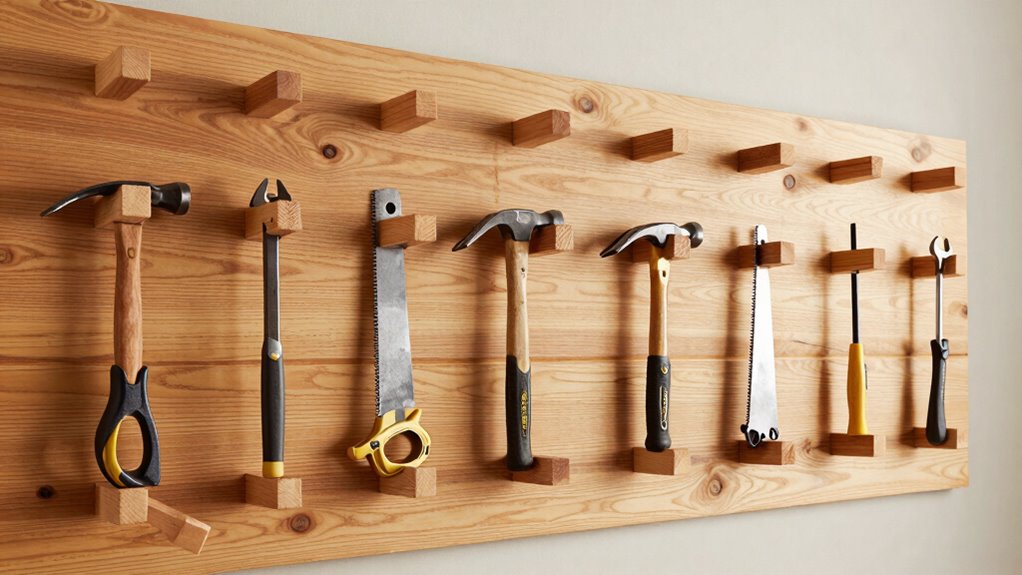
Building a French cleat wall is a smart way to maximize storage and organization in your space. When you choose wall mounting with a French cleat system, you create a versatile setup that makes accessing tools and supplies quick and effortless. This approach isn’t just about hanging items; it’s about transforming your workspace into an efficient, clutter-free environment. With a well-planned cleat wall, you’ll find that storage optimization becomes second nature, giving you more room to work and less time searching for your tools.
A French cleat wall boosts storage, organization, and workspace efficiency with versatile, customizable tool-hanging solutions.
The key to a successful French cleat wall is installing sturdy, level cleats along the wall, which act as anchors for your hooks, shelves, or storage bins. Since the system is modular, you can customize it to fit your needs, whether you’re hanging power tools, hand tools, or small parts. The wall mounting process involves attaching the cleats securely to your wall studs, ensuring they can handle the weight of your gear. Once in place, you simply hang brackets or accessories on the cleats, creating an organized display that’s easy to update or expand as your collection grows.
One of the biggest advantages of a French cleat system is how it enhances storage optimization. Instead of cluttered drawers or overcrowded shelves, you have a clean, accessible layout where each item has its designated spot. Because the cleats are adjustable, you can rearrange tools or add new storage options without drilling new holes or damaging your walls. The modular system allows for flexible customization, making it easy to adapt your setup over time. This flexibility means your wall evolves with your needs, giving you a customized organization system that’s both practical and aesthetically pleasing.
Wall mounting with a French cleat is straightforward, but it pays off in long-term efficiency. It frees up valuable workspace, reduces clutter, and makes it easy to see everything at a glance. The system also adds a level of safety, as tools are securely hung rather than left lying around where they could fall or cause injury. Plus, since the cleats are usually installed high enough for easy reach, you cut down on bending or crouching, making your workflow smoother.
In the end, building a French cleat wall isn’t just about hanging tools—it’s about creating an organized, optimized space that makes your projects more enjoyable. Once you see how simple wall mounting can improve your storage—and how addictive it is to keep improving your setup—you’ll wonder why you didn’t do it sooner. It’s a straightforward upgrade that transforms chaos into order, making every project feel more manageable and your workspace more inspiring. Incorporating wall mounting techniques can further enhance your system’s stability and accessibility, ensuring your tools are always ready when you need them.
French cleat wall tool storage
As an affiliate, we earn on qualifying purchases.
As an affiliate, we earn on qualifying purchases.
Frequently Asked Questions
Can the French Cleat System Be Customized for Different Tools?
Yes, you can customize a French cleat system for different tools. You can add adjustable shelving to hold larger or oddly shaped items, making the system versatile. Additionally, many options come with custom color choices, allowing you to match your workshop’s aesthetic. This flexibility helps you organize your tools efficiently while giving your workspace a personalized touch. The system adapts easily to your needs, making tool storage simple and effective.
What Is the Ideal Wall Height for a French Cleat Wall?
You should build your French cleat wall about 6 to 7 feet high to balance tool access and wall aesthetics. It’s tall enough for easy tool maintenance without overwhelming your space, yet low enough to keep everything within reach. If you’re concerned about clutter, this height helps you organize efficiently, making your workspace look tidy and inviting while ensuring you can quickly grab or store tools without hassle.
Are There Safety Considerations When Installing a French Cleat Wall?
When installing a French cleat wall, you should prioritize safety by ensuring proper wall mounting tips, like anchoring into studs and avoiding drywall-only attachment. Always follow power tool safety guidelines during installation, wearing goggles and gloves. Double-check cleat alignment for secure support, and avoid overloading. Taking these precautions minimizes risks, helps your tools stay safe, and keeps your workspace accident-free while enjoying organized storage.
How Much Weight Can a French Cleat Hold Securely?
A French cleat wall can securely hold around 100 to 200 pounds per linear foot, depending on the material and installation quality. To guarantee tool stability, you should use strong, sturdy cleats and proper wall anchors. Distribute weight evenly across the cleats, avoid overloading them, and regularly check for wear or damage. This approach guarantees your tools stay safe and organized without risking damage or accidents.
What Materials Are Best for Constructing the Cleats?
Think of your wall as the backbone of your tool storage—choose materials that stand the test of time. For cleats, hardwood like oak or maple offers unmatched durability, ensuring your tools stay secure and organized. If you prefer a budget-friendly option, high-quality plywood can work well, provided it’s thick and sturdy. Prioritize strength and longevity to keep your tools safe and your wall looking sharp for years to come.
wall mounted tool organizer hooks
As an affiliate, we earn on qualifying purchases.
As an affiliate, we earn on qualifying purchases.
Conclusion
Now, with your French cleat wall in place, you’ve unlocked a new level of organization—like a craftsman wielding a well-honed tool. It’s more than just storage; it’s a system that transforms chaos into order, inviting you to create and conquer. As you step back and admire your work, remember, even the greatest artisans started with a simple idea. Your wall isn’t just functional—it’s a canvas for endless possibilities.
modular workshop storage shelves
As an affiliate, we earn on qualifying purchases.
As an affiliate, we earn on qualifying purchases.
heavy-duty French cleat system
As an affiliate, we earn on qualifying purchases.
As an affiliate, we earn on qualifying purchases.