To build a garden potting bench that keeps your tools within reach, use durable materials like cedar or treated lumber for weather resistance. Incorporate open shelving, hooks, and pegboards on sides or back to organize tools and supplies efficiently. Add labeled containers for small items and magnetic strips for metal tools. Consider wheels for mobility and a water-resistant surface for watering tasks. For more tips on creating a highly functional potting station, keep exploring the options.
Key Takeaways
- Incorporate open shelves, cubbies, and labeled containers for organized, easy access to all gardening tools and supplies.
- Install hooks, pegboards, and magnetic strips on sides or back for vertical tool hanging and quick retrieval.
- Design the bench with a comfortable height and a spacious, durable work surface for efficient potting and planting.
- Use weather-resistant materials and finishes to protect tools and structure from outdoor elements over time.
- Add mobility features like wheels or casters for flexible positioning and streamlined garden workflow.

Creating a garden potting bench is a rewarding project that can make your gardening routine more organized and efficient. When you build your own, you get to customize it to fit your specific needs, guaranteeing that every tool and supply is within easy reach. A well-designed bench isn’t just about aesthetics; it’s about optimizing your garden design to support your workflow. You’ll find that having a dedicated space for potting, pruning, and planting helps you stay focused and reduces clutter.
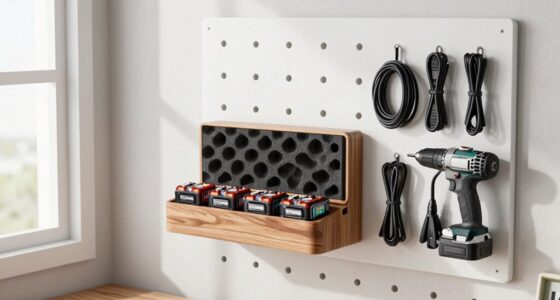
Starting with the structure, choose durable materials like cedar or treated lumber that can withstand the elements. When designing your garden bench, consider including a sturdy tabletop surface large enough for spreading out pots and soil bags. Incorporate open shelves or cubbies underneath for storing smaller tools, seed packets, and gloves. Adding hooks or pegboards on the side or back allows you to hang tools vertically, making tool organization quick and simple. This setup prevents you from wasting time hunting for that missing trowel or pruning shears.
Choose durable materials and add shelves, hooks, and pegboards for efficient, organized garden tool storage.
Think about integrating a built-in container or bin for soil and compost. This keeps your materials contained and accessible, saving you trips to your compost pile or storage shed. Consider installing a water-resistant surface or a small sink if you want to rinse tools or watering cans without moving back and forth. When planning your garden design, make sure the bench’s height is comfortable for you—standing or sitting—so you can work without strain. Position it in a sunny spot if possible, as good lighting helps you see what you’re doing and prevents accidents. Proper lighting is especially important because natural light can significantly improve your visibility and safety while gardening. Additionally, choosing weather-resistant materials and finishes will help ensure your bench remains durable and functional over time.
Tool organization is the backbone of a functional potting bench. Use labeled containers or jars for small items like plant tags, screws, or plant food. Magnetic strips can hold metal tools securely, preventing them from falling or getting lost. A dedicated space for each item ensures that you always know where to find what you need and makes cleanup faster. As you build, think about adding wheels or casters if you want to move the bench around your garden. This flexibility can help you adapt to different gardening tasks or weather conditions. When selecting materials, consider their weatherproof qualities to enhance the longevity of your work area.
Ultimately, a custom-built garden potting bench is about streamlining your gardening process. It keeps everything organized, accessible, and tidy, boosting your productivity and enjoyment. With thoughtful garden design and clever tool organization, your new bench becomes a central hub for all your gardening activities, saving you time and effort while making your garden look neat and inviting. Additionally, selecting weather-resistant building materials ensures your bench remains durable for years to come. To further enhance its longevity, consider adding weatherproof finishes or sealants to protect the surface from moisture and sun damage.
garden potting bench with storage shelves
As an affiliate, we earn on qualifying purchases.
As an affiliate, we earn on qualifying purchases.
Frequently Asked Questions
What Materials Are Best for Weather-Resistant Garden Potting Benches?
For a weather-resistant garden potting bench, opt for treated cedar or cedar composite, as they withstand moisture well. Use weatherproof finishes to protect wood from rain and sun, and choose rust-resistant hardware to prevent corrosion over time. These materials and protective elements guarantee your bench remains durable and functional, keeping your tools organized and accessible, no matter the weather conditions.
How Much Does It Typically Cost to Build a DIY Potting Bench?
You can build a DIY potting bench for around $50 to $200, depending on materials and size. Don’t let the cost deter you—think of it as an investment in your gardening journey. With planting tips and essential gardening accessories, a custom bench keeps tools within reach, making your gardening more enjoyable. Plus, building it yourself adds a personal touch that stores off-the-shelf options can’t match.
Can I Customize the Size of My Potting Bench?
Yes, you can definitely customize the size of your garden bench. When planning, consider your garden bench dimensions based on your space and needs. Many DIY projects offer customization options, allowing you to adjust height, width, and depth to fit your tools and workspace. By tailoring these aspects, you create a more functional and comfortable potting station, making gardening more enjoyable and efficient.
What Safety Precautions Should I Take During Construction?
Have you considered how safety gear and careful tool handling can prevent accidents? Always wear protective gear like gloves and goggles during construction, and handle tools responsibly. Make sure your workspace is clear of hazards and stable before starting. Do you really want a mishap to ruin your project? Staying alert, using the right equipment, and working methodically keep you safe and make your building process smoother and more enjoyable.
How Do I Maintain and Clean the Potting Bench Over Time?
To maintain and clean your potting bench, regularly wipe down surfaces with a damp cloth to remove dirt and debris. Keep plant safety in mind by inspecting for mold or pests, and treat any issues promptly. Organize your tools after each use to prevent clutter and damage, ensuring they’re safe to handle. Periodically check for loose screws or wear, so your bench stays sturdy and functional over time.
weather-resistant outdoor garden workbench
As an affiliate, we earn on qualifying purchases.
As an affiliate, we earn on qualifying purchases.
Conclusion
With your new potting bench in place, the chaos of gardening transforms into a symphony of order. Tools, once scattered and forgotten, now sit within arm’s reach, ready to assist. The cluttered mess becomes a tidy workspace, where creativity blossoms alongside blooms. You’ve built more than just a bench—you’ve crafted a haven of productivity and peace, where every seed sown and every plant nurtured flows smoothly, blending purpose with tranquility in your thriving garden sanctuary.
garden tool organization hooks and pegboards
As an affiliate, we earn on qualifying purchases.
As an affiliate, we earn on qualifying purchases.
mobile garden potting station with wheels
As an affiliate, we earn on qualifying purchases.
As an affiliate, we earn on qualifying purchases.