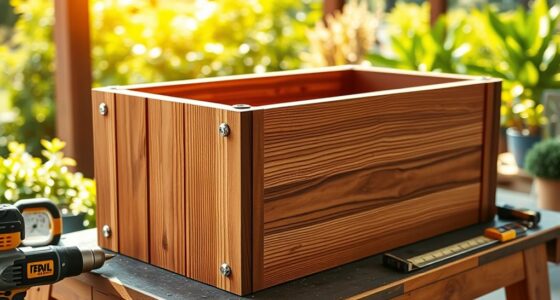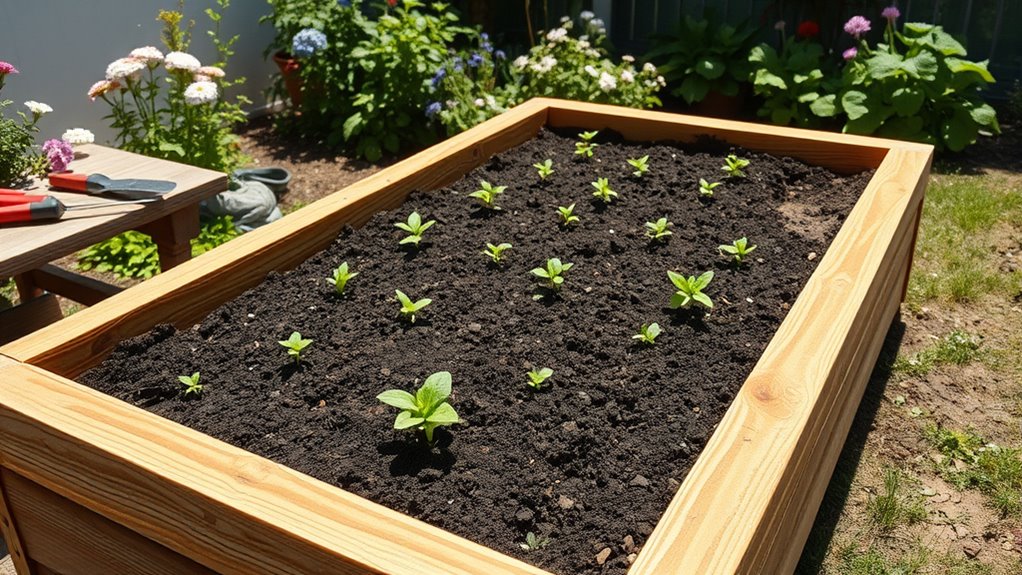
Building a raised garden bed for vegetables is a smart way to improve your gardening space and boost plant health. You can control soil quality, drainage, and accessibility while reducing pests with barriers and mulch. Incorporate compost and organic pest control methods to keep your plants thriving. With these tips, you’ll create a productive garden that’s easier to maintain. Keep exploring for more insights on making your vegetables flourish even more.
Key Takeaways
- Choose a suitable location with ample sunlight and good drainage for your raised garden bed.
- Build the frame using durable materials like cedar, composite, or bricks to ensure longevity.
- Fill the bed with nutrient-rich soil and compost to promote healthy vegetable growth.
- Implement pest control measures such as barriers and beneficial insects to protect your crops.
- Maintain the bed regularly by adding compost and monitoring for pests to ensure a productive garden.
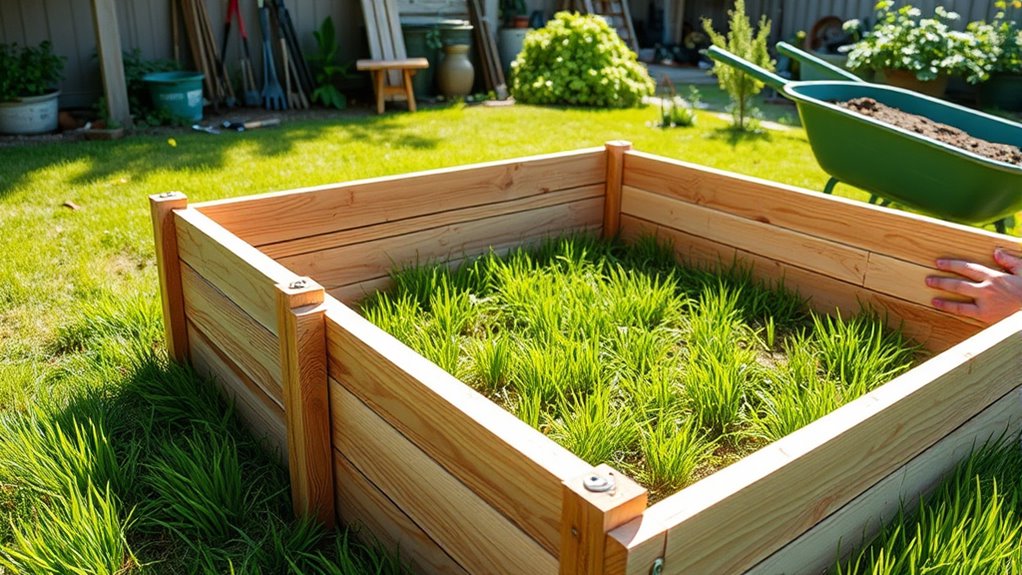
Creating a raised garden bed is a simple way to improve your gardening space and boost plant health. When you build one, you gain control over soil quality, drainage, and accessibility, making it easier to grow healthy vegetables. To maximize your efforts, you should pay attention to composting techniques. Composting helps you create nutrient-rich soil that feeds your plants naturally, reducing the need for chemical fertilizers. You can start by collecting kitchen scraps like vegetable peelings, coffee grounds, and eggshells, then mix these with yard waste such as leaves and grass clippings. Layering these materials in your compost bin or pile encourages decomposition. Turning the compost regularly aerates it and speeds up the process, giving you a steady supply of organic matter to mix into your garden bed. Incorporating compost directly into your raised bed improves soil structure, increases moisture retention, and provides essential nutrients, leading to healthier, more productive plants.
Alongside composting, pest control methods are vital for maintaining a thriving vegetable garden. Pests like aphids, cabbage worms, and snails can quickly damage your crops if left unchecked. To keep them at bay, use integrated pest management strategies that combine physical barriers, natural predators, and organic treatments. Installing row covers or netting can prevent insects from reaching your plants while still allowing sunlight and rain to pass through. Introducing beneficial insects, such as ladybugs or predatory beetles, helps naturally control pest populations without harmful chemicals. If you notice pests, apply organic solutions like neem oil or insecticidal soaps, which are less toxic and safer for your family and pollinators. Regularly inspecting your plants also helps you catch problems early before they become severe. Mulching around your vegetables not only conserves moisture but also deters pests that hide in the soil or under debris. Consistent vigilance and a mix of pest control methods ensure your garden remains healthy and productive.
Building a raised bed also makes it easier to implement these techniques. The controlled environment allows you to better manage soil conditions and monitor pests more effectively. Using compost to enrich your soil offers a sustainable way to nourish your vegetables, while smart pest control methods protect your harvest without resorting to harsh chemicals. With some planning and ongoing attention, your raised garden bed can become a resilient, productive space where vegetables flourish and pests stay in check. This approach saves you time and effort in the long run, giving you a bountiful harvest and a more enjoyable gardening experience.
Frequently Asked Questions
How Deep Should a Raised Garden Bed Be for Root Vegetables?
You should make your raised garden bed at least 12 inches deep for root vegetables. This depth allows for proper soil drainage, preventing waterlogging, and gives roots enough room to grow freely. If you’re planting larger vegetables like carrots or parsnips, consider increasing the bed height to 18-24 inches. A deeper bed fosters healthy growth, better soil aeration, and ensures your root vegetables develop properly.
Can I Use Recycled Materials for the Bed Structure?
Yes, you can definitely use recycled materials for your bed structure. Recycling options include reclaimed wood, old pallets, or even concrete blocks, making your project more sustainable and environmentally friendly. Sustainable materials not only reduce waste but also add charm to your garden. Just guarantee your recycled choices are safe, free of harmful chemicals, and sturdy enough to support healthy vegetable growth. This way, you create a garden that’s green in both goal and practice.
What’s the Best Soil Mix for Different Vegetable Types?
You should use a well-balanced soil mix tailored to each vegetable type. Typically, combine garden soil with compost in a 1:1 ratio for most vegetables, adding organic soil amendments like aged manure or peat moss for extra nutrients. For root vegetables, use lighter, well-draining soil, while leafy greens prefer richer mixes. Adjust compost ratios based on the crop’s needs, ensuring your plants get essential nutrients and proper drainage.
How Do I Prevent Pests From Entering the Raised Bed?
Imagine your garden as a fortress protecting your treasures. To keep pests out, install pest-proof barriers like fine mesh or netting over your bed’s openings. Use natural repellents such as neem oil or garlic spray to deter unwanted visitors. Regularly inspect your plants, remove debris, and encourage beneficial insects that naturally fight pests. These strategies form an unbreakable shield, ensuring your vegetables flourish undisturbed.
How Often Should I Water My Raised Garden Bed?
You should water your raised garden bed consistently, aiming for a regular watering schedule that keeps the soil evenly moist. Check the moisture levels daily by touching the soil; it should feel damp but not soggy. During hot or windy days, you might need to water more often, possibly once a day. Adjust your watering schedule as needed to maintain ideal moisture levels, ensuring healthy vegetable growth.
Conclusion
Building your own raised garden bed is a brilliant way to boost your backyard’s beauty and bounty. By blending basic building skills with a bit of patience, you’ll create a space that’s simple to tend, produce plenty of produce, and provide a pleasing, polished plot. Remember, a sturdy, well-constructed bed isn’t just about planting; it’s about planting with purpose, passion, and pride. So, start shaping your space today and watch your garden grow!