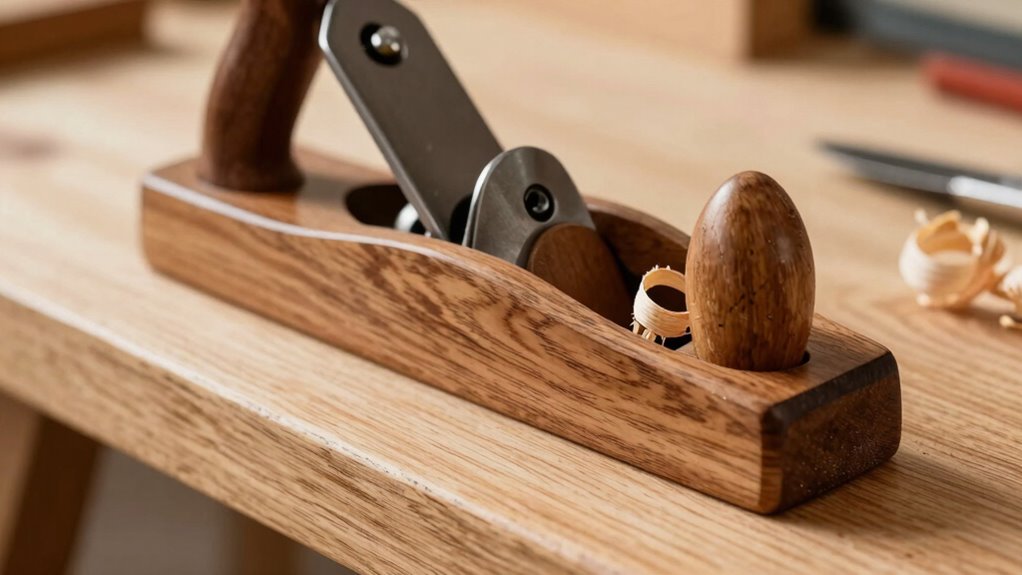

To choose a better hand plane for trim, edges, and cleanup, focus on selecting a lightweight, well-balanced model that feels comfortable in your hand. A block or smoothing plane with a sharp blade provides precise control and smooth cuts, while easy blade adjustments help maintain accuracy. Consider the size and design to match your specific tasks, ensuring good control and minimal fatigue. Keep your tools well-maintained for peak results—more tips are just ahead.
Key Takeaways
- Select a block or smoothing plane that offers precise control for trimming and cleanup tasks.
- Ensure the plane size, weight, and ergonomics suit detailed, delicate work.
- Prioritize sharp blades and easy adjustment mechanisms for clean, accurate cuts.
- Maintain the tool regularly by sharpening blades and keeping the sole flat and rust-free.
- Test different models to find a comfortable fit that integrates well with your woodworking techniques.
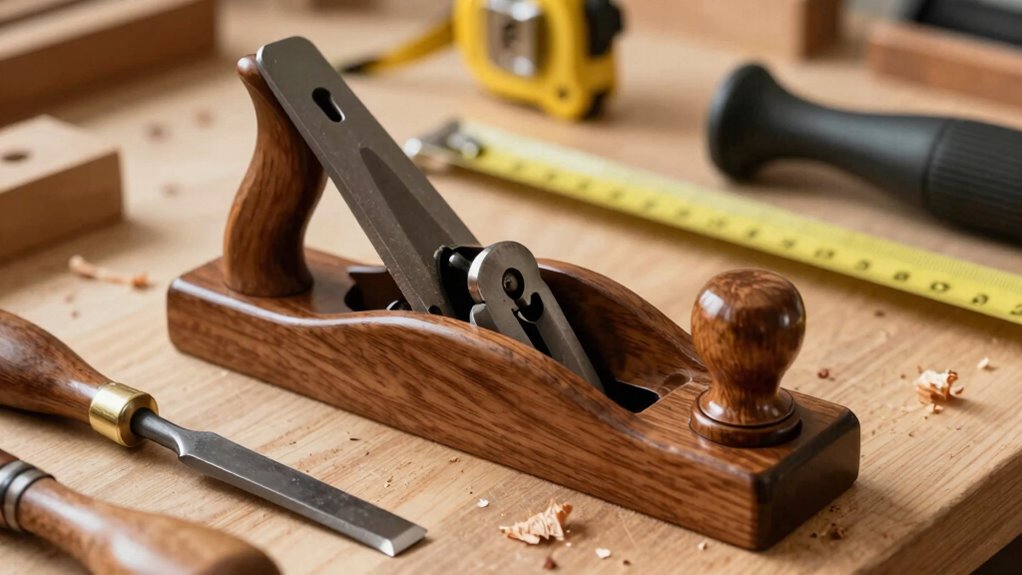
Selecting the right hand plane can make a significant difference in your woodworking projects, whether you’re smoothing surfaces or shaping edges. When choosing a hand plane for trim, edges, and cleanup work, you need to take into account how its design and size will complement your woodworking techniques. A well-suited plane guarantees precision, control, and efficiency, making your tasks smoother and quicker.
Choosing the right hand plane ensures precision, control, and efficiency in your woodworking projects.
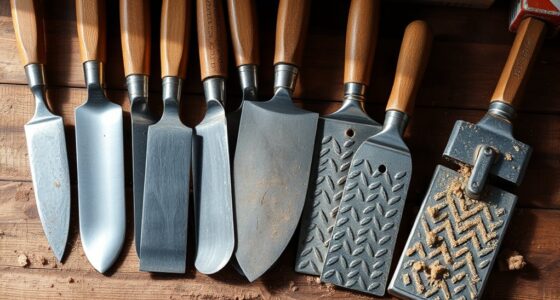
If you’re focusing on fine trim work or refining edges, a block plane or a shoulder plane might be your best choice. Block planes are versatile and excellent for shaving small amounts off end grain or smoothing surfaces, thanks to their low-angle blades. Shoulder planes, on the other hand, excel at fitting tenons or cleaning up shoulder cuts, thanks to their adjustable fences that give you better control over depth and width. You want to select a plane that fits comfortably in your hand and allows for precise control, especially when working on detailed or delicate tasks.
Contemplating the size and weight of the hand plane is vital. Lighter planes are easier to maneuver and ideal for detailed work, while heavier planes give more stability and are better suited for removing larger amounts of material. You should also pay attention to the blade adjustment mechanisms. A smooth, easy-to-use adjustment system helps you keep the blade at the perfect angle, which is important for woodworking techniques that require accuracy and consistency. Additionally, choosing a plane with an ergonomic design can reduce fatigue and improve your overall control during prolonged use. Proper maintenance practices also ensure that your tools stay in optimal condition and provide consistent results.
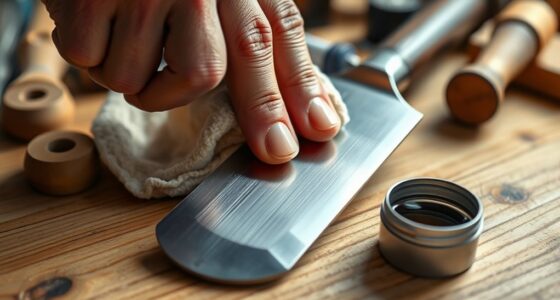
Maintenance plays a big role in how well your hand plane performs over time. Regular hand plane maintenance involves keeping the blade sharp and clean, as dull blades make your work more difficult and can damage your project. Learning how to properly sharpen and hone your blades ensures that you can maintain ideal cutting performance, especially when doing cleanup work that demands fine, clean shavings. Additionally, keeping the plane’s sole flat and free of rust prolongs its life and maintains its accuracy. Proper storage and periodic lubrication prevent corrosion and ensure smooth operation. Recognizing the importance of blade sharpness can motivate you to prioritize regular sharpening routines, which ultimately saves you time and effort. Moreover, understanding the design features of your plane can help you select the most appropriate model for your specific projects and tasks.
Furthermore, understanding the importance of blade sharpness can significantly improve your results and reduce fatigue during use. Ultimately, choosing a better hand plane comes down to understanding your specific needs and how each tool fits into your woodworking techniques. Take the time to test different models if possible, and think about how comfortable and effective they feel in your hand. With the right maintenance, your chosen plane will serve you well for years, helping you achieve clean edges, smooth surfaces, and precise trims in every project.
As an affiliate, we earn on qualifying purchases.
Frequently Asked Questions
Can I Use a Hand Plane for Rough Carpentry?
Yes, you can use a hand plane for rough carpentry, especially for shaping and smoothing wood surfaces. However, for heavy-duty tasks, power tools might be more efficient. Make certain you maintain your hand tool properly through regular hand tool maintenance, keeping blades sharp and parts in good condition. This keeps your hand plane effective and safe to use, giving you better control and results during rough carpentry projects.
What Safety Gear Should I Wear When Using a Hand Plane?
Like a knight preparing for battle, you should gear up before using a hand plane. Wear protective gloves to shield your hands from splinters and sharp edges, and always use eye protection to guard against flying debris. Safety gear keeps you focused and confident, ensuring your work is precise and accident-free. Think of it as your armor—necessary for a smooth, safe woodworking journey.
How Do I Prevent Tear-Out on Delicate Woods?
To prevent tear-out on delicate woods, always pay attention to the grain direction—plan your cuts along the grain, not against it. Keep your blade sharp, as a dull blade can cause tearing. Before starting, test on scrap wood to guarantee clean cuts. Use light, even pressure, and make multiple shallow passes instead of one deep cut. These steps help you achieve smooth, tear-out-free surfaces.
Are Vintage Hand Planes Better Than New Ones?
Vintage hand planes often carry a charming vintage appeal, but they may lack modern functionality like adjustable blades or ergonomic features. If you value authenticity and craftsmanship, a vintage plane can be a great choice. However, if you want precision and ease of use, new planes often offer better performance with updated technology. Consider your specific needs and preferences to decide whether vintage appeal or modern functionality suits you best.
How Often Should I Sharpen My Hand Plane Blade?
You should sharpen your hand plane blade whenever it starts to struggle cutting smoothly, typically every few sessions or when you notice tearing. Think of blade maintenance like tending a garden; regular sharpening keeps tools effective and prevents weeds of frustration from taking over. Use a proper sharpening technique, like honing on a stone, to maintain a keen edge. Frequent sharpening ensures cleaner cuts and easier work, saving you time and effort in the long run.
As an affiliate, we earn on qualifying purchases.
Conclusion
Choosing the right hand plane makes your woodworking smoother and more precise. Remember, over 60% of woodworkers say that using the correct plane considerably improves their finish quality. So, take your time to select one suited for trim, edges, or cleanup tasks. With the right tool in hand, you’ll find your projects easier and more enjoyable, transforming rough cuts into flawless surfaces. Happy woodworking!
As an affiliate, we earn on qualifying purchases.
As an affiliate, we earn on qualifying purchases.