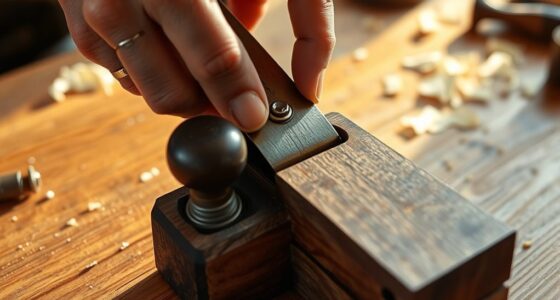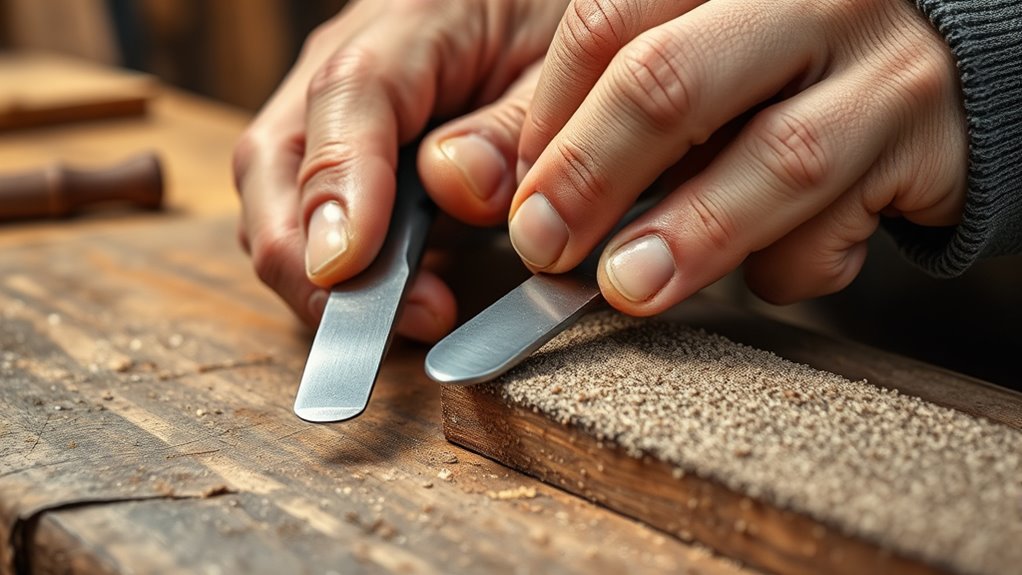

To maintain and use files and rasps safely, always wear gloves and keep your tools clean by removing debris after each use. Check for damage, sharpen dull teeth with a fine file, and store your tools properly to prevent wear. When using, apply controlled pressure and select the right coarseness for your task. Maintaining these practices ensures your tools stay effective and safe. Keep assisting your skills to learn more about suitable tool care and use.
Key Takeaways
- Always wear gloves and keep hands clear of cutting edges during use and maintenance.
- Regularly inspect tools for damage, wear, or dullness, and sharpen rasps with a fine file when needed.
- Use the appropriate coarser or finer files and rasps based on material removal or finishing tasks.
- Clean tools after each use to remove debris and prevent buildup that can hinder performance.
- Store tools properly in designated containers to maintain sharpness and prevent damage.
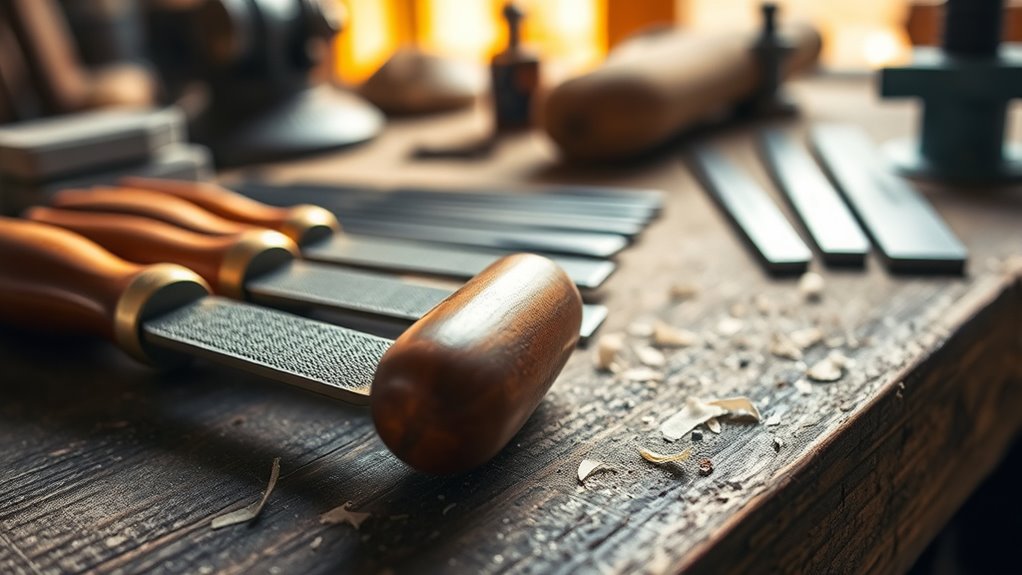
Proper maintenance and effective use of files and rasps are vital for achieving smooth, precise finishes in your projects. When you handle these tools correctly, you not only improve your work’s quality but also guarantee your safety. File safety should always be a priority; always wear gloves if possible, and keep your hands clear of the cutting edges to avoid accidental cuts. Make sure to secure the workpiece firmly, so you don’t have to apply excessive force, which could cause slips or damage the tool. When you’re finished using a file or rasp, clean off any debris or metal shavings to prevent buildup that can dull the tool’s edge or cause injury during subsequent use. Regularly inspecting your tools is essential—look for signs of wear, like chipped or rounded teeth, which can compromise safety and effectiveness. Proper storage, such as keeping files and rasps in a designated container or tool rack, prevents unnecessary damage and maintains their sharpness. Additionally, maintaining sharpness and alignment of your rasps ensures optimal performance and safety during use. Rasp sharpening is an important aspect of tool maintenance. Over time, rasps can become dull, making your work more laborious and less precise. Sharpening rasps restores their cutting ability, ensuring that you get the most out of each stroke. To sharpen a rasp, you’ll need a fine file or a specialized rasp sharpener. Carefully run the file along the teeth, following the natural direction of the cut, to remove any dull or flattened material. Be gentle but firm, maintaining a consistent angle to keep the teeth uniform. Proper rasp sharpening not only improves efficiency but also prolongs the tool’s lifespan, saving you money in the long run. Remember, a dull rasp can be more dangerous because you tend to apply more force, increasing the risk of slips or hand fatigue. Using your files and rasps effectively involves more than just sharpening and safety. You should choose the right tool for each task—coarser files for material removal, finer files for finishing touches. Apply steady, controlled pressure, letting the tool do the work, rather than forcing it. Always work in a consistent direction, usually away from your body, to maintain control and produce even results. Keep your workspace organized and clean, removing shavings and debris frequently, so you can see your progress clearly. By respecting these principles—prioritizing file safety and regularly sharpening your rasps—you’ll achieve better results with less effort, creating smooth, accurate finishes that stand out. Proper care and technique make all the difference in your craftsmanship, ensuring your tools remain reliable and your projects flawless.
Frequently Asked Questions
How Do I Identify the Right File or Rasp for Specific Materials?
You identify the right file or rasp by checking material compatibility and desired surface finish. For softer woods or plastics, choose a fine-toothed rasp or file to avoid damage and achieve a smooth surface. For harder materials like hardwoods or metals, opt for coarser tools to remove material efficiently. Always match the tool’s grit and design with the material’s hardness to guarantee precise shaping and a quality finish.
What Safety Precautions Should I Take When Using Files and Rasps?
When using files and rasps, you should always wear personal protective equipment like gloves and safety glasses to protect your hands and eyes. Keep your workspace organized, ensuring tools are secure and surfaces are clear to prevent accidents. Use proper technique, applying controlled pressure, and avoid distractions. Regularly inspect tools for damage, and clean up debris promptly. These precautions help keep you safe while working efficiently.
How Often Should I Sharpen or Replace My Files and Rasps?
Think of your files and rasps as trusty tools on a journey; they need regular care. You should sharpen them when their cutting edges dull, following a consistent sharpening schedule, maybe after every few uses. Watch for replacement indicators like chipped teeth or excessive wear. When these signs appear, it’s time to substitute your tools to ensure safety and efficiency, keeping your work smooth and trouble-free.
Can Files and Rasps Be Used for Precision or Delicate Work?
Yes, files and rasps can be used for precision or delicate work. You should choose finer, more delicate tools for fine detailing and gentle shaping. Use a fine-toothed file or rasp to achieve smooth, precise results without damaging the material. Always work carefully, applying light pressure, to maintain control and accuracy. These tools are excellent for delicate tasks when you need to shape or refine surfaces with precision.
What Are the Best Storage Practices to Prolong Tool Lifespan?
You should follow storage tips that will make your tools last forever—well, almost! Keep files and rasps in a dry, clean place, like a fortress against rust and damage. Use protective covers or sheaths to prevent scratches, and avoid tossing them around carelessly. Regular tool maintenance, like cleaning and oiling, is your secret weapon. Follow these storage tips, and your tools will stay sharp, shiny, and ready for action for years!
Conclusion
Remember, proper preservation and prudent practices protect your files and rasps. Maintain mastery by managing tools meticulously, making maintenance matter. With consistent care, your files and rasps will serve you smoothly and securely, stopping setbacks and splintering. Stay steady, sharpen skills, and stay savvy—success stems from solid, systematic strategies. So, stay sharp, stay systematic, and secure your skills for a smoother, more satisfying finish every time.