
To use hand clamps properly, first select the right size and type for your project, guaranteeing the capacity matches your workpiece. Position the clamps evenly, close to the edge without risking damage, and tighten gradually to avoid stressing the material. Keep safety in mind by wearing goggles and checking the clamps for damage before use. Proper placement and gentle tightening ensure a secure hold. For detailed tips and techniques, continue exploring these essential steps.
Key Takeaways
- Select the appropriate clamp size and type for your workpiece, ensuring capacity matches dimensions.
- Position clamp jaws evenly on the workpiece, close to edges without causing damage.
- Tighten gradually and evenly, avoiding over-tightening to prevent stress or damage.
- Use protective pads or covers for delicate surfaces to prevent surface damage.
- Regularly inspect clamps for wear or damage, and release pressure carefully to ensure safety.

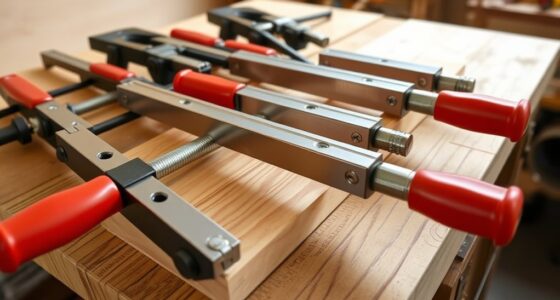
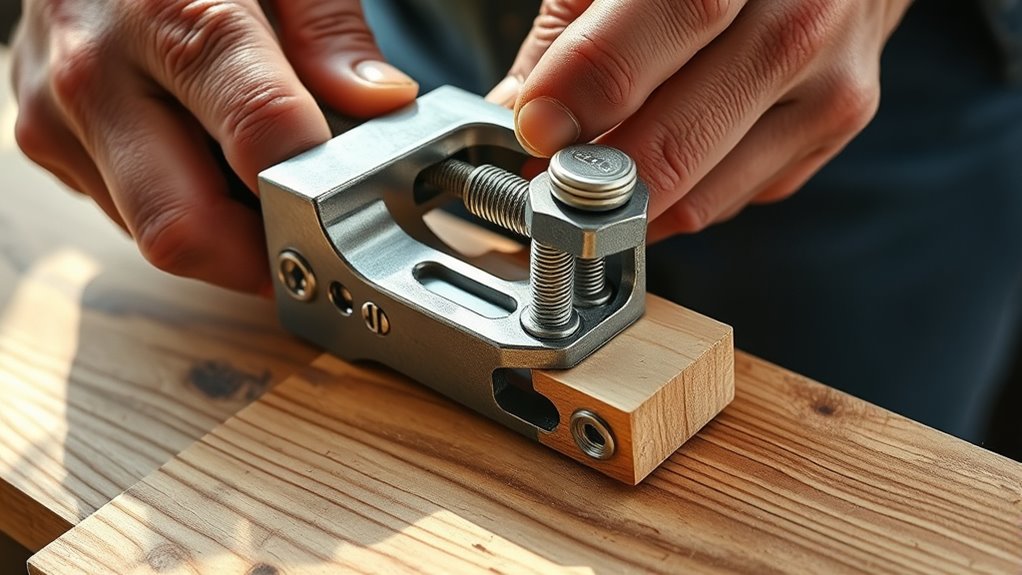
Have you ever struggled with securing materials firmly enough to complete your project? If so, mastering the proper use of hand clamps can make a significant difference. The key to effective clamping lies in proper clamp positioning and understanding safety precautions. When you position your clamp correctly, you ensure a secure hold without damaging your workpiece. Start by selecting the right size and type of clamp for your task. Once you have the right tool, focus on clamp positioning. Place the clamp so that its jaws grip the workpiece evenly, avoiding any tilting or uneven pressure. Position the clamp close to the edge of the material but not so close that it risks splitting or cracking it. Distribute the pressure evenly by placing multiple clamps if necessary, especially on larger or more delicate pieces. This ensures the load is spread out, reducing the chance of deformation or slipping. When tightening the clamp, do so gradually and evenly. This prevents undue stress on the material and guarantees that the workpiece remains aligned. Keep in mind that over-tightening can cause damage or deform the material, so tighten just enough to hold everything securely in place. Always double-check the positioning after tightening to confirm that the clamp isn’t slipping or causing distortion. Safety precautions are equally important when using hand clamps. Wear safety glasses to protect your eyes from accidental slips or debris. Keep your fingers clear of the clamp’s moving parts to avoid pinching injuries. Ensure your work area is clean and free of obstructions, so you have stable footing and control during the clamping process. If you’re working with power tools or cutting equipment nearby, make sure the clamps don’t interfere or cause accidental movement. Use clamps that are in good condition—worn or damaged clamps can fail unexpectedly, posing safety risks. Regularly inspect your clamps for cracks, rust, or bent jaws, replacing any compromised tools immediately. Remember to always release the clamp carefully after your work is complete, easing the pressure gradually to prevent sudden shifts that could cause injury or damage. Being mindful of clamp positioning and adhering to safety precautions not only improves your work quality but also keeps you safe during the entire process. Proper clamp use also involves understanding how to avoid damaging delicate surfaces, which can be achieved by selecting the appropriate clamp pads or protective covers. With practice, you’ll develop a keen eye for the right placement and know when to tighten or loosen your clamps for ideal results. Proper clamp use isn’t just about holding materials in place; it’s about working efficiently and safely, ensuring your project turns out just right.
Frequently Asked Questions
Can Hand Clamps Be Used for Heavy-Duty Projects?
Yes, you can use hand clamps for heavy-duty projects, but it depends on the clamp material and its adaptability. If your clamps are made from durable materials like steel, they can handle more demanding tasks. Always check the clamp’s weight capacity and design to ensure it matches your project’s requirements. Properly selecting a clamp with high versatility ensures safety and effectiveness when tackling heavy-duty jobs.
What Safety Precautions Should I Take When Using Hand Clamps?
When using hand clamps, you should always wear safety gear like gloves and safety glasses to protect yourself. Make sure to check the clamps for damage and handle them with proper handling techniques to prevent slips or pinches. Keep your fingers clear of the clamping area, and secure the workpiece firmly. Following these safety precautions helps prevent injuries and guarantees effective, safe use of your hand clamps.
How Do I Choose the Right Size of Clamp for My Project?
You should choose a clamp size based on your project’s material and the clamp capacity needed to hold it securely. Measure the width or thickness of your materials to determine the right clamp length, ensuring it can handle the pressure without damaging your work. Always consider material compatibility to avoid damage or slipping, and pick a clamp that offers enough reach and strength for your specific task.
Can Hand Clamps Be Used With Delicate or Fragile Materials?
Think of hand clamps like gentle hands for delicate materials. You can absolutely use them with fragile items, but choose clamps with soft, padded jaws to prevent damage. I once used a padded clamp to hold a fragile glass ornament during repair, and it worked perfectly without any cracks. For delicate materials, always opt for clamps designed for gentle pressure, ensuring your fragile items stay safe and intact.
How Do I Maintain and Store Hand Clamps Properly?
To maintain your hand clamps, regularly clean them with a damp cloth to remove dirt and debris, and lubricate the moving parts with light oil to guarantee smooth operation. Store your clamps in a dry, cool place, ideally hanging or laid flat to prevent warping or rust. Proper storage techniques and clamp maintenance help extend their lifespan and keep them ready for your next project.
Conclusion
By following these simple tips, you’ll become a master at using hand clamps, ensuring your projects are flawless and secure. Remember, a well-used clamp can make all the difference between a mess and a masterpiece. Don’t underestimate the power of proper technique—it’s your secret weapon to success. Keep practicing, stay safe, and soon you’ll wonder how you ever managed without these essential tools. With the right approach, you’ll achieve results that are nothing short of extraordinary!