To operate a hand drill or brace effectively, start by choosing the right bit for your material, such as HSS for metal or masonry bits for concrete. Make certain the drill is in good condition, wear safety glasses, and secure your workpiece. Position yourself for balance, start slow, and apply steady pressure while turning. Pay attention to vibrations or sounds that indicate issues. Keep practicing, and you’ll master safe, efficient drilling—more tips await if you keep going.
Key Takeaways
- Select the appropriate drill bit for your material and ensure it is sharp before starting.
- Secure the workpiece firmly and maintain a stable stance for better control.
- Start drilling at a slow speed to ensure proper alignment, then gradually increase as needed.
- Apply steady, even pressure without forcing the drill to prevent slipping or damage.
- Keep safety gear on, watch for obstacles, and be aware of what’s beneath the surface before drilling.
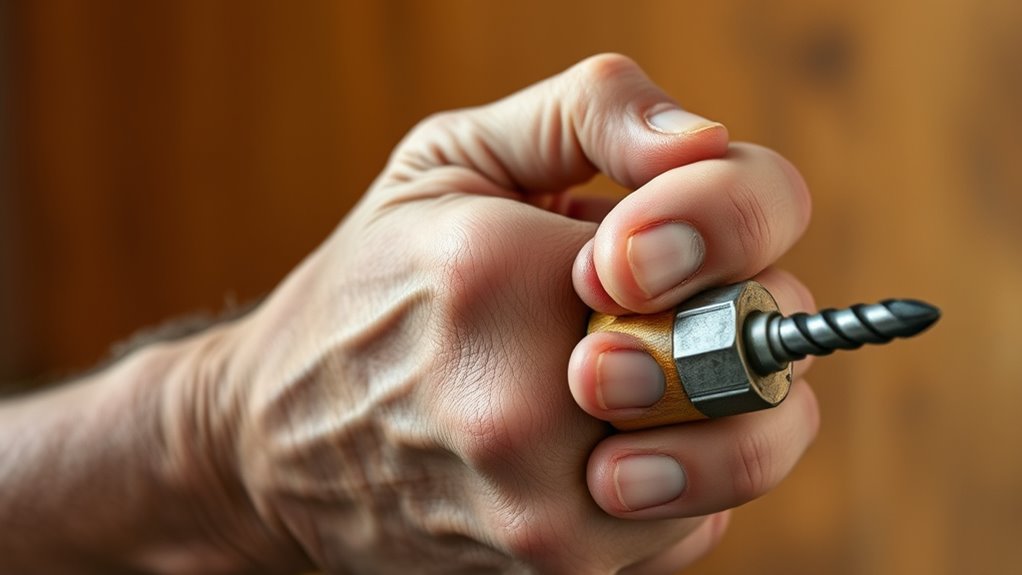
Have you ever wondered how to efficiently drill holes by hand? It’s a skill that can save you time and effort on various DIY projects, but it requires more than just grabbing a hand drill or brace. The first step is understanding drill bit selection. Choosing the right drill bit is essential because it directly impacts your success and safety. For most general-purpose tasks, a high-speed steel (HSS) bit works well, offering durability and versatility. If you’re drilling into harder materials like masonry or concrete, you’ll need bits specifically designed for those surfaces, such as masonry bits with carbide tips. For softer woods or plastics, standard twist bits will usually do the trick. Always match the drill bit to the material you’re working with, and ensure the bit is sharp; dull bits require more force and can slip, increasing the risk of injury.
Before you start drilling, it’s imperative to focus on safety precautions. Always wear safety glasses to protect your eyes from debris and dust, especially when working with tough materials. Keep your hands clear of the drill bit’s path and maintain a firm grip on the tool to prevent slips. Make sure the workpiece is securely clamped or held in place so it doesn’t shift during drilling. If you’re using a brace, position your body to maintain balance, and avoid overreaching. Check that the drill or brace is in good working condition—worn or damaged cords, bits, or handles can cause accidents. Keep your workspace clean, free of clutter, and avoid distractions while drilling. Remember, patience is key; apply steady, even pressure rather than forcing the drill, which can lead to broken bits or injury.
Another essential safety tip is to be aware of your surroundings. Know what’s beneath the material you’re drilling—hidden wiring, pipes, or other obstacles can cause dangerous situations. If you’re drilling into walls or floors, consider using a stud finder or a detection tool to locate hidden hazards. When using a hand drill or brace, start slowly to ensure the bit is aligned correctly, then increase speed gradually. Listening to the sound of the drill can also help; strange vibrations or sounds might indicate the bit is dull or misaligned, prompting you to stop and reassess. Incorporating proper technique and careful preparation will help prevent accidents and make your drilling more efficient. By carefully selecting your drill bit and adhering to safety precautions, you’ll make the drilling process more effective, safe, and less stressful, turning what might seem like a formidable task into a manageable one.
Frequently Asked Questions
How Do I Choose the Right Drill Bit for My Project?
To choose the right drill bit, first consider your project’s material and the bit types suited for it, like wood, metal, or masonry bits. Then, match the drill size to the task—smaller bits for precise holes and larger ones for bigger openings. Always select a bit type compatible with your material, and make certain the size fits your needs for clean, accurate results.
What Safety Gear Should I Wear When Using a Hand Drill?
Safety with a hand drill is your shield against mishaps. Wear protective eyewear to guard your eyes from flying debris and gloves to keep your hands safe and steady. These essentials are your armor in the battle against accidents. Think of them as your trusted partners, helping you work confidently and safely. Don’t skip these steps—they’re simple, crucial, and make your project both safer and more successful.
How Do I Prevent the Drill From Slipping During Use?
To prevent the drill from slipping, make sure you have a firm grip with grip enhancement techniques like wearing gloves or wrapping a cloth around the handle. Keep the drill bit aligned properly with your mark to guarantee accuracy. Hold the drill steady, apply consistent pressure, and start at a slow speed to maintain control. Regularly check your grip and alignment to prevent slipping and ensure precise, safe drilling.
Can I Use a Hand Drill for Heavy-Duty Tasks?
Sure, you can use a hand drill for heavy-duty tasks—if you enjoy slow progress and frustration. Its limited power capacity and drill speed mean it’s not designed for tough jobs, but if patience is your new hobby, go ahead. For demanding tasks, a power drill with higher torque and speed is your best bet. Otherwise, expect to be there all day, turning that hand crank with determination.
How Do I Maintain and Clean My Hand Drill Properly?
To maintain your hand drill, regularly clean the drill chuck by removing debris and dirt, ensuring smooth operation. Lubricate the drill bit with appropriate drill bit lubrication to prevent rust and improve cutting efficiency. Wipe down the entire tool after use with a clean cloth, and store it in a dry place. Periodic maintenance keeps your hand drill in top shape, extending its lifespan and ensuring safety during use.
Conclusion
Remember, a job worth doing is worth doing well. When operating a hand drill or brace, take your time, stay steady, and follow safety tips. With practice, you’ll become more confident and efficient. Keep in mind that patience and precision pay off in the end. So, don’t rush—trust your skills and tools. By doing so, you’ll get the job done right the first time, turning a simple task into a satisfying accomplishment.