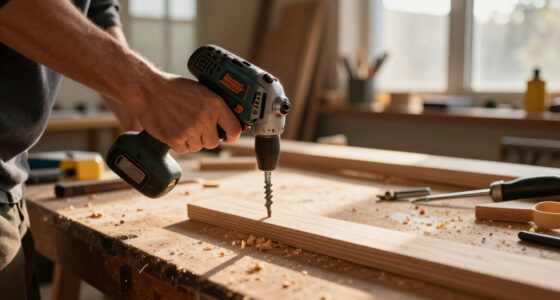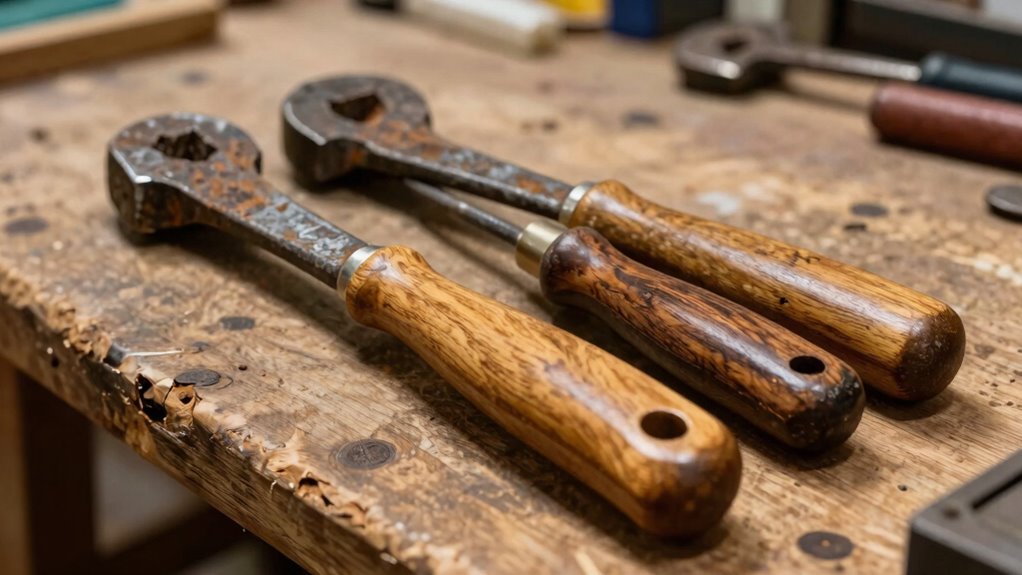
To make old hand tools feel better, start by carefully removing the old handles without damaging the tool. Clean the surface, then choose comfortable materials like rubber or wood with ergonomic designs. Sand rough spots and add grip tape or rubber coatings for extra comfort. Securing the new handle properly boosts safety and functionality. These simple upgrades can extend your tool’s life and improve your grip—keep going to discover more easy tips for making your tools feel like new.

Get business pricing on tools and workshop supplies
- Business-only prices and quantity discounts
- Tax-exempt purchasing
- Multiple users, one account, clear invoices
Key Takeaways
- Carefully remove old handles without damaging the tool’s shaft to prepare for a new upgrade.
- Choose comfortable handle materials like rubber or synthetic composites for improved grip.
- Sand or smooth rough handles, then add grip tape or rubber coatings for enhanced comfort.
- Incorporate ergonomic features such as contoured shapes or thicker ends for better control.
- Secure new handles firmly with appropriate fasteners or adhesives to ensure safety and durability.

Old hand tools can often become uncomfortable or unsafe to use over time, but upgrading their handles is a simple way to breathe new life into them. One of the most effective upgrades is improving the handle for a better ergonomic grip. When you focus on creating a handle that fits comfortably in your hand, you reduce fatigue and the risk of blisters or calluses. To do this, start by removing the old handle carefully, making sure not to damage the tool’s shaft. Once you have a clean surface, select a new handle material—wood, rubber, or synthetic composites—that provides a softer, more comfortable grip.
Handle restoration isn’t just about aesthetics; it’s about functionality and safety. You want your tools to feel natural in your hand, allowing precise control without strain. If the original handle was rough or splintered, sanding it smooth before attaching the new grip will make a big difference. For added comfort, you could wrap the handle with a layer of grip tape or apply a rubberized coating. These modifications help you hold the tool securely, even when your hands are sweaty or the weather is damp. Incorporating ergonomic principles into your handle design can make a noticeable difference in how comfortable and efficient your tools feel.
When it comes to handle restoration, choosing the right materials is essential. Wooden handles can be shaped and sanded to fit your grip perfectly, but they might require sealing or finishing to prevent splinters and rot. Rubber or synthetic grips, on the other hand, are quick to install and provide immediate comfort, especially for prolonged use. You can also add an ergonomic design feature, like a contoured shape or a thicker grip at the handle’s end, to further improve comfort and control. Additionally, ensuring the handle is ergonomically designed can significantly enhance comfort and reduce fatigue during extended use. Properly securing the handle with the right fasteners or adhesives is crucial to prevent loosening over time, which can compromise safety. Incorporating ergonomic design is especially important for tools used frequently or over long periods, as it helps prevent strain injuries. Regularly inspect your handle for wear and tear, and don’t hesitate to redo the handle restoration if it starts to feel loose or uncomfortable again.
Upgrading the handle is a straightforward way to make your old hand tools feel brand new. It not only enhances comfort and safety through an improved ergonomic grip but also extends the life of your tools. With a little effort and the right materials, you’ll enjoy more control and less fatigue during your projects.
Products Worth Considering

Levoit Core 400S-P Smart Air Purifier for Large Rooms

Hisense 85 U6 Pro Series Mini-LED ULED 4K UHD HDR Gaming AI Smart Fire TV (85U6SF Pro)

Google Nest Doorbell (Wired, 2nd Gen) – Snow
As an affiliate, we earn on qualifying purchases.
Frequently Asked Questions
Can Handle Upgrades Improve Tool Safety?
Yes, handle upgrades can improve tool safety. By enhancing the grip with ergonomic design and grip enhancement, you reduce the risk of slipping or losing control during use. A comfortable, secure handle allows you to work more precisely and confidently, decreasing the chance of accidents. Upgrading handles not only boosts comfort but also promotes safer handling, especially during prolonged tasks or when applying significant force.
Are Handle Upgrades Suitable for All Types of Hand Tools?
Handle upgrades are suitable for most hand tools, but not all. Think of it like fitting a new shoe; some tools benefit from an ergonomic grip and aesthetic enhancement, making them more comfortable and visually appealing. However, delicate or specialized tools may require different approaches. Always assess the tool’s design and purpose to determine if a handle upgrade will improve comfort and usability without compromising its function.
How Long Do Handle Upgrades Typically Last?
Handle upgrades with ergonomic designs and grip enhancements typically last several years, depending on usage and maintenance. You’ll find that high-quality materials resist wear and tear better over time. Regularly inspect your upgraded handles, clean them, and replace any worn parts promptly. Proper care guarantees your comfortable, improved grip remains effective, letting you work longer and more efficiently without discomfort or handle degradation.
What Materials Are Best for Handle Upgrades?
For handle upgrades, you should choose materials that offer an ergonomic grip and high material durability. Rubber and silicone provide comfortable, non-slip grips, making your tools easier to handle during extended use. Hardwood or dense plastics like polypropylene are durable options that withstand wear and tear. Consider these materials to improve your tools’ comfort and longevity, ensuring they feel better and last longer with every use.
Do Handle Upgrades Affect Tool Warranty?
Handle upgrades are like a fresh coat of paint on a rusty bike—they can improve tool aesthetics and comfort, but they might affect your warranty. Many manufacturers consider handle customization as altering the original design, which could void the warranty. Before upgrading, check your tool’s warranty policy. If you value your warranty, try reversible modifications or consult the manufacturer to avoid losing coverage while enhancing your tools.
Conclusion
By upgrading your old hand tools, you’re not just improving their comfort—you’re breathing new life into them. Think of each handle as a bridge connecting the past to your present craftsmanship, transforming rough edges into smooth, reliable companions. When you invest in these simple upgrades, you’re forging a stronger bond with your tools, turning each project into a journey of renewal. Embrace these changes, and let your tools carry your creativity forward, hand in hand.