
To keep your hand tools in top shape and your workspace organized, you should use proper storage solutions like wall-mounted pegboards, shelves, or drawer organizers. Label everything clearly and keep similar tools together for easy access. Regularly clean and inspect your tools, wiping blades and applying lubricant to prevent rust. Ensuring your storage system is well-maintained helps protect your tools and boosts efficiency—continue and discover more ways to improve your tool management.
Key Takeaways
- Use wall-mounted pegboards or panels with hooks for easy visibility and access.
- Organize small tools and accessories in labeled drawers or transparent containers.
- Implement a consistent routine of cleaning, inspecting, and returning tools after each use.
- Label storage spaces and color-code areas to quickly identify and locate specific tools.
- Store tools in a dry, protected environment to prevent rust, corrosion, and environmental damage.
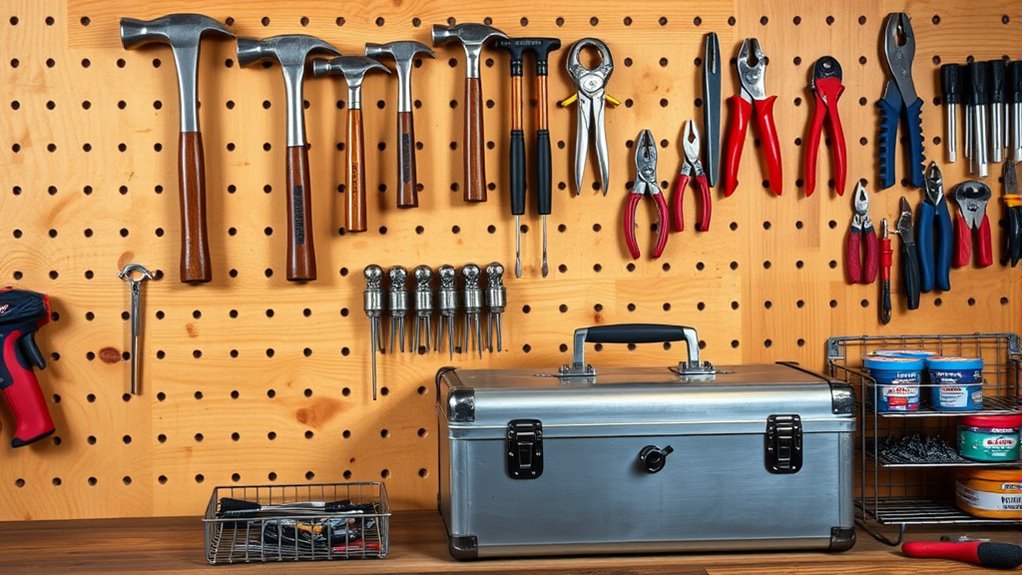
Proper storage for hand tools is essential to keep them in good condition and guarantee safety in your workspace. When your tools are well-organized, you save time searching for the right one and reduce the risk of accidents caused by misplaced or damaged equipment. Effective tool organization starts with choosing appropriate storage solutions that suit your workspace and your collection. Whether you’re working in a garage, workshop, or storage shed, investing in the right storage options helps maintain your tools’ longevity and keeps your area tidy.
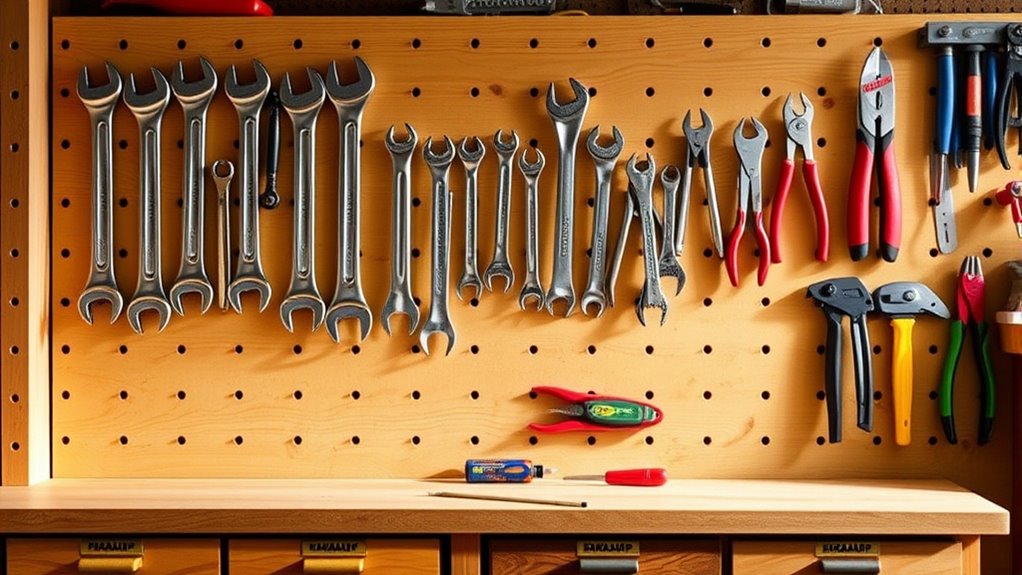
There are many storage solutions to consider, from simple wall-mounted racks to comprehensive drawer systems. Wall-mounted pegboards are a popular choice because they allow you to hang tools visibly and accessibly, making it easy to find what you need quickly. You can customize these panels with hooks and holders to fit different tool sizes and shapes. Drawer organizers are another excellent option, especially if you prefer to keep smaller tools or accessories sorted and protected from dust and damage. Clear containers and labeled bins also work well for storing screws, nails, and other small items, preventing clutter from spreading across your workspace.
In addition to using the right storage solutions, you should develop a consistent tool organization routine. Regularly clean, inspect, and put back your tools after each use. This habit prevents rust, corrosion, and damage, extending the lifespan of your tools. For instance, wiping down blades and applying lubricant to moving parts can prevent rust and ensure they work smoothly when you need them. When putting tools away, always return them to their designated spots, so you know exactly where everything is at all times. This practice minimizes downtime and keeps your workspace safe and efficient. Incorporating proper storage techniques can also help protect your tools from environmental damage, such as humidity and temperature fluctuations, which can accelerate wear and corrosion.
Labeling is a simple yet effective method to improve tool organization further. Use clear labels on drawers, bins, and shelves to quickly identify where your tools and supplies are stored. This way, you won’t have to rummage through multiple containers to find that specific screwdriver or wrench. Consider color-coding storage areas for different tool categories, making it even easier to locate what you need at a glance. Proper storage for hand tools isn’t just about keeping things tidy; it’s about creating a system that works for you and encourages disciplined tool management.
Frequently Asked Questions
How Often Should I Clean My Hand Tools Before Storing?
You should clean your hand tools after every use to guarantee ideal tool maintenance. Regular cleaning removes dirt, grease, and moisture, preventing rust and damage. If you use your tools frequently, consider cleaning them at least weekly. For less frequent use, clean them before storing to keep them in good condition. Consistent cleaning frequency helps extend your tools’ lifespan and ensures they work efficiently when needed.
What Is the Best Humidity Level for Storing Tools?
Think of Goldilocks finding the perfect bed — your tools need just the right humidity level to stay in prime condition. Aim for a humidity control level around 40-50%, preventing moisture buildup and rust. Maintaining this balance helps with moisture prevention, ensuring your tools won’t corrode or degrade over time. Use a dehumidifier or silica gel packs if needed, so your tools remain in top shape and ready whenever you need them.
Can Proper Storage Extend My Hand Tools’ Lifespan?
Yes, proper storage can extend your hand tools’ lifespan. By storing tools in a dry, humidity-controlled environment, you reduce the risk of tool corrosion. Additionally, using protective cases or covers prevents dust buildup, which can damage tool surfaces over time. Regularly cleaning and oiling your tools before storage also helps maintain their condition, ensuring they stay functional and safe to use for years to come.
Are There Specific Storage Methods for Power vs. Manual Tools?
Imagine your workshop as a symphony, where each instrument has its place. You should store power tools on dedicated power tool racks, ensuring they stay organized and protected. Manual tools, on the other hand, fit best in sturdy manual tool drawers, keeping them accessible and safe from damage. Using these specific storage methods prolongs your tools’ life and keeps your workspace efficient and enjoyable.
How Do I Organize Tools for Quick Access and Safety?
You should organize your tools using a tool rack organization system that keeps frequently used items within easy reach. Incorporate safety storage solutions like labeled bins and secure hooks to prevent accidents and keep tools from falling. Always store sharp or heavy tools separately, and make certain everything is clean before storing. This way, you improve quick access, maintain safety, and prolong your tools’ lifespan.
Conclusion
Did you know that proper storage not only keeps your tools organized but can actually extend their lifespan? Some believe that storing tools in a specific way prevents rust and damage, which is true to an extent. By using designated racks or containers, you ensure your tools stay in top shape and ready when you need them. So, invest a little time in storage now—your tools and your future projects will thank you.