When choosing the right mallet or hammer, consider the material you’ll work with and the task’s demands. For delicate jobs, opt for rubber or plastic mallets to prevent damage, while steel hammers are best for heavy-duty tasks like nailing or breaking. Focus on ergonomic handle designs that fit your hand and offer good grip and shock absorption to reduce fatigue. If you want to learn more about matching tools to your needs, keep exploring how to select the perfect tool for your project.
Key Takeaways
- Choose a tool material and head weight suited to your specific task for optimal safety and performance.
- Prioritize ergonomic handle design with proper grip size and non-slip features to reduce fatigue and injury risk.
- Select handles made from durable, shock-absorbing materials like fiberglass for longevity and comfort.
- Match the hammer or mallet type (rubber, steel, masonry) to the material and delicacy of the workpiece.
- Consider your hand size and grip strength to ensure precise control and reduce strain during use.

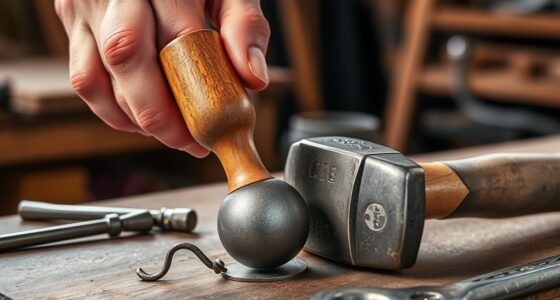
Choosing the right mallet or hammer is essential for ensuring your projects turn out safely and effectively. The key lies in understanding the material types and the ergonomic design of the tools. Different materials serve different purposes, so picking the correct one can make a significant difference in the quality of your work and your comfort. For example, rubber mallets are ideal for delicate tasks like assembling furniture or working with soft materials because they deliver a softer impact that minimizes damage. Conversely, steel hammers are better suited for more demanding jobs, such as driving nails or breaking hard surfaces, thanks to their durability and strength. Masonry hammers, with their chiseled edges, are tailored for chipping away at concrete or stone, and softer hammers, like plastic or rubber-tipped ones, are perfect for assembly or delicate adjustments. Understanding pen testing methodologies can help you better assess the effectiveness of your tools and techniques for specific tasks.
Beyond material types, ergonomic design plays a vital role in tool selection. An ergonomic hammer or mallet fits comfortably in your hand, reducing fatigue and the risk of strain, especially during prolonged use. Look for tools with handles that are contoured to your grip, providing a secure hold without causing discomfort. Such designs often incorporate non-slip grips, which are essential if you’re working in conditions where your hands might get sweaty or oily. The weight distribution of the tool also matters—ideally, the head should be balanced with the handle to prevent unnecessary strain on your wrist and arm. Lightweight tools are easier to maneuver and reduce fatigue, but they should still be sturdy enough to handle the intended tasks. Heavier tools, on the other hand, provide more power but require greater control and strength, so choose accordingly based on your comfort level and the type of work.
When selecting a mallet or hammer, consider how the ergonomic design aligns with your hand size and grip strength. A well-designed handle minimizes vibrations and shock transfer, which not only improves accuracy but also protects you from long-term injuries. Modern tools often incorporate materials like fiberglass or reinforced composites into handles, enhancing durability and shock absorption. This means you can work longer without feeling the impact in your hand or arm, making your efforts more productive and less tiring. Ultimately, choosing a tool with the right material types and ergonomic design isn’t just about convenience; it’s about safety, efficiency, and achieving professional results. Take your time to evaluate these aspects before making a purchase, and you’ll find that your projects become easier, safer, and more enjoyable to complete.
Frequently Asked Questions
How Do I Maintain and Clean My Mallet or Hammer?
To maintain and clean your mallet or hammer, regularly wipe them with a damp cloth to remove dirt and debris. Keep your tools in a proper tool storage to prevent damage. Check the head for any cracks or chips, and use sharpening techniques if your hammer has a metal face that needs smoothing. Proper care guarantees your tools stay effective and last longer, making your work safer and more precise.
What Safety Precautions Should I Follow When Using These Tools?
When using a mallet or hammer, always wear personal protective equipment like safety glasses to protect your eyes from flying debris. Keep your workspace tidy and store tools properly to prevent accidents. Make certain you grip the tool firmly and strike surfaces accurately to avoid slips or mis-hits. By following these safety precautions, you reduce injury risk and keep your tools in good condition for safe, effective use.
Can I Use a Hammer on Delicate or Fragile Materials?
Like a knight of old, you shouldn’t wield a hammer on delicate or fragile materials. Proper hammer usage minimizes the risk of damage, so use a soft mallet or a hammer with a gentle strike for delicate work. Using a regular hammer can crack or shatter fragile surfaces, increasing the risk of accidents. Always choose the right tool for the job to protect your materials and ensure safety.
How Do I Choose the Right Handle Material for Comfort?
You should choose a handle material that offers a comfortable grip and good durability. Look for handles with rubber or cushioned grips, as they reduce hand fatigue and provide better control. Materials like fiberglass or reinforced wood are durable and withstand impact. Consider how the handle feels in your hand and how it holds up over time, ensuring it provides a balance of comfort and long-lasting performance.
Are There Specific Brands Recommended for Durability?
You should look for brands known for their reputation in quality and durability, like Estwing, Vaughan, or Stanley. These brands use high-quality materials that stand up to heavy use, ensuring your tools last longer. By choosing a reputable brand, you get a reliable product that maintains its strength over time. Always check reviews and product details to confirm their materials are durable and suitable for your specific tasks.
Conclusion
Now that you know how to choose the perfect mallet or hammer, the next hit could make all the difference. Will you trust your instincts or second-guess your choice? Remember, the right tool isn’t just about power; it’s about precision and control. As you reach for that tool, ask yourself—are you ready to unbolt new possibilities? The right selection might just be the key to your next big breakthrough. Are you prepared to find out?