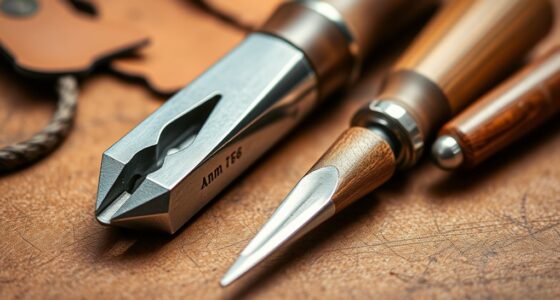
There are various screwdriver types, such as flat-head, Phillips, Torx, and hex, each designed for specific screw shapes and sizes. To use them properly, select the right screwdriver for the screw, verify the tip fits snugly, and apply steady, even pressure without forcing it. Keep your grip comfortable, and avoid using damaged tools. Mastering these types and techniques helps you work efficiently and safely—continue to explore for more expert tips.
Key Takeaways
- Choose the correct screwdriver type (flat-head, Phillips, Torx) for each screw to prevent damage and ensure proper fit.
- Use ergonomic screwdrivers with padded grips and contoured handles for comfort and reduced fatigue during extended use.
- Apply proper technique by gripping firmly, using your whole hand and wrist, and turning with controlled, steady pressure.
- Regularly inspect and maintain screwdrivers to ensure tips are in good condition and aligned for precise, safe operation.
- Store screwdrivers safely with tips covered and keep workspace clean to prevent accidents and tool damage.

A screwdriver is an indispensable tool for many tasks, but choosing the right type and using it correctly can make all the difference. When selecting a screwdriver, paying attention to ergonomic screwdriver designs can greatly enhance comfort and reduce fatigue. Ergonomic designs often feature padded grips, contoured handles, and balanced weight distribution, making it easier to apply force without straining your hand or wrist. This is especially important during extended use or when working with tough materials. By choosing screwdrivers with ergonomic features, you minimize discomfort and decrease the risk of repetitive strain injuries, allowing you to work more efficiently and safely. Proper technique is essential when using screwdrivers to guarantee your safety and achieve the best results. Always grip the handle firmly but comfortably, avoiding excessive force that might cause slipping or loss of control. When turning the screwdriver, use your whole hand and wrist rather than just your fingers. This gives you better leverage and control, especially with larger screws or stubborn fasteners. Pay close attention to the screwdriver’s blade or tip to ensure it fits the screw head precisely. Using the correct size and type prevents stripping the screw or damaging the tool. Additionally, understanding the importance of proper calibration can help maintain the screwdriver’s effectiveness over time, especially for precision tasks. Safety precautions during use are critical to prevent accidents and injuries. Before starting, inspect your screwdriver for any damage, such as cracks or worn-out tips. Damaged tools can slip unexpectedly, leading to cuts or punctures. Keep your workspace clean and free of clutter to avoid accidental slips or falls. When working at height or in awkward positions, secure yourself and the workpiece to maintain stability. Always wear safety glasses to protect your eyes from flying debris or accidental slips. If you’re using a powered screwdriver, make sure to follow the manufacturer’s instructions and avoid over-tightening, which can cause the tool to slip or break. Additionally, be mindful of your hand placement. Keep your fingers away from the screw’s path and the screwdriver’s tip to prevent pinching or puncture injuries. Use the right screwdriver for the job—using a flat-head instead of a Phillips, for example, can help you maintain better control. When finished, store screwdrivers in a safe place, out of reach of children, and keep the tips covered or in a tool rack to prevent damage and accidental injury.
Frequently Asked Questions
How Do I Choose the Right Screwdriver for a Project?
You choose the right screwdriver by considering your project’s needs and focusing on screwdriver ergonomics for comfort and control. Pick a screwdriver with a handle that fits well in your hand, reducing fatigue. Also, look at screwdriver material types—steel for durability or softer metals for specific tasks. Match the screwdriver’s tip to the screw head, ensuring a secure fit, so you work efficiently without damaging screws or tools.
What Safety Precautions Should I Take When Using Screwdrivers?
When using screwdrivers, always wear safety gear like goggles to protect your eyes from debris. Make sure to maintain a proper grip on the handle to prevent slipping, which could cause injuries. Keep your workspace well-lit and clear of clutter. Avoid applying excessive force, and use the right screwdriver for the screw type. Taking these precautions helps guarantee your safety and completes your project efficiently.
Can I Use a Screwdriver for Tasks Other Than Screwing?
Imagine a screwdriver transforming into a tiny pry bar or a makeshift chisel—yes, you can use it for tasks beyond screwing. Its multitool versatility allows you to tackle small prying, scraping, or even opening paint cans. Just remember, for heavy-duty or specialized jobs, it’s better to choose alternative tools designed for those tasks. Using a screwdriver creatively can save time, but don’t force it where a proper tool is needed.
How Do I Maintain and Store Screwdrivers Properly?
To maintain and store screwdrivers properly, you should regularly check the screwdriver blade care by cleaning and inspecting for damage. Keep your screwdrivers in a dry, organized place, storing screwdrivers safely to prevent accidents and blade dulling. Use a tool rack or case to avoid misplacement. Always tighten or shield the blades when not in use, ensuring they stay in good condition and ready for your next task.
Are There Eco-Friendly or Sustainable Screwdriver Options Available?
Think of eco-friendly screwdrivers as green shoots in a garden of tools—they’re available if you look closely. You can find options made from sustainable materials like bamboo or recycled metals, crafted through sustainable manufacturing processes. These tools help reduce environmental impact while still providing strength and durability. By choosing eco-conscious screwdrivers, you’re nurturing the planet’s health, making every turn you take a step toward a greener future.
Conclusion
So, now that you’re a screwdriver aficionado, go forth and conquer every screw in sight—just don’t forget which tip fits which head. Remember, using the wrong screwdriver is a surefire way to turn a simple task into a DIY disaster. But hey, if all else fails, you can always blame the tool. Keep your screwdrivers organized, your ego intact, and your screws tight—because nobody wants a wobbly shelf or a stripped screw, after all.