
To maintain and sharpen your spokeshave, regularly check the blade’s alignment and adjust it so it’s flush with the sole, ensuring smooth cuts. Use a fine stone to sharpen the blade at a consistent 25-30 degree angle, sharpening both sides evenly. Keep the handles comfortable for better control, and inspect the blade often for sharpness and alignment. Proper maintenance improves your tool’s performance and helps you achieve beautiful, precise curves—if you want to master these steps, keep exploring.
Key Takeaways
- Regularly inspect and re-align the blade after sharpening or if cuts become rough.
- Use a fine sharpening stone and maintain a 25-30 degree angle for consistent sharpening.
- Ensure the blade is flush with the sole for proper alignment and smooth cuts.
- Maintain a comfortable, firm grip for better control and safety during sharpening and adjustments.
- Clean and inspect the spokeshave frequently to prevent damage and ensure optimal performance.
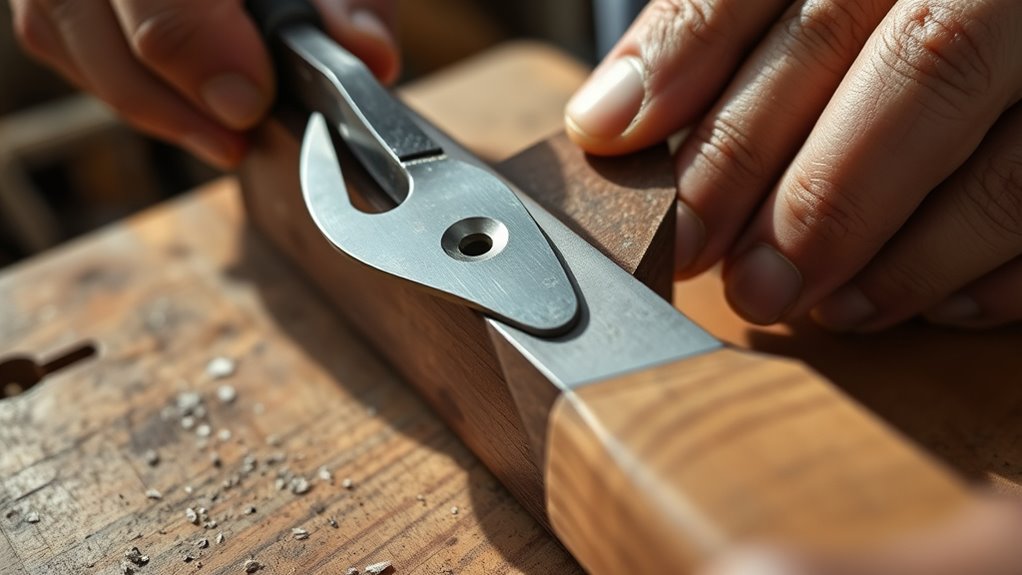
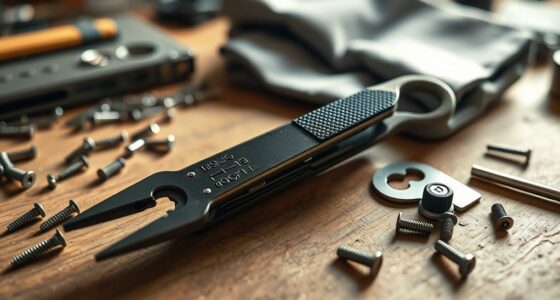
A spokeshave is a versatile tool that can deliver smooth, precise curves when properly maintained and sharpened. To achieve best results, you need to pay close attention to blade alignment and make certain your tool feels comfortable in your hand. Proper blade alignment is essential because it directly affects the quality of your cuts. When the blade isn’t aligned correctly, you may notice uneven shavings, increased effort, or even tear-out on your workpiece. To check the alignment, loosen the blade adjusting screw slightly, then carefully move the blade side to side until it’s flush with the sole of the spokeshave. Once aligned, tighten the screw securely, making sure the blade stays in place. Regularly inspecting and adjusting the blade alignment keeps your tool performing at its best, especially after sharpening or if you notice inconsistent cuts.
Another vital factor is your grip. An ergonomic grip isn’t just about comfort; it impacts control and precision. Most spokeshaves feature a handle designed to fit comfortably in your hand, but over time, the grip can become less effective due to wear or personal preference. If your spokeshave has adjustable handles or a palm grip, experiment with different positions to find what feels most natural and secure. This reduces fatigue and allows you to apply consistent pressure, giving you better control over the cut. When sharpening or adjusting the blade, maintain a firm but relaxed grip to prevent slipping and ensure safety. A well-designed ergonomic grip helps you make smoother, more controlled cuts, which is especially important when working on detailed curves or delicate projects.
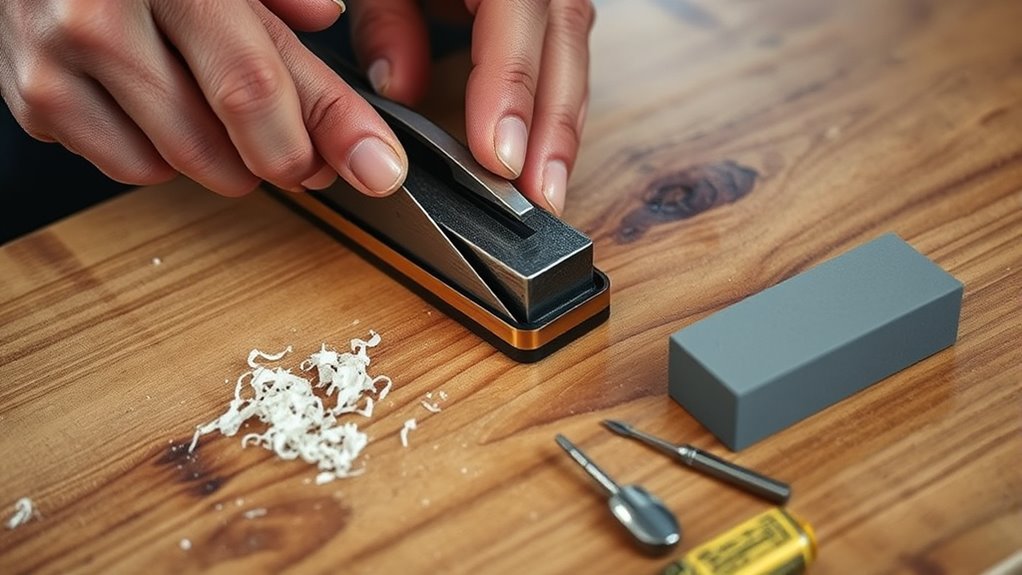
Maintaining your spokeshave also involves keeping the blade sharp. A dull blade requires more force, which can lead to uneven cuts, frustration, and even damage to your workpiece. When sharpening the blade, use a fine stone or sharpening system, maintaining a consistent angle—usually around 25 to 30 degrees. Make sure to sharpen evenly on both sides to preserve the blade’s symmetry. After sharpening, recheck the blade’s alignment and test it on a scrap piece of wood. If the cuts are smooth and clean, you’ve done a good job. Additionally, choosing the right sharpening stones and techniques can greatly improve the efficiency and longevity of your blade sharpening techniques. Remember to periodically check the blade’s sharpness and alignment, especially if you notice your shavings becoming rough or your effort increasing. Proper maintenance ensures your spokeshave continues to produce the beautiful, precise curves that make it such a valuable tool in your workshop.
Frequently Asked Questions
Can I Sharpen My Spokeshave Without Special Tools?
Yes, you can sharpen your spokeshave without special tools by using DIY sharpening methods with homemade tools. For example, you can create a makeshift sharpening stone from household items like a ceramic mug or a piece of fine grit sandpaper. Simply rub the blade against your homemade tool with consistent pressure and angle. This DIY approach helps keep your spokeshave sharp without needing specialized equipment, saving you time and money.
How Often Should I Replace the Blade?
You should replace the blade when it becomes chipped, dull, or no longer produces clean cuts, which usually means every few months with regular use. Keep an eye on your sharpening frequency; if you notice a decline in performance despite sharpening, it’s time for a new blade. Regular blade replacement guarantees precise, smooth work, saving you time and effort while maintaining your spokeshave’s effectiveness.
What Safety Precautions Are Necessary During Sharpening?
Think of sharpening your spokeshave like handling a delicate sculpture; safety is key. Always wear protective gear such as gloves and eye protection to prevent cuts and debris. Keep your workspace well-lit, organized, and free of distractions. Use a stable surface and proper tools to control the blade’s angle. By prioritizing workspace safety, you safeguard yourself and ensure precise, safe sharpening.
Is It Possible to Refurbish an Old, Damaged Spokeshave?
Yes, you can definitely refurbish an old, damaged spokeshave. For spokeshave restoration, focus on blade refurbishment by sharpening or replacing the blade, cleaning rust, and restoring the handle if needed. With patience, you can restore its cutting performance and extend its life. Make sure to follow proper safety precautions during the process, and take your time to achieve the best results in your restoration project.
How Do I Adjust the Blade for Different Curves?
Adjusting the blade is like tuning a musical instrument—you want perfect harmony. To match different curve profiles, loosen the blade clamp, then tilt the blade to set the ideal angle for each curve. Fine-tune the blade angles until you achieve smooth, consistent cuts. Secure the blade firmly, ensuring it follows your desired curve profile. Regular adjustments let you carve with precision, turning rough wood into art.
Conclusion
Maintaining and sharpening your spokeshave ensures precise, smooth cuts every time. Regular care extends its lifespan and keeps your projects looking professional. Did you know that a well-maintained blade can cut up to 50% more efficiently? By following these simple steps, you’ll improve both your craftsmanship and safety. Keep your tools sharp and clean, and you’ll enjoy better results and less frustration on your woodworking journey. Your skill and patience truly make the difference.