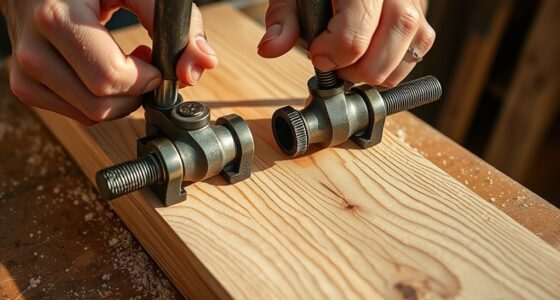

Understanding different types of hand saws helps you choose the right tool for your project. You’ll find varieties like hacksaws for cutting metal, coping saws for detailed curves, and crosscut or rip saws for wood. Each type has unique blade materials, handle designs, and features tailored to specific tasks. Consider how comfort and blade durability affect your work. To master selecting the best saw for your needs, exploring these options further will give you valuable insights.
Key Takeaways
- Different hand saws are designed for specific tasks, such as crosscutting, rip-cutting, or fine woodworking.
- Blade material varies from high-carbon steel to tungsten carbide, affecting durability and cutting efficiency.
- Handle ergonomics influence comfort, grip security, and control during extended use.
- Saw types include panel saws, back saws, coping saws, and hacksaws, each suited for particular materials and cuts.
- Selecting the right saw depends on blade type, handle design, and the project’s material and complexity.
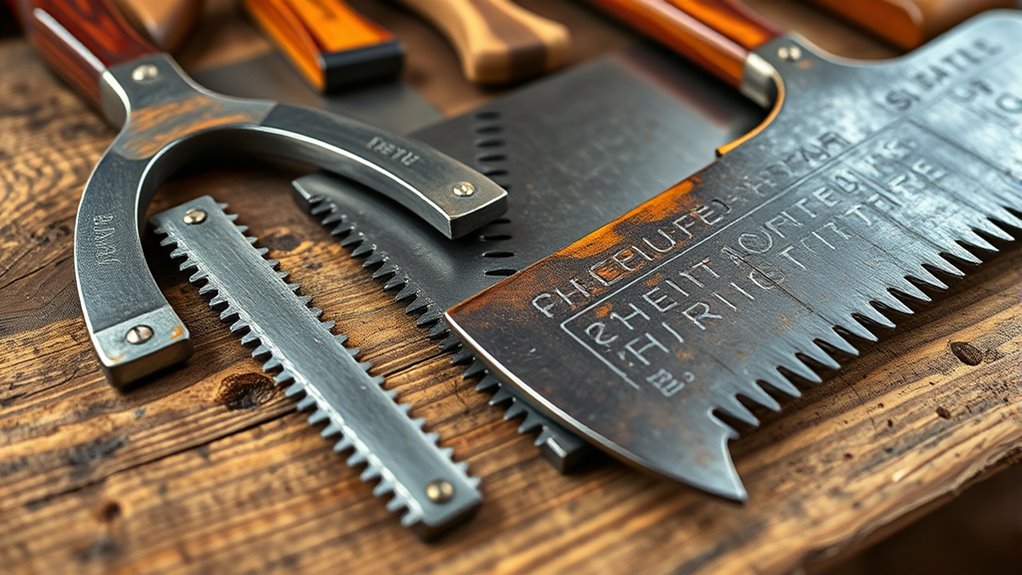
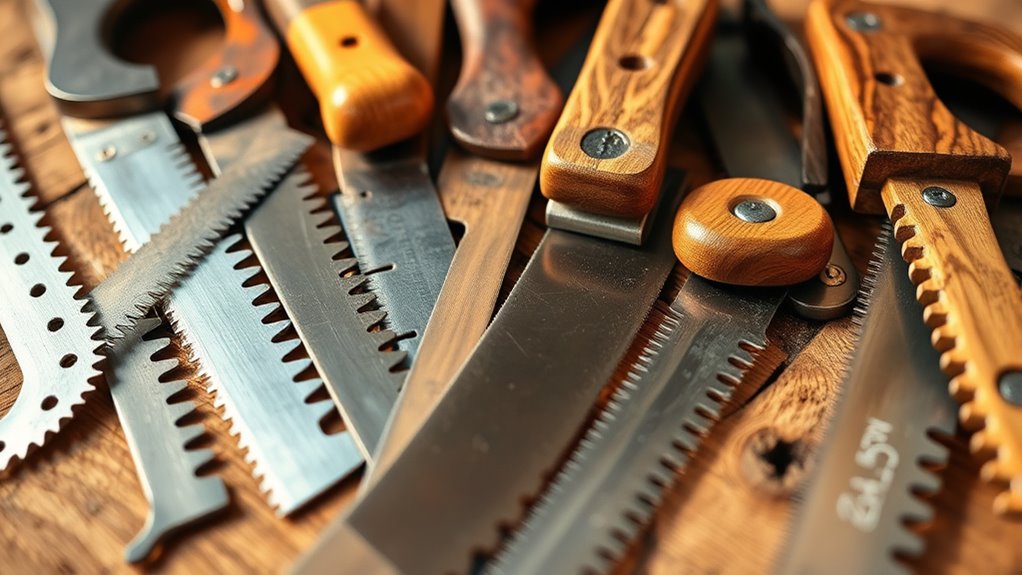
Have you ever wondered which hand saw is best for your project? Choosing the right saw depends on understanding the different features that influence performance, especially blade materials and handle ergonomics. Blade materials play a pivotal role because they determine durability, cut quality, and ease of use. Saws with high-carbon steel blades are common—they’re affordable, hold a sharp edge well, and are suitable for general purpose cutting. For more demanding tasks, like cutting through hardwoods or tougher materials, you might prefer blades made from hardened steel or even tungsten carbide, which offer increased longevity and cutting power. On the other hand, blades made from softer metals tend to dull faster and may require more frequent sharpening, so consider what you’ll be working with most often.
Handle ergonomics is another essential factor that impacts your comfort and control during cutting. An ergonomic handle is designed to fit comfortably in your hand, reducing fatigue and minimizing the risk of slips or accidents. Look for handles that are shaped to match the contours of your grip, with textured or rubberized surfaces that provide a secure hold even when your hands are sweaty or dirty. The placement of the handle relative to the blade also matters—if it’s positioned for optimal leverage and control, you’ll find it easier to guide the saw precisely. Some handles are designed with added features like padding or contours that reduce strain during extended use, making them ideal for longer projects. Additionally, understanding blade materials helps in selecting the most suitable saw for your specific tasks.
When considering these aspects, think about the type of material you’ll be cutting and how much time you’ll spend using the saw. A saw with a comfortable, well-designed handle can make the work feel less like a chore, while a blade made from quality materials ensures cleaner cuts and less effort. Remember, the best hand saw isn’t just about the blade or handle on their own—it’s about how well these components work together to match your specific needs. Whether you’re tackling fine woodworking or rough carpentry, paying attention to blade materials and handle ergonomics will help you choose a saw that feels comfortable and performs reliably. In the end, investing in the right saw will save you time, reduce fatigue, and give you more confidence in your work.
As an affiliate, we earn on qualifying purchases.
Frequently Asked Questions
Which Hand Saw Is Best for Cutting Plywood?
The best hand saw for cutting plywood is a crosscut saw, which excels in plywood cutting techniques. Look for a saw with fine, sharp teeth designed to make clean cuts without splintering. The best saw blades for plywood are those with triple-chip grind teeth or crosscut teeth, as they provide smoother, precise cuts. Use steady, even strokes to guarantee safety and accuracy during your plywood project.
How Do I Maintain and Sharpen My Hand Saw?
Like a seasoned artisan from the Renaissance, you can keep your hand saw sharp and efficient. To maintain your blade, regularly clean it to prevent rust, and use proper sharpening techniques—like filing teeth at the correct angle. Guarantee your saw is dry after use, store it properly, and periodically inspect for dullness or damage. Proper blade maintenance keeps your saw performing like new, making each cut precise and effortless.
What Safety Gear Should I Use With Hand Saws?
You should always wear safety goggles to protect your eyes from sawdust and flying debris, and hearing protection to guard against loud noise. Gloves can offer some hand safety, but be cautious not to wear loose ones that could get caught. Make sure your workspace is clear, and keep your hands away from the blade’s path. Following these safety practices helps prevent injuries and keeps your work safe and efficient.
Are There Eco-Friendly or Sustainable Hand Saw Options?
Yes, you can find eco-friendly hand saws made from sustainable materials like bamboo or FSC-certified wood. Look for brands that prioritize sustainable manufacturing practices, reducing environmental impact. These saws often feature biodegradable or recyclable components, making them a greener choice. By choosing tools made with eco-friendly materials, you support environmentally responsible manufacturing and help reduce your carbon footprint during woodworking projects.
Can Hand Saws Be Used for Metal or Plastic?
Like a key unfastening new possibilities, your hand saw can open doors to metal and plastic cutting. Use a fine-toothed saw for precision in metal cutting, ensuring smooth and accurate results. For plastic cutting, opt for a saw with a fine or specialized blade to prevent cracks or melting. Remember, using the right saw for each material keeps your project safe, efficient, and successful.
As an affiliate, we earn on qualifying purchases.
Conclusion
Now that you know the different types of hand saws, you’ll be better equipped to choose the right tool for your project. Remember, a craftsman is only as good as his tools, and “a good workman never blames his tools.” By understanding each saw’s purpose, you’ll work more efficiently and achieve better results. So, pick wisely, stay safe, and enjoy transforming your ideas into reality with confidence.
As an affiliate, we earn on qualifying purchases.
As an affiliate, we earn on qualifying purchases.