To use utility knives safely without slowing down, always keep blades sharp and in good condition to reduce effort and prevent slips. Handle blades carefully, following manufacturer instructions, and store them securely to avoid damage or accidents. Use steady, controlled strokes and guarantee your material is secure before cutting. Always retract or lock the blade when not in use and inspect tools regularly. By following these tips, you can stay safe and efficient—there’s more to learn for even better results.

Get business pricing on tools and workshop supplies
- Business-only prices and quantity discounts
- Tax-exempt purchasing
- Multiple users, one account, clear invoices
Key Takeaways
- Keep blades sharp and properly replaced to reduce force and improve cutting efficiency.
- Use controlled, steady strokes to maintain safety without sacrificing speed.
- Secure materials firmly before cutting to prevent slips and ensure smooth cuts.
- Always retract or lock blades when not in use to prevent accidental injuries.
- Regularly inspect and maintain tools to ensure optimal performance and safety.
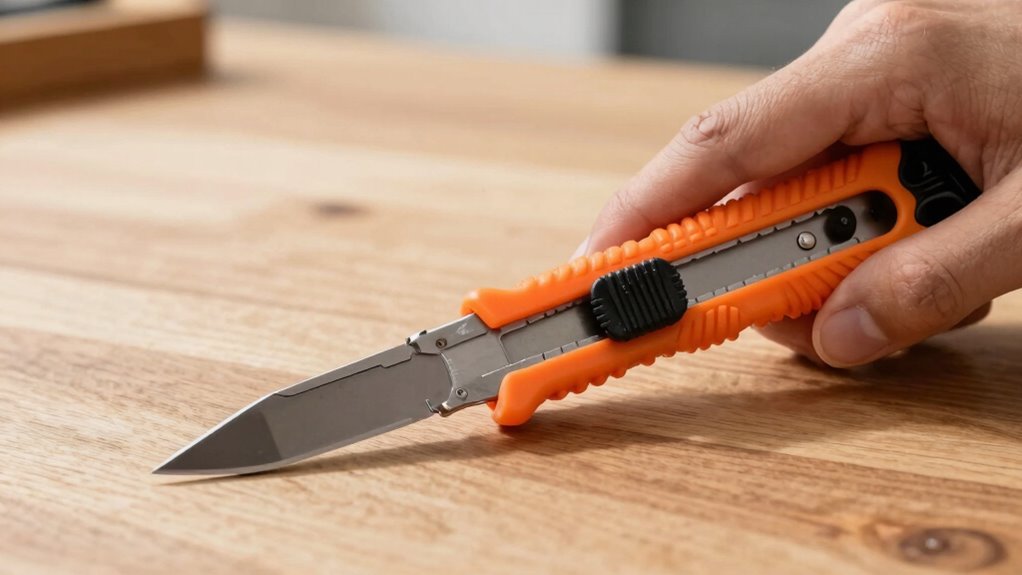
Utility knives are versatile tools that can make cutting tasks quicker and easier, but safety should always come first. When you’re working with a utility knife, one of the most important things to keep in mind is proper blade replacement. Dull blades require more pressure to cut through materials, increasing the risk of slips and injuries. Always replace the blade when it starts to dull or shows signs of damage. Make sure to handle blades carefully during replacement—use gloves if needed, and follow the manufacturer’s instructions to avoid cuts. Keeping your blades sharp not only makes your work more efficient but also minimizes the chance of accidents, helping you stay safe without slowing down your workflow. Additionally, inspecting your tools regularly for any signs of wear can prevent unexpected injuries. Storage safety is another critical aspect of using utility knives responsibly. When you’re finished with your task, store the knife in a secure place, ideally with a blade cover or in a designated toolbox. Leaving blades exposed or placing the knife loosely in a drawer can lead to accidental cuts or injuries later. Proper storage also keeps your blades from getting damaged or dull prematurely, which means you won’t need to replace them as often. Consider using a storage container specifically designed for utility knives—these often have compartments that keep blades protected and out of reach of children or untrained users. This way, you maintain a safe environment while keeping your tools in good condition. Using your utility knife more safely doesn’t mean sacrificing efficiency. For instance, when you’re ready to cut, ensure you’re securely holding the material and cutting in a controlled motion. Don’t rush through your work; instead, use steady, deliberate strokes to maintain control. Keep your hands dry and free of debris, as slipping can cause injuries. Regularly check your blades for dullness or damage, and replace them promptly to maintain clean, safe cuts. When storing your knife, always retract the blade if it has that feature, or lock it in place, so it can’t accidentally extend or cause harm. Proper tool maintenance and safe handling practices are essential for preventing accidents and ensuring efficient work. Developing a routine of inspection and maintenance can help identify potential hazards early and keep your tools in optimal condition. Remember, being proactive about blade safety can significantly reduce the risk of injury while working.
Products Worth Considering

eufy Security eufyCam C37 4-Camera Kit with 360° Pan and Tilt, Auto Tracking, 2K Color Night Vision, and Solar Panels

eufy Security eufyCam C35 4-Camera Wireless Indoor/Outdoor Kit

Philips Hue Smart Light Starter Kit with Bridge and 4 White and Color A19 Bulbs
As an affiliate, we earn on qualifying purchases.
Frequently Asked Questions
What Is the Best Type of Utility Knife for Safety?
The best type of utility knife for safety features blade durability and ergonomic design. Look for a knife with a sturdy, high-quality blade that resists dulling and breaking, reducing the risk of slips. An ergonomic handle ensures a comfortable grip, giving you better control and preventing accidents. Choose a knife with a safety lock or retractable blade to protect your fingers when not in use. This combination maintains your safety without sacrificing efficiency.
How Often Should Utility Blades Be Replaced?
When it comes to utility blades, you should replace them as soon as they become dull, which is your cue to sharpen or swap them out. Keep blades sharp by regularly blade sharpening, and store them safely in a dedicated blade storage. This way, you’re not only cutting safely but also maintaining efficiency. Don’t wait until a dull blade causes a mishap—replace it promptly to stay sharp and safe.
Can Safety Gloves Improve Utility Knife Safety?
Safety gloves can definitely improve utility knife safety. Look for gloves made from durable materials like nitrile or leather, which provide better protection and cut resistance. The right glove material also enhances grip, helping you control the knife more precisely. By improving grip and offering a barrier against accidental slips, safety gloves allow you to work efficiently while reducing the risk of injury.
Are There Specific Safety Accessories for Utility Knives?
Yes, there are specific safety accessories for utility knives. Look for models with enhanced blade ergonomics, which provide better grip and control, reducing slips. Safety blade locks are essential—they prevent accidental blade exposure when not in use, ensuring safer handling. Using these accessories, you can work efficiently while minimizing risks. Always choose tools with these features to enhance safety without compromising your speed or productivity.
How Do I Dispose of Used Utility Blades Safely?
To dispose of used utility blades safely, you should place them in a puncture-proof disposal container, like a dedicated sharps or blade recycling container. Never throw blades in regular trash to prevent injuries. Once full, seal the container tightly and take it to a local blade recycling or hazardous waste facility. This method keeps everyone safe and promotes responsible blade disposal.
Conclusion
By following these safety tips, you’ll turn your utility knife into a harmless tool—like a gentle breeze instead of a raging storm. Always stay alert, keep your hands clear, and replace blades when dull. Remember, a single careless moment can turn your project into a disaster, so treat your utility knife with respect. Mastering safe use guarantees your work stays smooth and injury-free, making you the ultimate pro in safety and efficiency.