
You’ll notice your tool needs sharpening when it drags, catches, or produces uneven cuts, even with more effort. Increased force can lead to slipping or binding, which raises safety risks. Pay attention to louder noises or ragged edges, as these clues indicate dullness. Proper maintenance and regular inspections help you catch dull blades early. If these signs sound familiar, there’s more to discover about keeping your tools in top shape.
Key Takeaways
- If the tool begins to drag, catch, or require excessive effort, it likely needs sharpening.
- Uneven, ragged, or torn cuts indicate dull blades rather than applying more force.
- Increased noise or straining sounds during use signal dullness and the need for sharpening.
- Resistance, slipping, or sudden binding suggest the tool is dull and unsafe to force through material.
- Regular inspection and sensory cues help determine when sharpening is necessary instead of forcing the tool.

Knowing when to sharpen your tools is essential for maintaining efficiency and safety in your work. When you use dull blades or tools, you often find yourself applying more force than necessary, which not only tires you out but also increases the risk of accidents. Recognizing the signs early helps preserve blade longevity and ensures you operate safely. Instead of pushing harder, you should focus on the tool’s performance and condition.
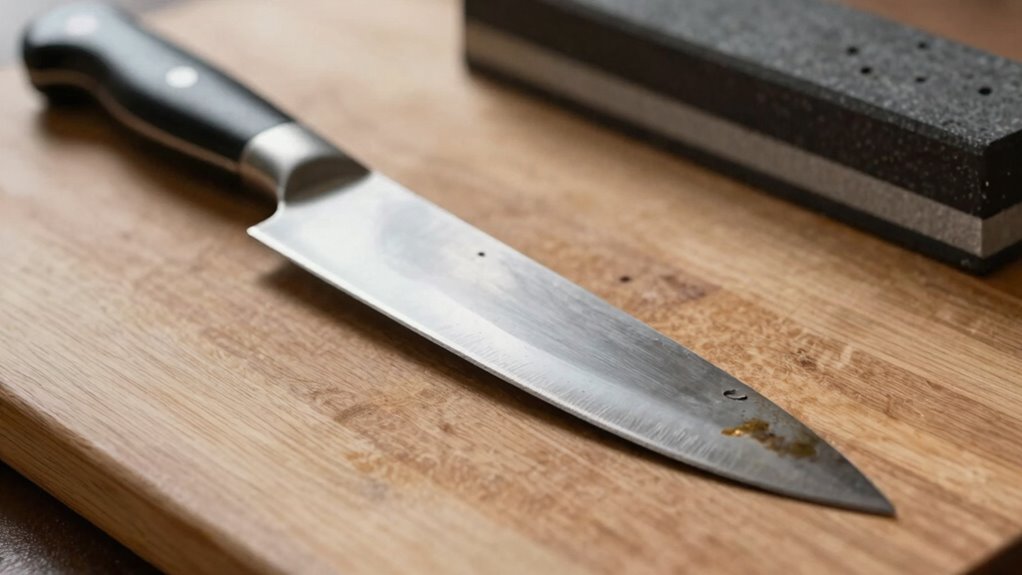
One clear indicator that your tool needs sharpening is when it begins to drag or catch during use. If you notice that your cutting or slicing becomes uneven or takes more effort, it’s a sign the edge has dulled. This extra resistance can cause you to apply excessive force, which decreases control and increases safety risks. Sharp tools cut smoothly, requiring less force, so if you’re fighting with your tool, it’s time to consider sharpening.
Another important factor to consider is the quality of your work. If you see ragged edges, torn material, or uneven cuts, your blade or tool edge is likely dull. These imperfections not only compromise the quality of your work but also indicate that the blade’s cutting ability has diminished. Continuing to use a dull blade can lead to quicker blade wear, reducing blade longevity and leading to more frequent replacements.
Safety considerations also play a significant role in knowing when to sharpen. Dull tools are more prone to slipping or sudden binding, which can lead to accidents. Applying more force to compensate for dullness increases the chance of slips, cuts, or other injuries. Sharp tools, on the other hand, allow for controlled, precise movements. If you notice increased effort or a change in how the tool handles, it’s better to stop and sharpen rather than risk an injury. This highlights the importance of regular tool maintenance to keep your equipment in optimal condition.
Additionally, pay attention to the sound your tool makes during use. A dull blade often produces a louder, more straining noise as it struggles through material. This auditory cue can alert you that the blade’s edge has become less effective. Regularly inspecting your tools and maintaining their sharpness not only enhances blade longevity but also aligns with safety considerations, helping you work more efficiently and securely. Being attentive to these performance cues can save you time and prevent mishaps.
Furthermore, understanding the importance of proper maintenance can significantly extend the lifespan of your tools and ensure consistent performance. Ultimately, trusting your senses and paying attention to the tool’s performance ensures you sharpen your tools at the right time. This proactive approach keeps your blades in prime condition, extends their lifespan, and creates a safer working environment. Instead of forcing a dull tool to do the job, sharpen it promptly and work smarter, not harder.
knife sharpening kit
As an affiliate, we earn on qualifying purchases.
As an affiliate, we earn on qualifying purchases.
Frequently Asked Questions
Can a Dull Tool Be Safely Used Without Risking Damage?
Using a dull tool isn’t safe because it can slip, cause accidents, or damage your work. Always prioritize tool maintenance by sharpening blades when needed. Wear safety gear like gloves and eye protection to stay safe during use. If the tool feels resistant or requires extra force, it’s a sign it needs sharpening. Maintaining tools properly not only guarantees safety but also makes your work easier and more precise.
How Often Should I Check My Tools for Sharpness?
Did you know that dull tools can increase work time by up to 30%? You should check your tools for sharpness regularly—ideally after each use or weekly if you use them often. Proper tool maintenance and sharpening frequency are key to safety and efficiency. Keep an eye on their performance, and sharpen when you notice any struggle or resistance. Regular checks help maintain cutting quality and extend your tools’ lifespan.
Does Sharpening Extend a Tool’s Lifespan Significantly?
Yes, sharpening can considerably extend your tool’s lifespan. Proper tool maintenance, including regular sharpening, reduces stress on the tool, prevents damage, and keeps it performing efficiently. Using effective sharpening techniques ensures you don’t remove too much material, preserving the tool’s integrity. By maintaining a sharp edge, you minimize the need for excessive force, saving your tools from unnecessary wear and tear, and ultimately increasing their longevity.
Are There Specific Signs of Irreparable Tool Damage?
If your tool shows damage indicators like cracks, chips, or excessive wear, it’s likely irreparably damaged. Tool metallurgy influences how well a tool withstands stress; poor-quality metal is more prone to damage. Keep an eye out for signs such as pitting or deformation, which suggest damage is beyond repair. When these indicators appear, replacing the tool is safer and more effective than attempting repairs.
What Safety Precautions Should I Take When Sharpening Tools?
When sharpening tools, always wear personal protective equipment like safety goggles and gloves to protect against sparks and sharp fragments. Use proper sharpening techniques, keeping your hands steady and the tool at the correct angle. Work in a well-ventilated area, and make certain your workspace is clear of distractions. Taking these precautions minimizes injury risks and ensures a safe, effective sharpening process.
tool sharpener for woodworking tools
As an affiliate, we earn on qualifying purchases.
As an affiliate, we earn on qualifying purchases.
Conclusion
Just like a well-tuned instrument produces beautiful music, a sharp tool works effortlessly and precisely. When you notice increased force, sluggish cuts, or uneven results, it’s a sign your tool is crying out for a sharpening session. Think of it as tending a garden; neglecting the tools means slower growth and frustration. Keep your tools sharp, and your work will flow smoothly—like a melody that’s always in tune.
electric blade sharpener
As an affiliate, we earn on qualifying purchases.
As an affiliate, we earn on qualifying purchases.
garden tool sharpening stone
As an affiliate, we earn on qualifying purchases.
As an affiliate, we earn on qualifying purchases.