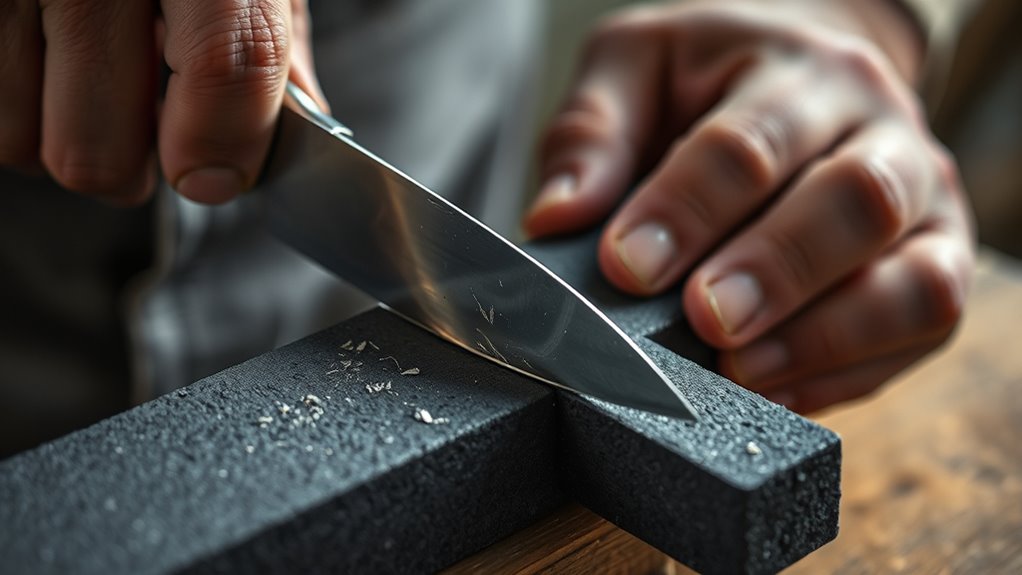

To sharpen blades with whetstones, start by choosing the right type and grit based on your blade’s dullness. Wet the stone if needed, and hold the blade at about a 20° angle. Use smooth, consistent strokes from heel to tip, maintaining the angle and applying moderate pressure. Regularly check your progress to avoid over-sharpening. If you want to perfect your technique and get the best results, there’s more to learn about sharpening methods and safety tips.
Key Takeaways
- Choose the appropriate whetstone type and grit based on blade dullness and desired sharpness.
- Soak water stones or prepare oil/diamond stones as per the manufacturer’s instructions before sharpening.
- Maintain a consistent angle, typically around 20°, throughout the sharpening process.
- Use controlled, even strokes from heel to tip, applying moderate pressure for effective results.
- Regularly check blade sharpness and clean the blade and stone after sharpening for safety and longevity.
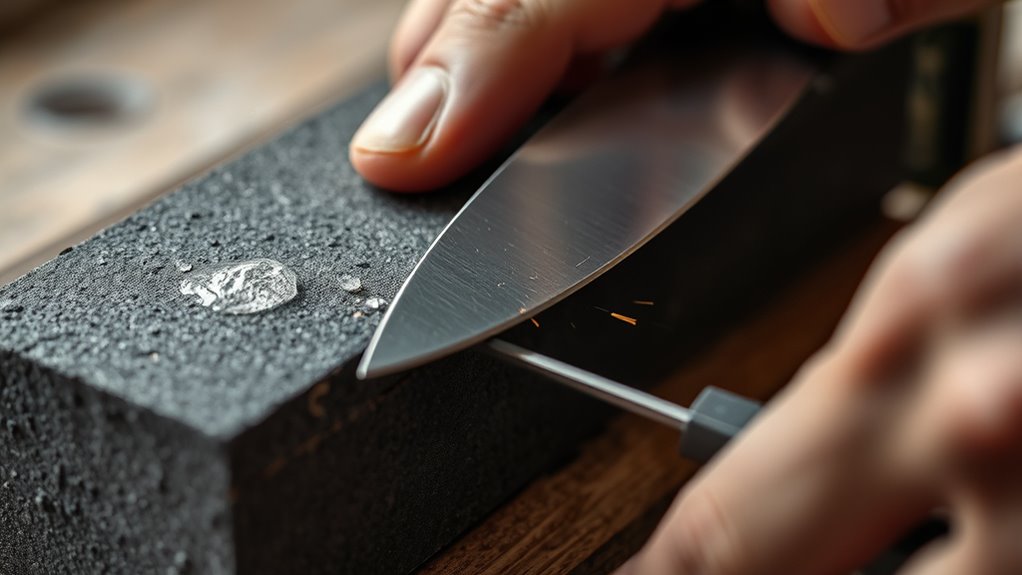
Keeping your blades sharp is essential for safe and efficient cutting, and using a whetstone is one of the most effective methods. Proper blade maintenance isn’t just about keeping your tools looking good; it directly impacts performance and safety. When you maintain your blades correctly, you ensure they cut smoothly, reduce the risk of accidents caused by dull edges, and extend the lifespan of your tools. The key to successful sharpening lies in choosing the right whetstone, which hinges on understanding the different types and grit levels available. Whetstone selection isn’t a one-size-fits-all process; it depends on your specific needs, the type of blades you’re working with, and how dull they are. For instance, if your blades are very dull or damaged, you’ll want a coarse grit whetstone to reshape and remove nicks quickly. For routine maintenance or touch-ups, a medium or fine grit whetstone is more suitable, providing a smoother, sharper edge without removing too much material.
Before starting, inspect your blade to determine its condition and decide on the appropriate whetstone. If you’re unsure, start with a medium grit; it’s versatile enough for most blades and helps you gauge the sharpening process. When selecting your whetstone, consider the material it’s made from—most common options include oil stones, water stones, and diamond stones. Water stones are popular for their fast cutting action and ease of use, but they require soaking before use. Oil stones are durable and don’t require soaking, making them a good choice for heavy-duty sharpening. Diamond stones are the most aggressive and can quickly reshape very dull blades, but they tend to be more expensive.
Once you’ve selected the right whetstone, prepare your workspace and ensure your blade is clean. Wet the stone if necessary, and hold your blade at the correct angle—usually around 20 degrees for most kitchen knives or tools. Use consistent, controlled strokes, moving from the heel to the tip of the blade, maintaining the same angle throughout. Apply moderate pressure and regularly check your progress to avoid over-sharpening or uneven edges. Remember, blade maintenance is a continuous process; regular sharpening with the appropriate whetstone keeps your blades performing at their best. Proper technique and the right equipment can turn this task into a safe and satisfying routine.
With patience and the right equipment, you can achieve a razor-sharp edge that improves your cutting experience and prolongs your tools’ life. Choosing the correct whetstone for your needs and mastering the proper technique makes all the difference, turning what might seem like a tedious task into a straightforward part of your maintenance routine. Additionally, understanding the different types of whetstones helps optimize your sharpening results and ensures your blades stay in top condition.
Frequently Asked Questions
How Often Should I Sharpen My Blades With a Whetstone?
You should sharpen your blades with a whetstone every few weeks or when you notice a decline in cutting performance. Regular blade maintenance helps keep your blades sharp and effective. The sharpening frequency depends on how often you use the blades and the material you’re cutting. By maintaining a routine, you prevent damage and ensure safety. Keep an eye on the blade’s edge, and sharpen as needed to maintain peak performance.
Can I Use a Whetstone on All Types of Blades?
You can use a whetstone on most blades, but it depends on the blade material and sharpening angles. For stainless steel, carbon steel, or ceramic blades, a whetstone works well, provided you adjust the angle accordingly. Always research the recommended sharpening angles for your specific blade type to avoid damage. Keep in mind, some specialty blades may require different sharpening tools or techniques for ideal results.
What Safety Precautions Are Necessary When Sharpening?
When sharpening blades, you need to prioritize workspace safety and wear protective gear like gloves and safety glasses to prevent injuries. Make sure your workspace is clean, well-lit, and stable, so the whetstone doesn’t slip. Keep your hands away from the blade’s edge during sharpening, and always handle the stone carefully. These precautions help prevent accidents and make certain a safe, effective sharpening process.
How Do I Choose the Right Grit for My Blade?
Many believe that a finer grit always produces a sharper edge, but research shows that grit progression depends on your sharpening technique and blade condition. Start with a coarser grit to remove nicks and reshape, then move to a medium grit for refinement, and finish with a fine grit for a polished edge. Choose a grit based on your blade’s dullness and intended use, adjusting as needed for ideal results.
How Long Does It Typically Take to Sharpen a Blade?
It usually takes about 5 to 15 minutes to sharpen a blade, depending on its dullness and your sharpening techniques. When doing blade maintenance, you focus on consistent strokes and proper grit selection to guarantee a sharp edge. For heavily dulled blades, expect more time and possibly multiple passes. Regular sharpening keeps your blades in top shape, making your work easier and safer.
Conclusion
Think of your whetstone as a trusted partner, guiding your blade back to its razor-sharp edge. With patience and practice, you’ll turn dull knives into precision tools that slice through tasks effortlessly. Remember, sharpening isn’t just about maintaining your tools — it’s about honing your skills and taking pride in your craft. Keep at it, and soon your blades will be as sharp as a hawk’s eyesight, ready to conquer whatever’s next.