TL;DR
A practical guide describes building outdoor landscape stairs with reclaimed 6×6 timbers, using leveled gravel foundations and joined timber supports. It recommends consistent step dimensions and pressure-treated wood, while warning that buried timbers can still rot and may need replacement in 10 to 15 years.
A practical guide to outdoor stairs describes adapting a This Old House method that joins reclaimed 6×6 landscape timbers over a carefully leveled gravel foundation. The approach offers a way to build steps on sloped yards using salvaged lumber, but the guide cautions that wood in contact with soil will eventually rot and may need replacement.

Get business pricing on tools and workshop supplies
- Business-only prices and quantity discounts
- Tax-exempt purchasing
- Multiple users, one account, clear invoices
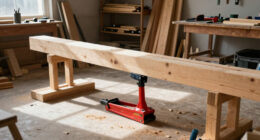
The method uses two sets of timbers: sleepers, which form the supporting base, and pieces that create the stair treads. Construction starts by measuring the bottom and top landings, then digging a trench so the lowest sleeper sits level with the bottom landing. Gravel provides the foundation, and treated timbers are pinned in position with rebar. Long timber screws join the wood, requiring a drill or driver suited to the fasteners.
For the example described, each step has a 5½-inch rise and an 11-inch tread depth. Each succeeding sleeper is 11 inches shorter than the one below it, allowing the stair structure to step up the slope. The guide stresses checking the work repeatedly with a level. Where the natural grade changes, a landing can keep the sequence regular; it cites a Landscape Architectural Graphic Standards convention of adding a 36-inch landing when a tread would otherwise need to extend beyond 18 inches.
The listed tools and supplies include gravel, wood preservative, a shovel, a level, circular and handsaws, rebar, long timber screws, a drill or driver, a sledgehammer and a 2-by-2-inch stake. For outdoor use, the guide recommends pressure-treated timbers unless the wood has substantial natural resistance to rot. It also suggests preservative, while warning that fully treating wood with significant ground contact is impractical.
Build garden stairs with reclaimed 6x6s
A practical timber layout can turn a sloped yard into outdoor steps. Success depends on sound reclaimed wood, a level gravel base and consistent dimensions.
How the timber structure works
Horizontal sleepers support the treads as the stairway steps up the slope.
Measure the full rise and available run, then mark the top and bottom landings.
Prepare a gravel foundation and level the lowest sleeper with the bottom landing.
Pin treated timbers with rebar, join them with long timber screws and check each step with a level.
Find and assess reclaimed wood
Salvaged lumber may lower material costs, but sourcing and removal take effort.
Search locally
Check online listings, construction or fencing businesses, deck builders and discarded playsets.
Inspect before reuse
Look for hidden damage, treatment history, usable length and deterioration near ground contact.
Match timber length
The guide suggests at least 36 inches for steps and roughly 48 to 60 inches or more for a broader stairway.
Keep the steps regular
The example dimensions are a reference for this method, not universal requirements.
- Repeat the rise and tread spacing.
- Set each sleeper level behind the one below.
- Add a landing where needed to avoid an unusually deep tread.
- Inspect timber and confirm it suits the intended stair width.
- Check local building codes and permit rules.
- Use safe handling practices for digging and heavy timbers.
A Lower-Cost Route to Garden Stairs
Reclaimed timbers may reduce the material cost of a landscape-stair project. The guide gives a current retail reference of about $36 for an 8-foot 6×6 at Home Depot, while noting that suitable salvaged lumber may be available free or at low cost. Potential leads include online listings, construction and fencing businesses, deck builders, and discarded playsets. These are suggestions, not guaranteed sources; availability and the condition of the wood will vary.
The construction details matter beyond appearance. Evenly spaced rises and treads help avoid irregular steps, and a stable, level base supports the structure. The guide notes that outdoor stair dimensions may not always be regulated, but presents common stair ranges as a useful reference: risers of 4 to 7¾ inches and tread depths of at least 10 to 11 inches. Local requirements can differ, so builders should check applicable codes and permit rules before work begins.
Products Worth Considering

Philips Hue Smart Light Starter Kit with Bridge and 4 White and Color A19 Bulbs

Dyson Cyclone V10 Origin Cordless Vacuum

Sonos Era 100 Wireless Smart Speakers, 2-Pack, Black
As an affiliate, we earn on qualifying purchases.
What the Timber Layout Requires
The guide describes the method as a durable, carpenter-style build in which timber is joined to timber rather than simply placed in soil. Its base is a sequence of horizontal sleepers, with each shorter sleeper set behind the one below to support the next step. The design therefore depends on accurate measurements, suitable fasteners and careful leveling across the slope.
Finding reclaimed 6x6s can involve more work than collecting offcuts. The guide points to playsets as a possible source because some are made with wood resistant to rot and insects, though it says damage may be concentrated near ground contact. It also warns that dismantling a playset or removing fence posts can be time-consuming and difficult. Timber length is another constraint: the guide suggests at least 36 inches for steps and says widths of roughly 48 to 60 inches, or more, may suit a broader stairway.
““you’re never going to permanently prevent rot in any wood making contact with the ground””
— The guide describing the This Old House method
Timber Condition and Site Rules
The method does not establish whether any particular reclaimed timber is safe or suitable. Its treatment history, age, hidden damage, dimensions and condition below the surface need to be checked before reuse. The guide estimates that ground-contact wood may need replacement in 10 to 15 years, but that is not a guarantee for a specific stairway; exposure, drainage, wood species and maintenance can affect its lifespan.
The guide also does not identify local building-code or permit requirements, which can vary by location and project. Nor does it provide a site-specific design for every slope, soil condition or drainage pattern. Its dimensions are an example, not a substitute for checking the proposed stairway against local rules and conditions.
Check the Site Before Building
Before collecting lumber or digging, measure the full rise and available run, mark the landing positions, and check local rules for outdoor stairs. Inspect reclaimed timbers for damage and confirm they are long enough for the intended stair width. During construction, keep the sleepers level, verify step spacing repeatedly and add a landing where needed to avoid an unusually deep tread.
Because the work involves digging and heavy timbers, use suitable protective equipment and safe handling practices. The guide’s method calls for a stable gravel base and mechanical fasteners; the finished stairs should be checked for movement and uneven steps before regular use. Plan for inspection and eventual timber replacement rather than treating ground contact as rot-proof.
Source: rss
Key Questions
What step dimensions does the guide use?
The example uses a 5½-inch rise and an 11-inch tread. These are the dimensions described for this method, not a statement of the rules that apply in every location.
Where might reclaimed 6×6 timbers be found?
The guide suggests online listings, construction or fencing businesses, deck builders and discarded playsets. Availability, timber length and condition are not guaranteed, and dismantling or extracting the wood can take considerable effort.
Can treated 6x6s avoid rot in the ground?
No. The guide recommends pressure-treated wood for outdoor use and says preservative can help, but warns that wood in contact with soil cannot be permanently protected from rot. It estimates replacement may be needed in 10 to 15 years, depending on conditions.
Why does the method use sleepers and gravel?
The sleepers support the stair treads, while a carefully leveled gravel foundation provides a base. The guide calls for checking the structure with a level as each step is added.
Do these steps meet local code?
The guide does not establish code compliance. Outdoor stair requirements can vary, so check local building codes and permit rules before construction.
Source: hunker.com