To enhance your garden design, use contrasting colors like purple and yellow or bold reds to create visual impact. Mix textures by pairing smooth, glossy leaves with feathery or coarse plants to add tactile interest. Combining color schemes with textured plants creates vibrant focal points and harmony. Layer plants by size and texture, placing larger, colorful plants at the back and smaller, textured ones in front. Keep exploring to discover more ways to craft a dynamic, balanced garden landscape.
Key Takeaways
- Use contrasting colors like purple and yellow to create visual interest and focal points.
- Mix plants with different leaf textures, such as glossy and feathery, to add tactile contrast.
- Combine complementary color schemes with varied textures for vibrant, balanced garden effects.
- Layer plants by size and texture, placing bold-colored, smooth-leaved plants at the front and textured varieties behind.
- Select durable, suitable plants and materials that maintain color and texture appeal over time.

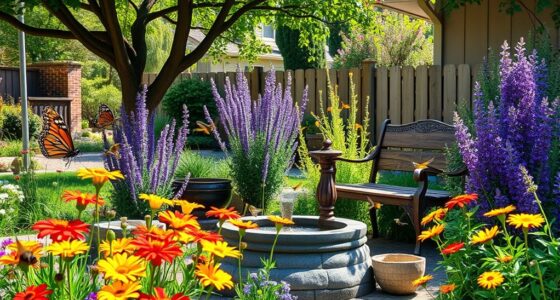
Creating a stunning garden often depends on how effectively you use color and texture to bring your space to life. One of the most impactful ways to do this is by carefully planning your plant color schemes. Think about how different hues interact; bright, bold colors like reds and yellows can energize a space, while softer pastels create a calm, soothing atmosphere. To make your garden truly engaging, mix complementary colors—such as purple and yellow—or use analogous schemes like blue, teal, and green for harmony. This strategic use of plant color schemes ensures your garden feels vibrant and balanced, guiding the eye naturally across the landscape.
In addition to color, texture contrast techniques greatly enhance visual interest. Combining plants with varying leaf shapes and surface qualities creates a layered, dynamic look. For example, pairing the smooth, glossy leaves of a camellia with the feathery foliage of ornamental grasses introduces a tactile richness. You might also contrast coarse, textured plants like succulents with fine-textured varieties such as ferns. This variety in textures prevents your garden from appearing flat or monotonous, adding depth and complexity that invites closer inspection.
Using plant color schemes and texture contrast techniques together amplifies their effects. For instance, placing a cluster of brightly colored, smooth-leaved plants beside a grouping of muted, highly textured foliage creates a striking focal point. Conversely, repeating similar textures in different shades can unify a space, giving it cohesion. When designing your garden, consider how different plants will look in various light conditions—colors may appear more subdued in shade, while textures can add drama through shadow and highlight.
You should also think about the scale and proportion of your plant choices. Larger, bold-colored plants can serve as anchors, while smaller, contrasting textured plants fill in gaps and add detail. This balance helps avoid overwhelming the senses and ensures your garden is inviting rather than chaotic. Play with layering—placing textured plants at the back and colorful, smooth-leaved plants at the front creates depth and invites exploration. Additionally, understanding the material options of your plants can help you select varieties that will thrive and maintain their visual appeal over time.
colorful garden plant combination
As an affiliate, we earn on qualifying purchases.
As an affiliate, we earn on qualifying purchases.
Frequently Asked Questions
How Can Color and Texture Influence Garden Mood and Atmosphere?
Color and texture markedly influence your garden’s mood and atmosphere. You can use color psychology to evoke feelings—calming blues or energizing reds—while texture contrast adds depth and interest. Combining smooth and rough surfaces creates visual excitement and guides your experience through the space. By thoughtfully selecting colors and textures, you shape an inviting, lively, or tranquil environment, making your garden a true reflection of your desired ambiance.
What Are Common Mistakes to Avoid When Combining Colors and Textures?
Don’t let your garden turn into a visual jumble by overusing overly contrasting palettes or clashing textures. Think of color and texture like dance partners—if they don’t complement each other, they stumble. Avoid mixing bold hues with chaotic textures that fight for attention. Instead, aim for harmony, blending subtle shades with coordinated textures to create a garden that feels balanced and inviting, like a well-choreographed performance.
How Do Seasonal Changes Affect Color and Texture Choices in a Garden?
Seasonal changes notably impact your color and texture choices in the garden. You should plan seasonal planting to guarantee vibrant colors year-round, incorporating both evergreens and seasonal blooms. Pay attention to texture contrast to add visual interest through different leaf and flower surfaces. As seasons shift, adapt by selecting plants that thrive in each period, ensuring your garden remains dynamic and appealing regardless of the time of year.
Which Plants Best Showcase Vibrant Colors and Interesting Textures Together?
Think of your garden as a lively painting where plants symbolize emotions. To showcase vibrant colors and interesting textures, choose plants like purple coneflowers, with their bold hues, alongside ornamental grasses for texture contrast techniques. Incorporate bright petunias and textured succulents to create eye-catching garden color schemes. These combinations evoke energy and harmony, making your garden a dynamic masterpiece that delights with both color and tactile variety.
How Can Color and Texture Be Used to Create Focal Points in a Garden?
You can create focal points by combining vibrant, bird-attracting plants with interesting textures, like spiky succulents or soft, billowing grasses. Use bold colors to draw attention and contrast with surrounding foliage. Drought-tolerant plants with striking textures can serve as eye-catching features, especially in dry areas. Position these plants strategically, such as near pathways or seating areas, to naturally guide visitors’ eyes and emphasize key garden spots.
textured foliage plants for garden
As an affiliate, we earn on qualifying purchases.
As an affiliate, we earn on qualifying purchases.
Conclusion
By thoughtfully combining color and texture, you can create a garden that feels lively and inviting. For instance, imagine planting vibrant red tulips alongside soft, velvety lamb’s ear; the contrasting textures and bold hues draw attention and add depth. When you experiment with these elements, your garden becomes a dynamic space that captures interest and reflects your personality. So, don’t be afraid to mix and match—your perfect outdoor oasis is just a creative step away.
As an affiliate, we earn on qualifying purchases.
As an affiliate, we earn on qualifying purchases.