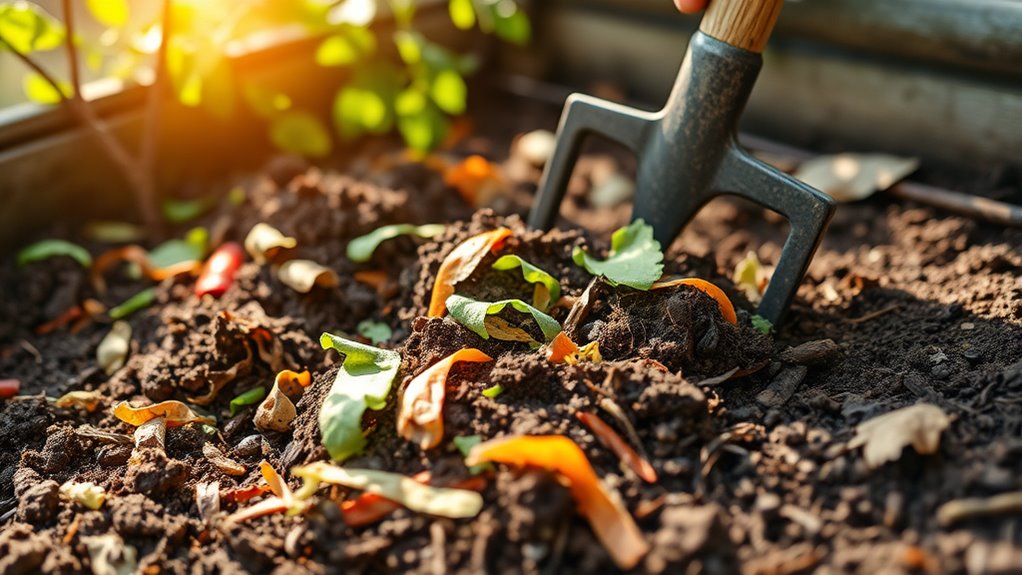

To start DIY composting, choose a well-drained spot near your kitchen and garden for easy access and good airflow. Build or buy a ventilated bin, ensuring it’s large enough and has a lid to control moisture and pests. Use a mix of kitchen scraps like vegetable peels and yard waste such as leaves, layering them properly. Regularly turn the compost, keep it moist, and watch the microbial magic happen—dive deeper to master this eco-friendly process.
Key Takeaways
- Choose a well-drained, accessible spot near your kitchen and garden for easy maintenance and proper airflow.
- Build or buy a compost bin with ventilation holes, ensuring adequate size and a lid for moisture and pest control.
- Balance green (nitrogen-rich) and brown (carbon-rich) materials in a 1:2-3 ratio, layering them to promote decomposition.
- Regularly turn the compost and monitor moisture, adding water or dry materials as needed to maintain optimal conditions.
- Microbial activity transforms organic waste into nutrient-rich compost, which improves soil health and reduces landfill waste.
Have you ever wondered how to turn kitchen scraps and yard waste into nutrient-rich soil? Composting is a simple, eco-friendly way to recycle organic materials and improve your garden’s health. The key to successful composting lies in understanding soil enrichment and how to optimize your compost bin design. When you create a well-balanced compost, you provide essential nutrients back to the soil, boosting plant growth and reducing waste in landfills.
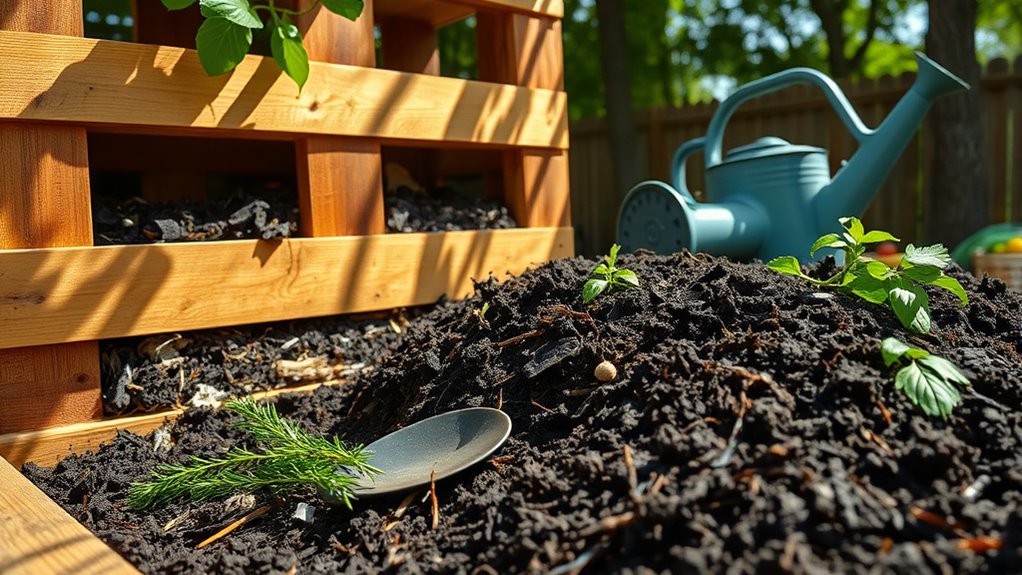
To start, you need to choose a good spot for your compost bin. It should be accessible, well-drained, and ideally near your kitchen and garden. The design of your compost bin matters because it affects airflow, moisture retention, and ease of turning the compost. You can buy a ready-made bin or make your own using wood pallets, wire mesh, or plastic containers. Whatever you choose, ensure it has ventilation holes or openings to promote air circulation, which is vital for aerobic decomposition.
Choose a well-drained, accessible spot near your kitchen and garden for optimal composting.
When building or selecting your compost bin, think about its size. A bin that’s too small can heat up too quickly and dry out, while a larger one maintains moisture and temperature better, speeding up the composting process. The design should also allow for easy turning of materials, as aeration helps break down organic matter efficiently and prevents foul odors. Some bins come with a lid to control moisture and keep pests out, which is especially helpful in urban settings.
Next, you should gather your compost ingredients. Kitchen scraps like vegetable peels, coffee grounds, and eggshells are great sources of nitrogen, while yard waste such as leaves, grass clippings, and small branches provide carbon. A good rule of thumb is to aim for a balance of roughly one part green materials to two or three parts brown. Layering these materials inside your compost bin helps regulate moisture and oxygen flow, which are critical for producing rich, soil-enriching compost.
Maintaining your compost involves regular turning and monitoring moisture levels. Turning aerates the pile, encouraging microbes to work more efficiently and preventing compaction. Your compost should feel moist but not soaked—like a damp sponge. If it gets too wet, add dry materials like straw or shredded paper; if it’s too dry, add a bit of water. Additionally, understanding the aerobic decomposition process helps in managing your compost effectively, ensuring faster breakdown and fewer odors. Over time, microbial activity breaks down the organic materials into dark, crumbly compost that’s packed with nutrients, ready to give your garden a boost.
outdoor compost bin with ventilation
As an affiliate, we earn on qualifying purchases.
As an affiliate, we earn on qualifying purchases.
Frequently Asked Questions
How Long Does Composting Take to Produce Usable Compost?
The composting timeline varies based on conditions, but generally, it takes about 3 to 6 months for compost to reach maturity. You’ll know it’s ready when the material is dark, crumbly, and earthy-smelling. To speed up compost maturity, turn the pile regularly and maintain proper moisture levels. Patience is key, but your efforts will reward you with rich, usable compost that improves your garden’s health.
Can I Compost Meat or Dairy Products Safely?
Imagine your compost pile turning into a smelly, meat-eating monster—that’s what happens if you toss in meat or dairy! For food safety and odor control, it’s best to avoid them. These items attract pests and create harmful bacteria, risking your health and turning your compost into a foul mess. Stick to plant-based scraps for safe, odor-free compost that’s good for your garden and peace of mind.
What Should I Do if My Compost Smells Bad?
If your compost smells bad, you need to improve odor control. First, turn your compost regularly to aerate it, which helps reduce odors. Make sure your compost bin is placed in a well-ventilated area, away from your house, to prevent bad smells from spreading. Avoid adding too much wet or nitrogen-rich material, and balance it with dry, carbon-rich items. These steps will help keep your compost smelling fresh and functioning properly.
How Often Should I Turn or Aerate My Compost Pile?
You should turn or aerate your compost pile every 1-2 weeks to maintain proper moisture levels and promote decomposition. Regular turning helps break up compost layering, ensuring oxygen reaches all materials. If your compost feels too wet or compacted, aerating it prevents odors and speeds up the process. Keep an eye on moisture levels and turn your pile consistently to create rich, healthy compost efficiently.
Is There a Recommended Size for a Compost Bin?
A compost bin is like Goldilocks’ porridge—finding the right size matters. For most backyard composting, the ideal dimensions are about 3x3x3 feet, giving you enough space for efficient decomposition without becoming unmanageable. The compost bin size should match your available space and the amount of waste you generate. A bin that’s too small won’t compost effectively, while one that’s too big can be difficult to manage.
As an affiliate, we earn on qualifying purchases.
Conclusion
Now that you know the basics, composting becomes your garden’s secret weapon, turning kitchen scraps into rich soil like alchemy. With just a little effort, you can nurture a thriving ecosystem right in your backyard. Think of your compost bin as a magic potion, transforming waste into life-giving goodness. Start small, stay consistent, and watch your garden flourish — because with composting, you hold the key to nature’s most rewarding transformation.
As an affiliate, we earn on qualifying purchases.
As an affiliate, we earn on qualifying purchases.