To avoid frustrating outdoor tasks, you need the right hose diameter and water pressure working together. A hose that’s too narrow with high pressure can cause damage or waste water, while a large hose with low pressure won’t deliver enough flow. Finding the perfect balance makes watering easier, faster, and more efficient. If you want to discover how to optimize your setup and prevent common issues, there’s more to uncover that can make a real difference.

Get business pricing on tools and workshop supplies
- Business-only prices and quantity discounts
- Tax-exempt purchasing
- Multiple users, one account, clear invoices
Key Takeaways
- Proper hose diameter and water pressure balance ensure efficient watering and prevent low flow or water waste.
- High pressure with narrow hoses can cause damage, while low pressure with large hoses results in poor performance.
- Using the right hose size for your system improves watering consistency and reduces frustration.
- Proper hose storage and maintenance prevent leaks and maintain optimal water flow.
- Matching hose size and pressure conserves water, saves resources, and enhances outdoor task effectiveness.
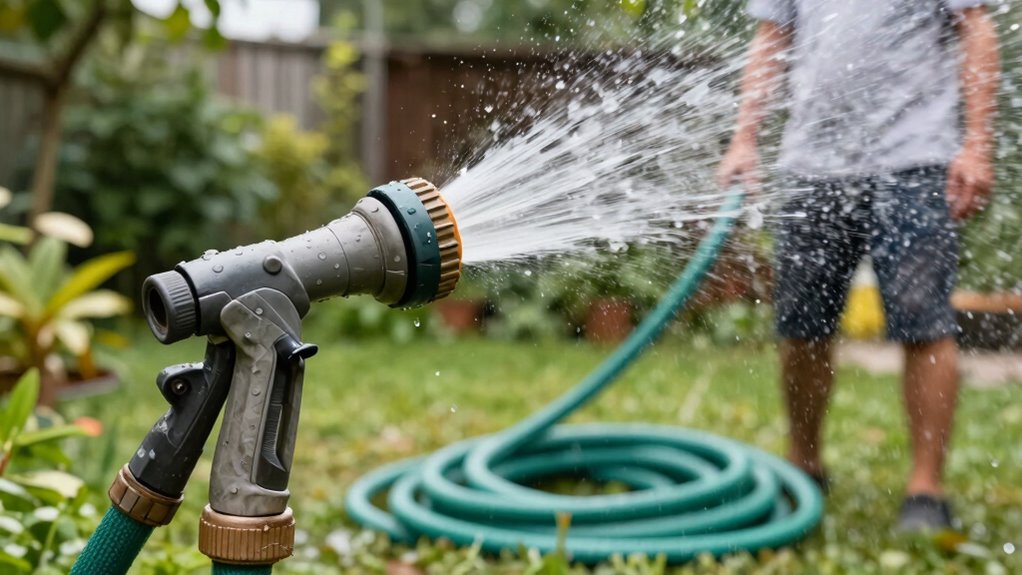
When tackling outdoor watering and cleaning tasks, understanding how hose diameter and water pressure interact can make a significant difference in your results. If you’ve ever felt frustrated with low water flow or inconsistent spray patterns, it’s likely because the hose’s diameter and the pressure supplied don’t align properly for your needs. Larger diameter hoses carry more water, which is essential for efficient garden irrigation or filling large containers quickly. But if your water pressure isn’t strong enough, even the biggest hose won’t perform well. Conversely, a high-pressure system with a narrow hose might deliver a powerful stream, but it can also cause damage or waste water. Striking the right balance between hose diameter and water pressure helps you get optimal performance without wasting resources or risking damage.
Balancing hose diameter and water pressure ensures efficient watering and prevents damage.
Knowing how to match your hose size with your water pressure also impacts hose storage and overall maintenance. When you store hoses, especially larger ones, you want to avoid kinks and pressure buildup that can weaken the material over time. Proper hose storage involves coiling hoses carefully, preferably on a reel or in a designated rack, to prevent unnecessary stress on the material. This becomes even more critical if your garden irrigation system relies on consistent water flow, as damaged hoses can lead to leaks, reduced pressure, or uneven watering. Taking the time to store hoses properly ensures they last longer and function more effectively, saving you money and frustration down the line. Additionally, understanding the relationship between hose diameter and water pressure can help you select the most appropriate hose for your specific outdoor tasks. Recognizing the importance of hose size compatibility ensures your setup remains efficient and reliable. Moreover, considering the impact on water efficiency can help you conserve water during long watering sessions, especially when using larger hoses or higher pressure systems.
Products Worth Considering

Philips Hue Festavia 130-Foot Indoor/Outdoor Smart String Lights, 500 Mini Color-Changing LEDs

Arlo Ultra 4K HDR Wireless Security Camera (3rd Gen), 3-Camera Kit with SmartHub

Philips Hue Starter Kit with Bridge Pro and 4 Retrofit LED Recessed Downlights
As an affiliate, we earn on qualifying purchases.
Frequently Asked Questions
How Does Hose Material Affect Water Flow?
Your hose material directly impacts water flow through its durability and flexibility. A durable material resists kinks and cracks, maintaining consistent flow, while flexible materials make it easier to maneuver without restricting water flow. If your hose is made from high-quality, flexible material, you’ll experience fewer interruptions and better pressure. Conversely, stiff or brittle materials can reduce water flow, making outdoor tasks more frustrating and less efficient.
What’s the Ideal Hose Diameter for Cleaning?
For cleaning, a hose diameter of 5/8 inch usually works best, providing enough water flow for effective garden irrigation and outdoor tasks. Larger diameters, like 3/4 inch, increase water volume but can be harder to store and handle. Smaller hoses save space but may struggle with high-pressure cleaning. Choose a hose that balances flow and storage convenience, ensuring you can tackle outdoor cleaning efficiently without hassle.
How Can I Prevent Hose Kinks During Use?
Think of your hose as a restless snake, enthusiastic to coil and twist. To prevent kinks, store it properly—coil it loosely in a shaded area, avoiding tight bends. When in use, keep the hose straight and avoid sharp turns. Use kink prevention tools like hose reels or sleeves, and always drain it before storage. Proper hose storage keeps your outdoor tasks flowing smoothly, with no frustrating twists to slow you down.
Does Hose Length Impact Water Pressure Significantly?
Yes, hose length impacts water pressure considerably. The longer your hose, the more water flow decreases due to friction loss, especially if your hose material is less flexible or lower quality. Thicker, more durable materials like rubber tend to maintain pressure better over longer distances. To keep water pressure ideal, choose a shorter hose if possible, or opt for a high-quality hose designed to minimize pressure loss over extended lengths.
How Often Should I Replace My Outdoor Hoses?
You should replace your outdoor hoses every few years, especially if they start showing signs of wear or leaks. Think of your hose as a fragile lifeline—neglecting it can turn your gardening into a disaster! Proper hose storage and seasonal maintenance help prolong its life, but if cracks, leaks, or mold appear, it’s time for a substitution. Regular checks ensure your watering tasks stay smooth and frustration-free.
Conclusion
Understanding hose diameter and water pressure can transform your outdoor chores. Did you know that using a 5/8-inch hose can deliver up to 40% more water flow than a 1/2-inch hose? That means less time watering and more enjoying your yard. By choosing the right hose, you’ll see a noticeable difference in performance and frustration levels. So, next time you tackle outdoor tasks, remember—size really does matter for efficient watering!