
To control pests naturally in your garden, try companion planting by pairing plants that repel pests, like marigolds near tomatoes or basil with peppers. Encourage beneficial insects, such as ladybugs and parasitic wasps, by creating habitat and nectar sources. Combine these methods with practices from integrated pest management, which maintains pest levels at safe rates without chemicals. Keep an eye on your garden’s health to fine-tune your approach—more tips await to help you master eco-friendly pest control.
Key Takeaways
- Implement companion planting with strategic plant pairings to naturally repel pests and promote plant health.
- Introduce or encourage beneficial insects like ladybugs and parasitic wasps to control pest populations biologically.
- Use integrated pest management by combining companion planting and biological control for layered, sustainable pest protection.
- Avoid chemical pesticides, instead fostering garden diversity and habitats that attract and sustain natural pest enemies.
- Regularly observe pests and adapt planting strategies to maintain a balanced, healthy, pest-resistant garden ecosystem.
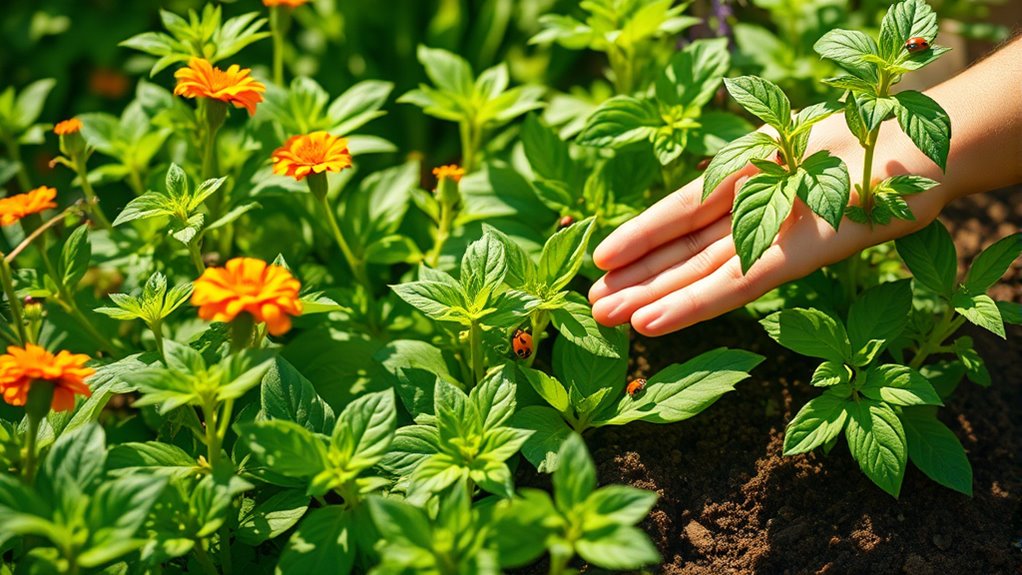
Dealing with pests doesn’t have to mean reaching for chemical solutions. Instead, you can leverage natural methods that protect your garden while keeping it healthy and vibrant. One effective approach is companion planting, where you strategically grow certain plants together to deter pests naturally. For example, planting marigolds alongside tomatoes can repel nematodes and aphids, while basil near peppers can ward off whiteflies. These plant pairings create a biological barrier that confuses pests and makes your garden less attractive to them. Companion planting is simple to implement and benefits your soil and plant health, making it a sustainable choice for pest management.
Use companion planting to naturally deter pests and boost garden health sustainably.
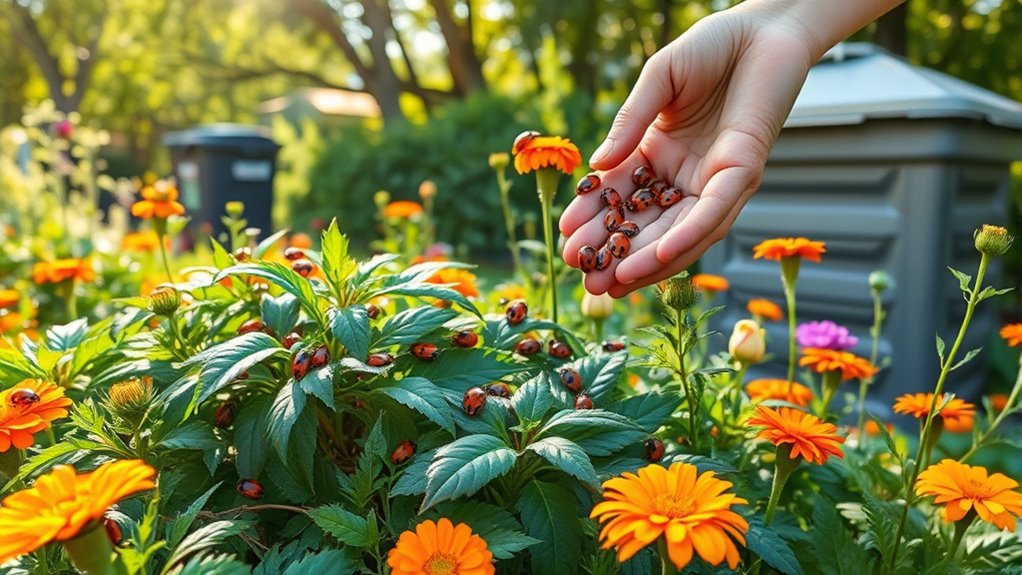
Another powerful natural strategy is biological control, which involves introducing or encouraging beneficial insects and organisms that prey on pests. Ladybugs, for instance, feast on aphids, while predatory nematodes target soil-dwelling pests like grubs and root maggots. By creating a welcoming environment for these allies—such as planting nectar-rich flowers or providing water sources—you foster a natural balance that keeps pest populations in check. This method reduces your reliance on chemical pesticides and promotes biodiversity within your garden ecosystem. Biological control is particularly effective because it addresses pests at their source, often preventing infestations before they become serious problems.
Combining companion planting with biological control amplifies their effectiveness. When you plant pest-repelling companions and attract beneficial insects simultaneously, you create a layered defense system. For example, planting dill or fennel alongside your vegetables can attract parasitic wasps that target pest caterpillars and aphids. These natural predators help maintain pest levels at manageable rates without harming your crops or the environment. Plus, this approach encourages a thriving garden ecosystem where beneficial insects flourish, ensuring ongoing pest suppression.
Implementing these methods requires some planning but offers lasting results. Observe your garden to identify pest issues and select companion plants accordingly. Encourage beneficial insects by avoiding broad-spectrum insecticides that can harm helpful species. Keep your garden diverse and inviting for natural enemies, and you’ll notice fewer pest problems over time. This integrated approach not only reduces the need for chemical interventions but also fosters a healthier, more resilient garden. With patience and strategic planting, you can maintain a pest-free garden that thrives naturally, making your gardening experience more sustainable and enjoyable.

MZK 12-Inch 10.5 Amp Corded Electric Tiller/Cultivator for Gardening, 8-inch tillling Depth with Adjustable Wheels, Electric Garden Rototiller for Lawn/Yard/Garden Soil Digging,TC12A03
[Efficient Digging Power]:With a 12-inch cutting width and 8-inch digging depth, MZK electric tiller is perfect for breaking...
As an affiliate, we earn on qualifying purchases.
Frequently Asked Questions
Are Natural Pest Control Methods Safe for Pets and Children?
Yes, natural pest control methods are generally safe for pets and children when used properly. You’ll want to prioritize pet safety and children protection by choosing non-toxic options like neem oil or insecticidal soaps. Always follow the instructions carefully, apply treatments when pets and kids are not around, and avoid spraying directly on edible plants. This way, you can protect your garden while keeping your loved ones safe.
How Long Does It Take to See Results From Natural Pest Controls?
You’ll typically see results from natural pest controls within one to three weeks. About 70% of gardeners notice a pest population reduction after this period. Timing expectations vary based on pest type and application method, but patience pays off. Consistent use helps guarantee pests decline steadily, leading to a healthier garden. Keep monitoring, and you’ll soon see your efforts pay off with fewer pests and thriving plants.
Can Natural Methods Completely Eliminate Pests From My Garden?
Natural methods can considerably reduce pests, but they might not completely eliminate them, especially if pests develop resistance. Unlike chemical pesticides, natural controls focus on balancing your garden’s ecosystem, making it harder for pests to thrive. You should combine methods like introducing beneficial insects and maintaining healthy plants. While you may see a substantial decrease in pests, total elimination isn’t always guaranteed without considering integrated pest management strategies.
Are There Any Plants That Naturally Repel Pests?
Yes, certain plants naturally repel pests, making them great for companion planting. For example, marigolds deter nematodes and aphids, while basil repels mosquitoes and flies. Incorporate these plants to attract beneficial insects that prey on pests, helping keep your garden healthy. By using companion planting, you create a natural pest barrier, reducing the need for chemical pesticides and promoting a balanced, thriving garden ecosystem.
How Often Should Natural Pest Control Treatments Be Applied?
You should apply natural pest control treatments on a regular basis, like clockwork, to stay ahead of pest resurgence. Typically, reapply every 7-14 days, especially after heavy rain or wind, which can wash away treatments. Keep a close eye on your plants to spot any signs of pests early. Consistent application guarantees your garden stays healthy and pest-free without overdoing it.

Sun Joe Corded Electric Garden Tiller & Cultivator with Steel Tines, 16 Inch, 13.5-Amp Motor - Heavy-Duty Tilling Machine for Lawn, Yard, and Gardening Care, TJ604E
Powerful Electric Tiller: Electric Tiller with a 13.5-amp motor easily tills up to 16 inches wide and 8...
As an affiliate, we earn on qualifying purchases.
Conclusion
By embracing natural pest control methods, you’re opening the door to a thriving, balanced garden where beneficial creatures dance among healthy plants. Think of your garden as a peaceful symphony, with each method acting as a gentle conductor guiding harmony. As you nurture this eco-friendly sanctuary, pests will retreat like shadows at dawn, leaving behind a vibrant oasis bursting with life. Your garden becomes a tribute to nature’s wisdom, resilient and beautifully alive.

IncwBo Electric Rototiller Garden Tiller 12 Inch Tilling Width 8-Inch Electric Tiller 10.5 Amp Tiller Cultivator for Garden Yard
👨🌾12-INCH MAX WIDTH👨🌾 Introducing Incwbo reliable 10.5-Amp 12-Inch Electric Tiller, designed with an impressive 8-inch cutting depth for...
As an affiliate, we earn on qualifying purchases.

IncwBo Garden Rototiller 12-Inch 10.5-Amp Corded Electric Tiller/Cultivator, Adjustable Wheels, 8-Inch Tilling Depth, Powerful and Lightweight Tiller
✈️Tiller Cutting Width 12-Inch✈️12-inch rotor tilling width ensures you cover more ground quickly. Make your garden preparation a...
As an affiliate, we earn on qualifying purchases.