Building a pergola or arbor for vines involves selecting sturdy materials like wood or stone, designing a support structure with beams or lattice panels, and choosing climbing plants such as wisteria or grapevines that thrive in your climate. Regular pruning and proper placement based on sunlight help keep your vines healthy and lush. When you combine the right support with well-chosen plants, you create an attractive, shaded retreat that transforms your outdoor space—more tips lie ahead.
Key Takeaways
- Choose sturdy support structures like beams and lattice for climbing plants’ growth.
- Select suitable climbing plants such as wisteria, clematis, jasmine, or grapevines based on climate and aesthetics.
- Properly space and reinforce supports to handle mature vines and prevent structural failure.
- Regularly prune and train vines to maintain health, shape, and dense coverage.
- Use natural materials like wood and stone to enhance aesthetic appeal and blend with the landscape.
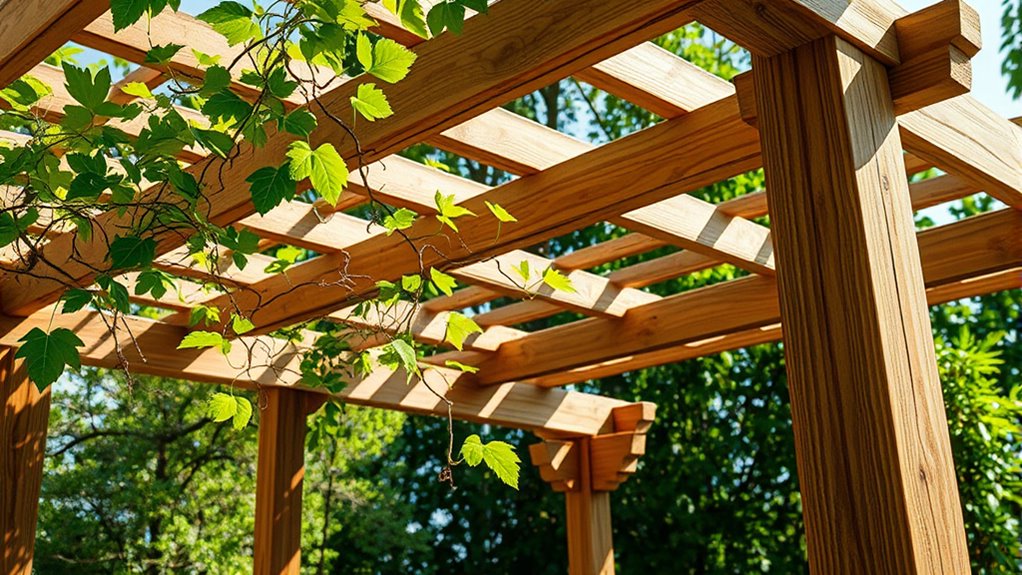
Building a pergola or arbor can transform your outdoor space into a stylish and functional retreat. When you plan to create a structure for vines, you’re not just adding aesthetic appeal—you’re designing a practical feature that offers natural shade and enhances privacy. Incorporating climbing plants into your design allows you to craft a lush, green canopy that provides excellent shade solutions, perfect for hot summer days or simply creating a cozy outdoor nook. With the right setup, your pergola or arbor becomes a living, breathing part of your garden, inviting you to relax under a canopy of greenery.
Start by choosing the right climbing plants for your climate and style preferences. Popular options include wisteria, clematis, jasmine, and grapevines, each offering unique blooms and foliage. As you select your plants, think about their growth habits and maintenance needs to ensure they thrive on your structure. When planting, make sure to install sturdy support beams and lattice panels that can handle the weight of mature vines. Proper support is essential because climbing plants will naturally seek out the strongest points to attach themselves. You’ll want to space the beams or lattice to give your plants ample room to grow and spread, encouraging dense coverage over time.
Choose sturdy support beams and select climbers suited to your climate for lush, healthy growth.
As your climbing plants develop, they’ll begin to weave through the support structure, creating a natural roof that filters sunlight and offers shade. This greenery not only cools the area beneath but also adds a sense of intimacy and tranquility to your outdoor space. Regular pruning and training are necessary to keep your vines healthy and to maintain the shape of your shaded retreat. You might also consider mixing different types of climbers for varied textures and colors, turning your pergola into a vibrant focal point.
Adding natural materials like wood and stone to your pergola or arbor enhances its rustic charm and complements the lush greenery.
To maximize shade solutions, position your pergola or arbor thoughtfully in relation to the sun’s path. You can orient it so the most sun exposure is blocked during the hottest parts of the day, providing a cool refuge during summer afternoons. If you want even more shade, consider installing retractable canopies or shade fabrics that can be pulled back when not needed. Combining these elements with climbing plants gives you flexible, natural shade that seamlessly integrates into your landscape.
Building a pergola or arbor with climbing plants isn’t just about aesthetics—it’s about creating a functional outdoor living space that invites you to unwind and enjoy nature. With careful planning and maintenance, your vine-covered structure will become a beautiful, shaded sanctuary for years to come.
Frequently Asked Questions
What Materials Are Best for Pergola Longevity?
You should choose durable materials like cedar, redwood, or pressure-treated wood for longevity, as they resist rot and pests. Metal options like aluminum or wrought iron also work well for outdoor shade solutions and climbing plant support, lasting longer with minimal maintenance. Always seal or stain wood to protect against weather, ensuring your pergola remains sturdy and attractive for years to come.
How Do I Choose the Right Location for My Arbor?
Think of your arbor as a guiding hand for your vines’ growth. You should position it where plant placement can thrive, ideally in a spot with ample sunlight considerations—full sun for most vines, or partial shade if needed. Choose a location that offers good airflow and is accessible for maintenance. By aligning these factors, you create a nurturing environment that encourages lush, healthy growth, transforming your space into a green sanctuary.
What Permits Are Needed for Outdoor Structures?
You’ll need to check your local zoning regulations and building codes before constructing your outdoor structure. Visit your city or county’s planning department or website to find specific permit requirements. Some areas require permits for structures over a certain size or height. Failing to obtain necessary permits can lead to fines or having to dismantle your pergola or arbor later. Always make certain your project complies with local rules to avoid issues.
How Do I Maintain Vines on a Pergola Over Time?
To maintain your vines on a pergola, you should regularly prune them to promote healthy growth and prevent overgrowth, removing dead or diseased branches. Keep an eye out for pests and use appropriate pest control methods to protect your vines. Also, guarantee they receive adequate water and nutrients. Consistent pruning and pest management help your vines thrive and keep your pergola looking beautiful over time.
Can I Build a Pergola Without Professional Help?
Did you know that over 60% of DIY projects succeed with proper planning? You can definitely build a pergola on your own, but remember to follow safety precautions like wearing gloves and eye protection. For DIY tips, start with detailed plans, gather quality materials, and ask for help if needed. With patience and care, you can create a beautiful pergola without professional help, just stay safe!
Conclusion
With your new pergola or arbor standing proudly, it’s like planting a gateway to a secret garden. Vines will weave their lush tapestry, turning your outdoor space into a green cathedral of shade and fragrance. As sunlight filters through the leaves, you’ll feel the warm embrace of nature’s artistry. Soon, your backyard will bloom into a living masterpiece, inviting friends and family to gather beneath your leafy canopy—where every moment feels like stepping into a dream.