To protect your wooden outdoor structures before sun and rain, start by cleaning and inspecting them for damage or pests. Reapply a high-quality sealant, stain, or weatherproof treatment annually, preferably before harsh weather arrives. Trim surrounding plants for proper airflow and guarantee good drainage around the base. Regular maintenance, like sealing cracks and clearing debris, will extend their life and keep them looking great. Stay committed to upkeep, and you’ll discover more tips for long-lasting protection.

Get business pricing on tools and workshop supplies
- Business-only prices and quantity discounts
- Tax-exempt purchasing
- Multiple users, one account, clear invoices
Key Takeaways
- Apply high-quality sealants or stains that block UV rays and repel moisture before peak weather seasons.
- Clean and sand surfaces thoroughly to ensure proper adhesion of protective treatments.
- Reapply wood treatments annually, following manufacturer instructions for optimal protection.
- Trim nearby plants and ensure proper drainage to reduce moisture exposure and damage risks.
- Conduct regular inspections for cracks, peeling paint, or pest signs to address issues early.
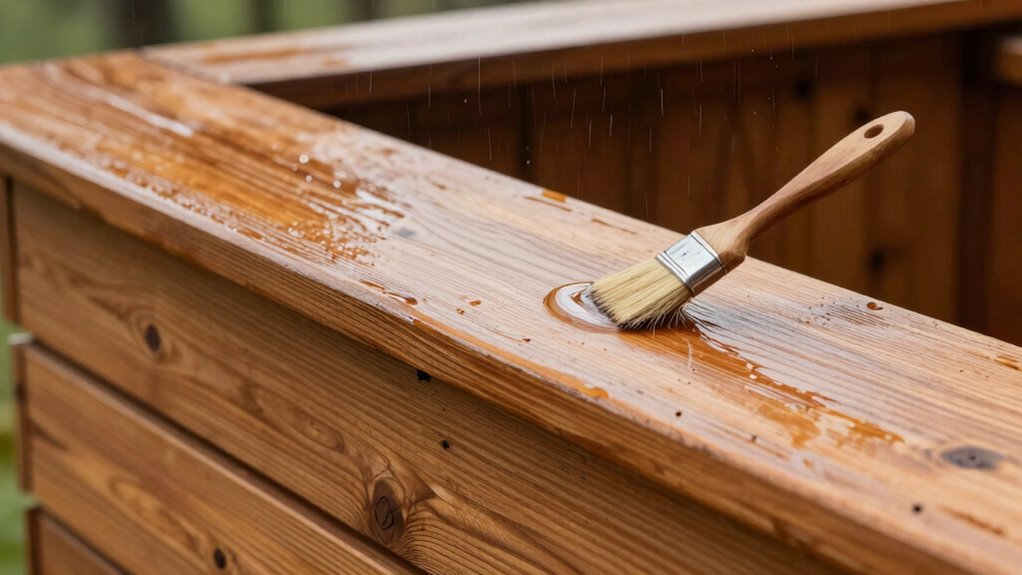
Wooden outdoor structures add charm and value to your property, but they face constant exposure to the elements that can cause damage over time. Rain, sun, wind, and temperature fluctuations can all take a toll, leading to rot, warping, cracking, and fading. To keep your structures looking beautiful and lasting longer, it’s essential to implement a solid wood treatment plan and stick to a regular maintenance schedule. This proactive approach helps prevent damage before it happens, saving you time and money down the line.
Protect your outdoor wooden structures with regular maintenance and proper treatments to ensure lasting beauty and durability.
Start by choosing the right wood treatment products. They create a protective barrier against moisture and UV rays, which are the main culprits of deterioration. You might opt for a high-quality sealant, stain, or weatherproofing treatment specifically designed for outdoor wood. Applying a wood treatment isn’t a one-and-done task; it requires periodic reapplication to maintain its effectiveness. Check the manufacturer’s instructions for recommended intervals, but generally, you should plan on re-treating your structures at least once a year, especially before the peak sun and rain seasons.
Maintaining a consistent schedule is key. Establish a routine that includes inspecting your outdoor structures at least twice a year—preferably in spring and fall. Look for signs of wear, such as peeling paint, fading, or areas where the wood appears dry or cracked. Address small issues promptly by cleaning and reapplying treatment as needed. Cleaning your wood surface before applying any treatment ensures better adhesion and a longer-lasting finish. Use a gentle scrub brush and mild detergent to remove dirt, algae, or mildew buildup. Additionally, proper surface preparation enhances the effectiveness of the protective coatings and prolongs their lifespan. Regular inspections can also help you identify early signs of damage, allowing for timely repairs that prevent further deterioration.
In addition, understanding the causes of wood deterioration can help you better tailor your maintenance efforts to prevent specific issues before they develop. Consider other maintenance tasks to extend the life of your wooden structures, such as trimming nearby plants that can trap moisture or cause scratches, and ensuring proper drainage around the base to prevent water from pooling. During inspections, look for signs of pest infestation, such as holes or sawdust, and treat or repair affected areas immediately. Regular upkeep not only preserves the structure’s appearance but also reduces the likelihood of costly repairs later on. Additionally, choosing moisture-resistant wood and treatments can significantly enhance durability against environmental stresses. Proper ventilation around your structures can also help reduce moisture buildup and prolong lifespan.
In the end, protecting your outdoor wooden structures requires a combination of proper wood treatment and a well-planned maintenance schedule. By staying proactive and attentive, you ensure that your structures withstand the sun’s harsh rays and the rain’s relentless assault. With consistent care, your outdoor woodwork remains a beautiful, functional part of your landscape for years to come.
outdoor wood sealant for weatherproofing
As an affiliate, we earn on qualifying purchases.
As an affiliate, we earn on qualifying purchases.
Frequently Asked Questions
How Often Should I Reapply Protective Coatings?
You should reapply protective coatings every 1-3 years, depending on exposure and wear. Application frequency varies with weather conditions; harsher environments demand more frequent maintenance. Follow maintenance tips like cleaning the surface beforehand and inspecting for damage regularly. If the coating looks worn or faded, it’s time for a new application. Regular reapplication keeps your wooden outdoor structures protected from sun and rain, extending their lifespan effectively.
Can I Use Natural Oils Instead of Sealants?
You can definitely use natural oils as sealant alternatives, but keep in mind they have their limitations. Natural oils like tung or linseed oil penetrate the wood and enhance its natural beauty, but may require more frequent reapplication. While they’re eco-friendly, they might not offer the same long-term protection as traditional sealants. It’s worth weighing their benefits against your specific needs to keep your outdoor structure protected and looking its best.
Will Protective Treatments Affect the Wood’s Color?
Protective treatments may slightly alter your wood’s color, but many options, like wood staining, can enhance its natural hue. If you prefer a more natural look, choose clear sealants that offer UV protection without changing the color markedly. Keep in mind, some treatments deepen or darken the wood over time, so consider testing a small area first. This way, you can enjoy both protection and the desired appearance.
Are There Eco-Friendly Options for Outdoor Wood Protection?
Yes, you have eco-friendly options like eco-friendly preservatives and biodegradable finishes that protect your outdoor wood without harming the environment. These products are made from natural ingredients, are biodegradable, and have low toxicity, making them safer for plants, animals, and you. By choosing these options, you preserve your wood effectively while reducing your ecological footprint, ensuring your outdoor space remains beautiful and sustainable.
How Do I Prevent Mold and Mildew Growth?
Coincidentally, the key to preventing mold and mildew growth lies in proper maintenance. You should regularly clean your wooden structures with a mixture of water and vinegar to inhibit mold prevention and mildew control. Guarantee good air circulation and avoid excessive moisture by sealing the wood and fixing leaks promptly. Applying a mold-resistant, eco-friendly wood preservative also helps keep mold and mildew at bay, extending the life of your outdoor wood.
wood stain for outdoor furniture
As an affiliate, we earn on qualifying purchases.
As an affiliate, we earn on qualifying purchases.
Conclusion
By applying protective treatments, you can extend the life of your wooden outdoor structures considerably. Did you know that untreated wood can deteriorate up to 50% faster when exposed to sun and rain? Regular sealing and maintenance not only preserve your investment but also keep your outdoor space beautiful year-round. So, take action today—protect your wood, enjoy your outdoor area longer, and save money on costly repairs down the line. Your outdoor space deserves the best care!
As an affiliate, we earn on qualifying purchases.
pest-resistant wood preservative
As an affiliate, we earn on qualifying purchases.
As an affiliate, we earn on qualifying purchases.
Fall Picks
fall essentials
As an affiliate, we earn on qualifying purchases.